About this place
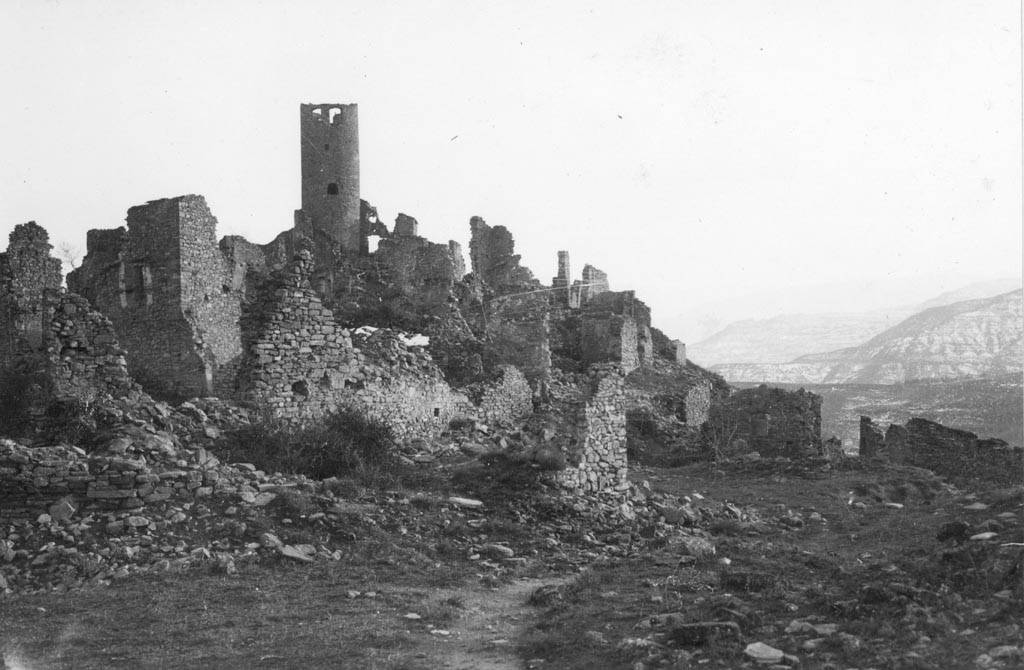
Sant Miquel de Collmorter is a small Romanesque church standing in Collmorter, a once-abandoned hamlet in the municipality of Castell de Mur, in the Pallars Jussà region of Lleida province, Catalonia. The building sits at an altitude of nearly 800 metres, surrounded by stone houses that have been gradually restored over the past few decades.
Where is Collmorter and its church located?
The hamlet lies at the edge of Pallars Jussà, in an area historically known as Guàrdia de Noguera — a former administrative district now folded into the municipality of Castell de Mur. Collmorter itself is a cluster of stone houses gathered around a central square, and the church of Sant Miquel stands next to one of them, traditionally linked to a house known as Casa Francisco. The settlement's name has medieval roots; some researchers trace it back to a Latin term for a burial ground, hinting at settlement here since very early times.
What is there to see on site?
Sant Miquel is a remnant of an older Romanesque religious building, no longer used for worship but preserved as a witness to the modest village churches found by the dozen across the wider Pallars region. Beyond the church itself, it's worth stopping at Cal Soldat, a house that took its name from the Napoleonic wars, when a general commanding troops camped in the village fields is said to have stayed there. Today its former stables and cellars host a small ethnographic museum holding more than 400 items — farming tools, furniture, clothing and everyday objects, most of them found inside the building. Taken together, the restored houses gathered around the square give a good sense of a typical turn-of-the-century Pyrenean mountain settlement.
How do you get to Collmorter?
The easiest approach is via the C-13 road heading north, followed by a turn onto the local LV-9124, which passes through Guàrdia de Noguera; from that junction it's roughly 10 km to Collmorter. There is no public transport link, so a car is effectively the only practical option. The nearest school and hospital are about 17 km away, which says a lot about how remote this corner of Lleida still is.
When is the best time to visit?
Given the altitude and mountain microclimate, spring and autumn tend to be the most comfortable seasons, with moderate temperatures and access roads free of the snow and ice that can complicate winter driving. In summer, the cooler air of these higher Pallars villages is a welcome contrast to the lowland heat further south in Lleida.
Frequently asked questions
Can you go inside the church of Sant Miquel? The building is abandoned and no longer used for services, so visits are mainly limited to viewing it from the outside — it survives as a Romanesque relic rather than an active parish church.
How many people live in Collmorter today? Only a handful of residents live there year-round, though the number of people formally registered is somewhat higher — a typical picture for a small Pyrenean hamlet that survived the region's mass depopulation in the second half of the 20th century.
What can you see at Cal Soldat? It's a former farmhouse converted into an ethnographic museum, where the old stables and cellars now display several hundred objects tied to everyday rural life, from farming tools to furniture and clothing.
Is the drive there easy? The route via the C-13 and the local LV-9124 is passable but runs through mountain terrain, so it's worth checking road conditions in winter and travelling in good visibility.
Nearby places

Earn badges for the places you visit
Download NextOnTrip, discover new places and check off your trails.