About this place
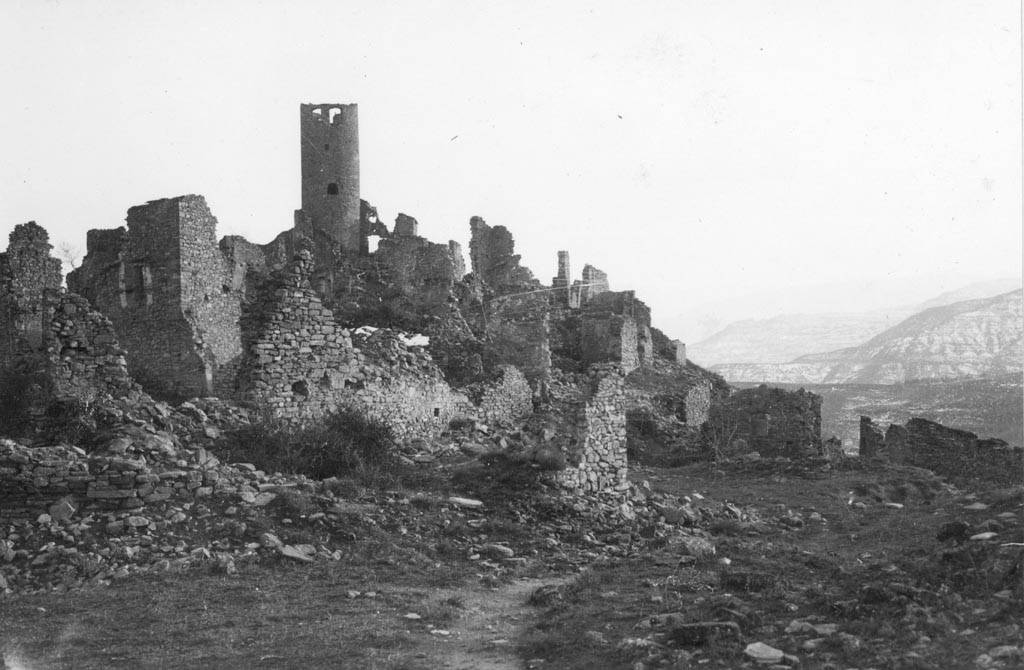
Sant Martí de les Tombetes is an abandoned church and archaeological site in the municipality of Sant Esteve de la Sarga, in the Pallars Jussà region of Lleida, Catalonia. It sits on a hilltop roughly 800 metres above sea level, just above the village of Moror, and combines the ruins of a medieval church, remains of an Iberian-Roman fortification, and a rock-cut necropolis.
What will you find at the site?
The centrepiece of the site is the ruin of a small church that was long believed to be pre-Romanesque. More recent archaeological research, however, has established that the building as it stands today actually dates from the medieval period — one of the more interesting revisions to the site's history in recent years. Around the church, terraces mark where the settlement once stood; the village itself has been completely deserted for centuries.
The second key feature is an older fortification with Iberian-Roman roots, showing that the hilltop was occupied and strategically used long before the church was built. The site also contains a late-Roman necropolis with about twenty tombs cut directly into the rock. These tombs are the source of the site's popular name: "les Tombetes," literally "the little tombs," a nickname that eventually replaced whatever the settlement was originally called.
Where does the name come from?
"Sant Martí de les Tombetes" is not the original historical name of the settlement but a later, popular nickname. It stuck because of the rock-cut graves scattered across the hilltop, which have drawn the attention of villagers and travellers passing through the area for generations.
How do you get there?
Sant Martí de les Tombetes lies close to the village of Moror, part of the municipality of Sant Esteve de la Sarga in the Pallars Jussà district. The site forms part of the area's local hiking network, marked as a stop on a signposted walking route through the countryside around Moror and the wider Pallars Jussà valley. The approach follows a footpath uphill to the summit, with views opening up over the surrounding valleys and the foothills of the Pyrenees. Sturdy walking shoes are worth packing — the ground is stony and the final stretch climbs steeply.
When is the best time to visit?
Given the altitude (around 800 m) and the uphill approach, spring and autumn are the most comfortable seasons, offering mild temperatures and clearer views of the ruins without heavy vegetation. In summer, expect strong sun with little shade along the whole route, so an early start is advisable. In winter, icy patches on the stony path can make the final climb trickier.
Why is this site worth visiting?
Sant Martí de les Tombetes is a rare case where several historical layers overlap on a small hilltop: an Iberian-Roman fortification, a late-Roman necropolis, and a medieval church. For anyone interested in the archaeology and history of the Pallars Jussà region, it's one of the more compelling, if still little-known, sites in Catalonia — free of crowds, with its layered past laid bare in the landscape.
Frequently asked questions
Is Sant Martí de les Tombetes an active church? No. It is an abandoned archaeological site — the ruins of a church and settlement, now uninhabited and no longer used for religious purposes.
Where does the name "les Tombetes" come from? From the rock-cut tombs found within the late-Roman necropolis on the site. It's a popular nickname, more recent than the settlement itself.
Is the church a pre-Romanesque building? That was long assumed, but recent archaeological research has shown the current structure actually dates from the medieval period.
How do you reach the site? The easiest approach starts from the village of Moror in the municipality of Sant Esteve de la Sarga; the site is part of a marked hiking route in the Pallars Jussà region leading up to the hilltop.
Nearby places

Earn badges for the places you visit
Download NextOnTrip, discover new places and check off your trails.