About this place
Sant Martí del Meüll is the ruin of a small Romanesque church in the village of Meüll, part of the municipality of Castell de Mur in the Pallars Jussà comarca, Lleida province, Catalonia, Spain. Tucked away from the main tourist routes, it makes an interesting stop for anyone exploring the region's rural Romanesque heritage alongside the better-known castle and collegiate church complex at Mur.
Where is Sant Martí del Meüll?
Meüll is one of seven villages that make up the municipality of Castell de Mur, alongside Cellers, Collmorter, Guàrdia, Puigmaçana, Santa Llúcia and Vilamolat. The area sits in the heart of the Pallars Jussà comarca, in the hilly pre-Pyrenean interior of Lleida province, where small villages and isolated Romanesque churches are scattered across the hills above the Noguera Pallaresa and Noguera Ribagorçana river valleys. It is a sparsely populated, largely agricultural and pastoral corner of the region.
What does the church look like?
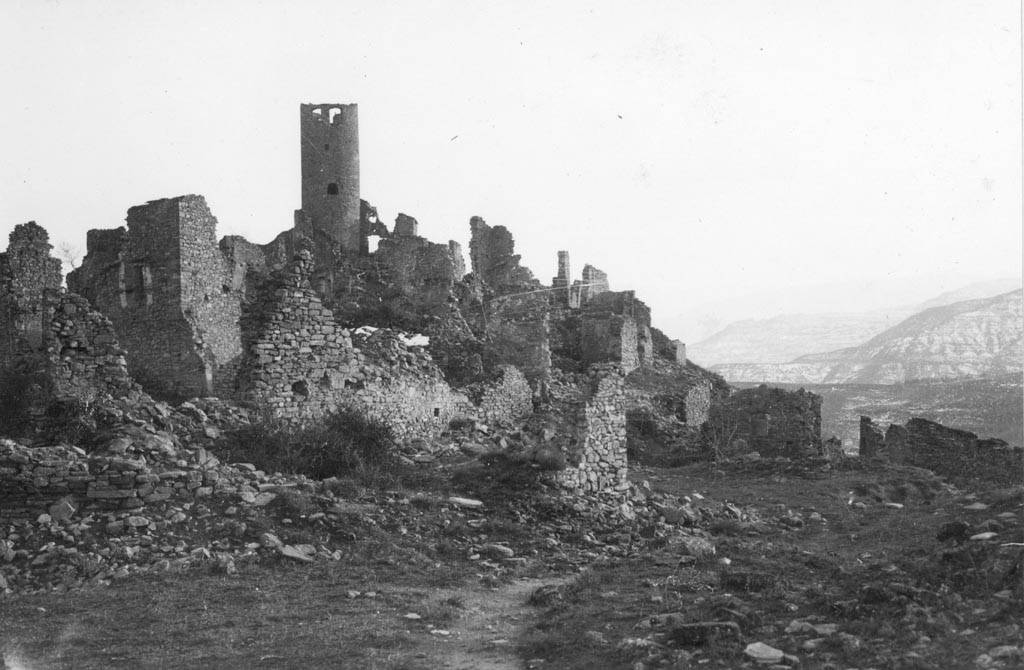
The church stands on the site once occupied by the Castell del Meüll, a castle of which little survives today alongside the church itself. Sant Martí del Meüll is a modest, single-nave building dating from the 12th century, constructed from small and somewhat irregular stone blocks — a simple, locally built work rather than an elaborate one. The nave is covered by a barrel vault reinforced with transverse arches, and to the east it opens into a semicircular apse. Notably, the apse joins the nave directly, without a separating triumphal arch — a simpler layout than the more common Romanesque scheme in the region, where the chancel is usually marked off more clearly from the nave.
What is the history behind it?
In the Middle Ages the church belonged to the barony of Mur and to the "pabordia" of the same name — an ecclesiastical administrative office, a type of prebend that managed the property and income attached to several churches in the area. Such arrangements were typical of how the Catholic Church organised its finances in medieval Catalonia, with land revenues and tithes assigned to specific offices rather than to individual parishes. Today the building no longer serves any religious function and survives only as a ruin.
What else is worth seeing nearby?
The main landmark of the Castell de Mur municipality is the castle and collegiate church complex at Mur, one of the most significant Romanesque monuments in the region and the source of the municipality's name. The castle itself dates from the 10th century and is notable for its unusual triangular floor plan, an uncommon layout for defensive architecture of that period. It is also worth driving through the other villages of the municipality — Cellers, Collmorter, Guàrdia, Santa Llúcia and Vilamolat — scattered across the hills of Pallars Jussà, several of which hold their own lesser-known Romanesque remains.
How do you get there, and when should you visit?
Sant Martí del Meüll lies in a remote, sparsely populated part of Pallars Jussà, so reaching it requires your own transport along local roads into the Castell de Mur municipality. As an unstaffed ruin, the site has no visitor infrastructure or set opening hours — worth checking locally beforehand, for instance with the Castell de Mur town council. Given the region's mountain climate, spring and early autumn generally offer the most comfortable conditions, since summers can turn quite hot.
Frequently asked questions
Can Sant Martí del Meüll be visited? The church survives only as a ruin and is not set up as an organised visitor attraction — there is no staff on site and no fixed opening hours.
How old is the church? It dates from the 12th century, built as a simple, single-nave Romanesque church from irregular stone blocks.
What was the "pabordia" of Mur that the church was linked to? It was a medieval ecclesiastical administrative office that managed the property and income belonging to the barony of Mur, covering several churches in the area, including Sant Martí del Meüll.
What is the most important monument in the Castell de Mur municipality? The castle and collegiate church complex at Mur, with its 10th-century castle known for its distinctive triangular floor plan — the area's principal Romanesque attraction.
Nearby places

Earn badges for the places you visit
Download NextOnTrip, discover new places and check off your trails.