About this place
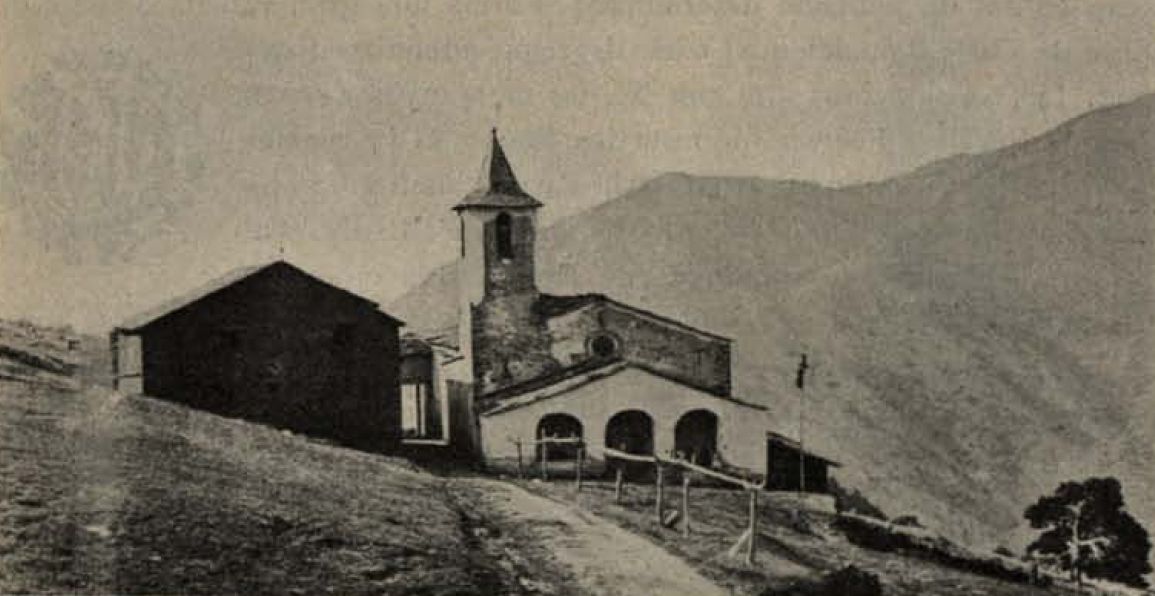
Sant Joan de l'Erm Vell is the ruined remains of an old mountain sanctuary and travelers' refuge in the municipality of Montferrer i Castellbò, in the Alt Urgell comarca of Lleida province, Catalonia. Perched above 1,700 metres, right on the old route linking Alt Urgell with the neighboring Pallars Sobirà valley, only stone walls remain today of a place that for centuries served as a lifeline for people crossing this stretch of the Pyrenees.
Where are the ruins?
The site sits high in the mountainous part of Montferrer i Castellbò, on the pass separating Alt Urgell from Pallars Sobirà, close to the small settlements of Romadriu and Montenartró. It's a remote corner of the Pyrenees, now surrounded by forest belonging to the Alt Pirineu Natural Park. A modern village of the same name lies a few kilometres away, reached by a forest track — hence the suffix "Vell" (old) in the ruin's name, distinguishing it from the newer Sant Joan de l'Erm Nou.
A sanctuary and a lifeline for travelers
The origins go back to the Middle Ages, when a chapel dedicated to Saint John the Baptist stood here under the protection of the viscounts of Castellbò, who ruled this part of the Pyrenees. Because it sat directly on the route between two valleys, a hospice grew up around the chapel — a place where shepherds, merchants, and pilgrims crossing the high pass could rest and get help. Given the harsh climate and altitude, such a stopping point was essential to the safety of anyone traveling through these mountains.
From chapel to small settlement
Over time, the site grew into a small service settlement in its own right. As late as 1905, records show it had an inn with several dozen rooms, a butcher's shop, a bakery, a small cellar, and a grocery store — a clear sign of how significant this remote spot had become despite being far from any larger town.
Destruction and the new Sant Joan de l'Erm
The settlement's fate changed abruptly in the 1930s, in the turbulent years leading up to the Spanish Civil War, when a fire tore through the sanctuary and inn buildings, ending centuries of continuous activity. The surrounding mountains later saw fighting during the war itself. Years afterward, in 1959, a new church was built a few kilometres from the ruined site, and today's village of Sant Joan de l'Erm grew up around it. A decade later, in 1969, a mountain refuge and a Nordic ski station opened there — one of the first of its kind in Spain, still drawing cross-country skiers through the forest today.
What can you see today?
At the old site, only ruins survive — sections of wall, the outline of what was once the settlement's main street, and remnants of individual buildings, including a facade that still preserves its arched doorway. The area is now protected as a local heritage site, and the municipality, together with the natural park authority, has installed information panels at the ruins explaining the site's history. It's a destination for hikers and history enthusiasts more than a conventional sightseeing stop — reaching it means walking a forest track from the modern village of Sant Joan de l'Erm.
Frequently asked questions
What was Sant Joan de l'Erm Vell? A medieval sanctuary dedicated to Saint John the Baptist, around which a hospice and small settlement grew to serve travelers crossing the pass between Alt Urgell and Pallars Sobirà.
Why are there only ruins left today? The buildings burned down in the 1930s, in the period leading up to the Spanish Civil War, and were never rebuilt on the same site.
How is it different from today's Sant Joan de l'Erm? The modern village of that name was built a few kilometres away, around a church erected in 1959 and a mountain refuge with a Nordic ski station that has operated since 1969.
What will you find at the ruins? Wall fragments, the outline of the old settlement's main street, and a surviving facade with an arched doorway, along with information panels describing the sanctuary's history.
Nearby places

Earn badges for the places you visit
Download NextOnTrip, discover new places and check off your trails.