About this place
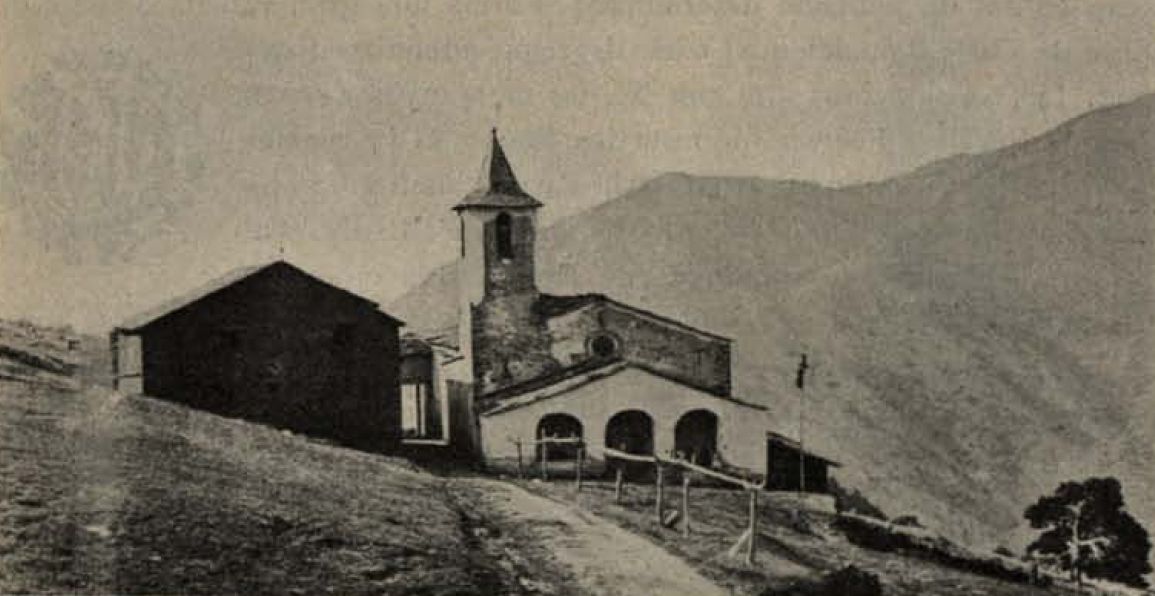
Sant Julià de Solanell is the former parish church of Solanell, a now-abandoned hamlet in the municipality of Montferrer i Castellbò, in the Alt Urgell region of Catalonia, Spain. Although no longer used for worship, it is listed in Catalonia's Inventory of Architectural Heritage as an example of rural Romanesque church-building in the eastern Pyrenees.
How do you get there?
The church sits within the municipality of Montferrer i Castellbò, a short drive from La Seu d'Urgell, the main town of Alt Urgell. Access is via local roads leading toward the hamlet of Solanell; the final stretch is a narrow approach road best covered on foot or by car at a slow pace. The site's coordinates (roughly 42.4129, 1.34432) work fine for GPS navigation, though it's worth checking road conditions beforehand since the route runs through mountain terrain.
What will you see?
The building follows a single-nave plan, oriented toward the north and closed by a flat apse. The nave is covered by a barrel vault with lunettes, split into two sections by a pair of transverse arches. Four side chapels open off the nave — two on each side — each entered through a semicircular arch. The interior walls are plastered, while the exterior is left in exposed stone, creating a contrast between the rough outer face and the smoother inside.
The most distinctive feature is the bell tower, set at the southwest corner of the building. It rises in two stages: a square lower section and an octagonal upper section, capped by a pyramidal slate roof. This two-tier tower design is characteristic of Romanesque churches built across this stretch of the Pyrenees.
What is the history behind it?
The place name Solanell already appears in documents from 941, and the church dedicated to Saint Julian is recorded roughly thirty years later. The parish of Solanello is also named in the consecration act of the Cathedral of La Seu d'Urgell, one of the key documents mapping the region's parish network in the early Middle Ages. That places the settlement and its church as an organized ecclesiastical unit as far back as the 10th century.
Over time the hamlet of Solanell declined and the church fell out of use as a place of worship. Today the building stands abandoned, but its architectural layout — the nave with its chapels, the barrel vault, and the tower — remains largely legible, which is why it earned a place on Catalonia's heritage inventory.
When should you visit?
Given the mountain setting, spring, summer, and early autumn are the best times to visit, when access roads are in good condition and temperatures suit walking around the area. In winter, the site can be harder to reach because of snow and the cold typical of the high valleys of Alt Urgell.
Frequently asked questions
Is Sant Julià de Solanell open to visitors? The building is abandoned and no longer used for services, but it can be viewed from the outside while walking around the hamlet of Solanell.
What makes the church's architecture distinctive? Mainly its two-tier bell tower (a square base topped by an octagonal upper level) and its four side chapels reached through semicircular arches — an unusual feature for a small rural church in the region.
How old is the church? Records date back to the 10th century: the place name Solanell is documented in 941, and the church itself appears in records roughly thirty years later.
Are there other nearby sites worth visiting? The Montferrer i Castellbò area and the wider Alt Urgell valley have several similar rural Romanesque churches, and the Cathedral of La Seu d'Urgell — mentioned in historical records alongside Solanell — is not far away.
Nearby places

Earn badges for the places you visit
Download NextOnTrip, discover new places and check off your trails.