About this place
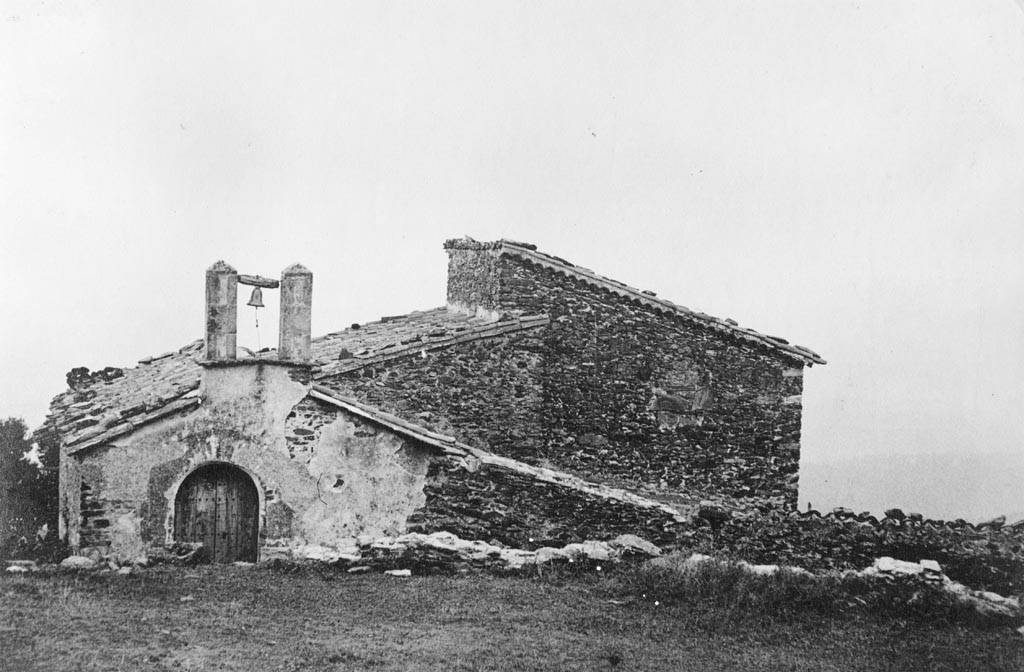
Sant Joan de Cavallar is a small pre-Romanesque chapel in the municipality of Sant Pere de Vilamajor, in the Vallès Oriental region of Catalonia, at the foot of the Montseny massif. Though it now stands in ruins, it ranks among the oldest surviving religious buildings in this part of Catalonia and is a notable reference point for anyone interested in early medieval architecture.
Where is the chapel located?
The building sits at roughly 569 metres above sea level, near the site of the former farmhouse Can Nadal, in the Santa Susanna area of Sant Pere de Vilamajor. It lies within the Refugis del Montseny holiday settlement, surrounded by woodland and hiking paths that lead further into the Montseny massif. Both driving and walking access are relatively straightforward, though the chapel itself sits on private land.
Where does the name come from, and what is its history?
The name "Cavallar" already appears in mid-10th-century records — in the 950 property survey (polyptych) of Vilamajor, where it designated the surrounding land. The chapel, dedicated to Saint John the Evangelist, originally stood as an annex to the old farmhouse known as mas Cavallar, from which the later Can Nadal estate developed. It resurfaces repeatedly in ecclesiastical and notarial documents across the Middle Ages, with mentions recorded in, among others, the 11th, 13th and 14th centuries.
Its architectural features — herringbone-pattern masonry (opus spicatum), a rectangular nave with a narrower, square apse, and a barrel-vaulted sanctuary built with irregularly placed voussoirs — allow architectural historians to date the structure to the pre-Romanesque period, most likely the first half of the 10th century. These traits make it one of the oldest surviving religious buildings identified in the Vallès area.
What happened to the chapel afterward?
The building was rebuilt more than once, first in 1610 and again during the 20th century. The most significant intervention came in 1975, when it was converted for use as a restaurant; a small arched bell tower was added at the time but has since disappeared. In 1983, a 16th-century plateresque altarpiece was stolen from inside.
What condition is the chapel in today?
Its state of preservation today is very poor: the roof has collapsed, and the building stands abandoned and exposed to vandalism. It remains privately owned and currently serves no function. Even so, it is listed in the municipality's heritage catalogue (the 2011 POUM plan), with a 30-metre archaeological protection zone around it.
What should visitors know before going?
Sant Joan de Cavallar is a point of interest for history and architecture enthusiasts rather than a conventional tourist attraction — there is no ticket office, no marked visitor route, and no guaranteed access to the interior. It's worth pairing a visit with a walk along the surrounding Montseny trails, for instance toward Santa Susanna or deeper into the massif. Because "Sant Joan" is an extremely common dedication across Catalonia, it's worth double-checking that any information found refers specifically to this chapel in Sant Pere de Vilamajor, rather than to a different building sharing the name (such as Sant Joan de Vilamajor or Sant Joan de Vilatorrada).
Frequently Asked Questions
Can visitors enter Sant Joan de Cavallar? The chapel is privately owned and structurally unsound, with a collapsed roof, so there is no regular organised access to the interior. It can, however, be viewed from the outside by anyone passing through the area.
How old is the chapel? Its architectural features point to the pre-Romanesque period, most likely the first half of the 10th century, although the place name itself is documented as early as 950 and the chapel appears in church records across several later centuries.
How do you get there? It stands near the former Can Nadal farmhouse, in the Santa Susanna district of Sant Pere de Vilamajor, at around 569 metres above sea level, within the Refugis del Montseny recreational area. Access is relatively easy, though it's best to plan the route using local Montseny trail maps.
Nearby places

Earn badges for the places you visit
Download NextOnTrip, discover new places and check off your trails.