About this place
Sant Muç de Cànoves is a Romanesque church standing in the municipality of Cànoves i Samalús, in the Vallès Oriental region near Barcelona. This modest parish building holds more than nine centuries of history — from its first documented mention in a testamentary bequest of 1077, through successive rebuilding phases, to the layered structure visitors see today.
What will you see on site?
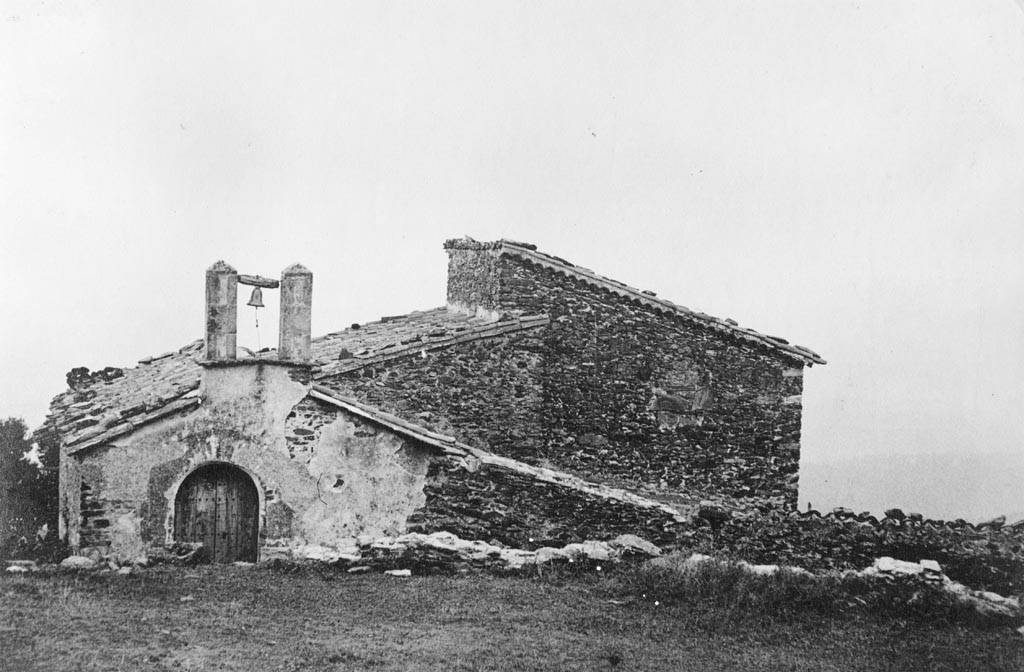
The core of the church is a Romanesque body dating from the 12th century, later extended with four side chapels — two on each side of the nave. The semicircular apse is covered by a barrel vault resting on the older Romanesque structure. From the original design, two apse windows with double splaying survive, along with a portal featuring an archivolt typical of 13th-century work — these elements are the clearest trace of the building's medieval origins.
Later centuries left a visible mark on the church's shape. In the 16th and 17th centuries it was enlarged with additional side chapels and reinforced for defensive purposes, with a massive tower-like entrance added to the main façade. The bell tower was finished in 1629, the southern section in 1643, and the apse was reworked again in 1757. The result is a building that stacks layers from different eras in a single structure — Romanesque foundations, Gothic-era details, and Baroque reinforcements.
How to get there?
The church sits at the heart of Cànoves i Samalús, in the Vallès Oriental region, roughly 40 km north of Barcelona. The most convenient way to arrive is by car, using local roads that connect Vallès Oriental with neighboring towns — the surrounding area is rural, so having your own transport is recommended. It makes a good stop on a longer route exploring the region's Romanesque heritage.
When to visit?
Spring and autumn are the best times to visit, when temperatures across Vallès Oriental are mild and the surrounding hills look their most scenic. Summer midday heat can be intense, so mornings or late afternoons are a better choice during that season. The church still functions as an active parish, so opening hours for visitors may be limited — it's worth checking locally or with the municipality before arriving.
What should you know before visiting?
Sant Muç de Cànoves is a destination for those interested in Romanesque architecture and local history, rather than a heavily developed tourist attraction. It's best approached with that expectation — a small-scale sacred building whose value lies in its authenticity and historical layers rather than in grandeur.
Frequently asked questions
How old is the church of Sant Muç de Cànoves? The parish is first recorded in 1077, and the surviving Romanesque core dates from the 12th century. Other elements, such as the portal and apse windows, are dated to the 13th century.
Has the building kept its original appearance? Not entirely. The original Romanesque core survives, but the church was repeatedly extended and reinforced between the 16th and 18th centuries, which is visible in its mix of architectural styles.
What is the most valuable architectural feature? The Romanesque apse with its barrel vault, the two double-splayed windows, and the archivolt portal are the clearest surviving traces of the original 12th-century building.
Is it worth combining this visit with other sights in the region? Yes — Vallès Oriental has many small Romanesque churches and heritage sites, so Sant Muç de Cànoves fits well into a route focused on the region's religious architecture.
Nearby places

Earn badges for the places you visit
Download NextOnTrip, discover new places and check off your trails.