About this place
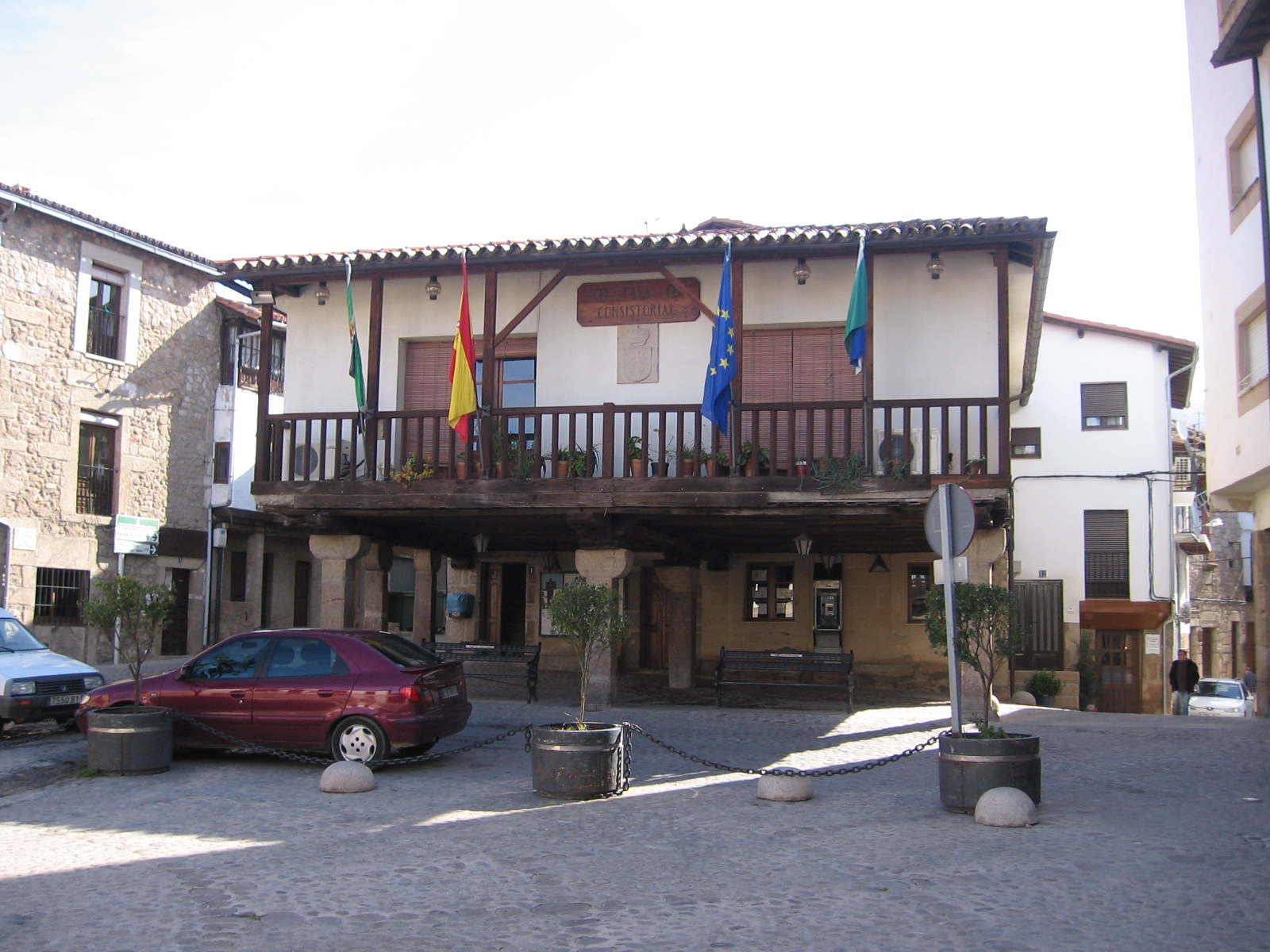
San Martín de Trevejo's town hall sits right at the heart of one of the best-preserved villages in the Sierra de Gata, in the province of Cáceres, Extremadura. The building faces the Plaza Mayor, an arcaded square built around a stone trough, or pilón, that has served as the village's social hub for centuries.
Where exactly is it located?
San Martín de Trevejo lies less than 20 km from the Portuguese border, within the Sierra de Gata comarca. The town hall stands on the main square, surrounded by the timber-and-adobe houses typical of this corner of Extremadura, among which a few old mansions stand out, including the Palacio del Comendador and the Palacio de Ojesto. This part of the village, together with its network of narrow lanes where spring water sometimes runs along the street, has been declared a Bien de Interés Cultural under the Conjunto Histórico category, meaning the whole historic quarter is protected as a single ensemble.
What's worth seeing near the town hall?
The square itself is the natural starting point for a walk through the village. Its arcades offer shade during the hot months and draw the eye toward the central pilón, a traditional watering trough that has doubled as a meeting spot for residents for generations. A short walk away stands the parish church of San Martín de Tours, a three-nave building that houses three panels painted by Luis de Morales, a 16th-century painter from Badajoz known as "El Divino." It's also worth reaching the former San Miguel convent, a 15th-century building — the only one of its kind still standing intact across the whole Sierra de Gata — which today operates as the region's tourism-run guesthouse.
What makes this place distinctive?
San Martín de Trevejo is one of only three villages in the Sierra de Gata — alongside Eljas and Valverde del Fresno — where a language called "a fala" is still spoken, a variety descended from a blend of Leonese and Galician-Portuguese. The local strand is known as mañegu, and it can still be heard around the town hall square, at markets, and during village festivities. It's a living piece of heritage that sets a visit here apart from touring a typical Extremaduran town: the architecture and the language together shape an identity found nowhere else in Spain.
How do you get there, and when should you visit?
Driving is the most practical option, with Coria as the nearest larger town before regional roads lead into the Sierra de Gata. Spring and early autumn are the best times to walk the historic quarter, since temperatures stay mild and fruit trees in bloom add extra colour to the surrounding landscape. Summers in Extremadura can turn very hot, so mornings are the better window for exploring, when the square's arcades still offer plenty of shade.
What else is nearby?
The wider Sierra de Gata is dotted with similar stone-built villages — Eljas, Valverde del Fresno and Gata are all just a short drive apart, making it easy to combine several stops in a single day. The comarca is also known for its olive oil and honey production, and hiking and cycling routes run through the hills surrounding the valley.
Frequently asked questions
Can you go inside the town hall? It's an active municipal administration building, so interior access is limited to office hours and official business — visitors mainly see it from the outside, standing in the Plaza Mayor.
How long does it take to see the area around the town hall? The square and the nearby lanes of the old quarter can be covered in 30–45 minutes, but allow 2–3 hours if you also want to visit the parish church and stroll through the wider historic centre.
Is Portuguese spoken in San Martín de Trevejo? Not exactly — the local language is "a fala," specifically its mañegu variety, formed from a mix of Leonese and Galician-Portuguese. It's a distinct, living dialect rather than standard Portuguese.
Is it worth pairing this visit with other Sierra de Gata villages? Yes — distances between the comarca's villages are short, and each has its own architectural character, which is why a day trip covering several of them is a popular way to explore the region.
Nearby places

Earn badges for the places you visit
Download NextOnTrip, discover new places and check off your trails.