About this place
Castillo de Trevejo is a medieval fortress overlooking the village that shares its name, part of the municipality of Villamiel in the province of Cáceres, deep in the Sierra de Gata. Its stone keep and broken walls sit on a rocky outcrop above a cluster of slate-and-tile roofs, with the folded hills of the Spanish-Portuguese border stretching beyond.
Where does the castle come from?
The site was defensively important long before the current structure was built — an earlier Muslim stronghold once stood here and formed the basis for later construction. After Alfonso VII of León reclaimed the area, the fortress was handed to the Knights Templar. In 1184, King Ferdinand II of León transferred it to the Order of St. John of Jerusalem, and just two years later to the Order of Santiago. Later still, it passed under the administration of the Order of Alcántara. This rapid succession of military orders reflects how strategically valuable the location was, sitting on the old frontier route between Castile and Portugal.
What survives today?
The castle never made it to modern times intact. During the Peninsular War against Napoleon's troops, it was deliberately demolished so Spanish guerrilla fighters couldn't use it as a hideout. What remains is a ruin — a standing keep (torre del homenaje) and an irregular, multi-angled wall circuit with two defensive lines, characteristic of the complex fortified architecture found across this border region.
What else is worth seeing beyond the castle itself?
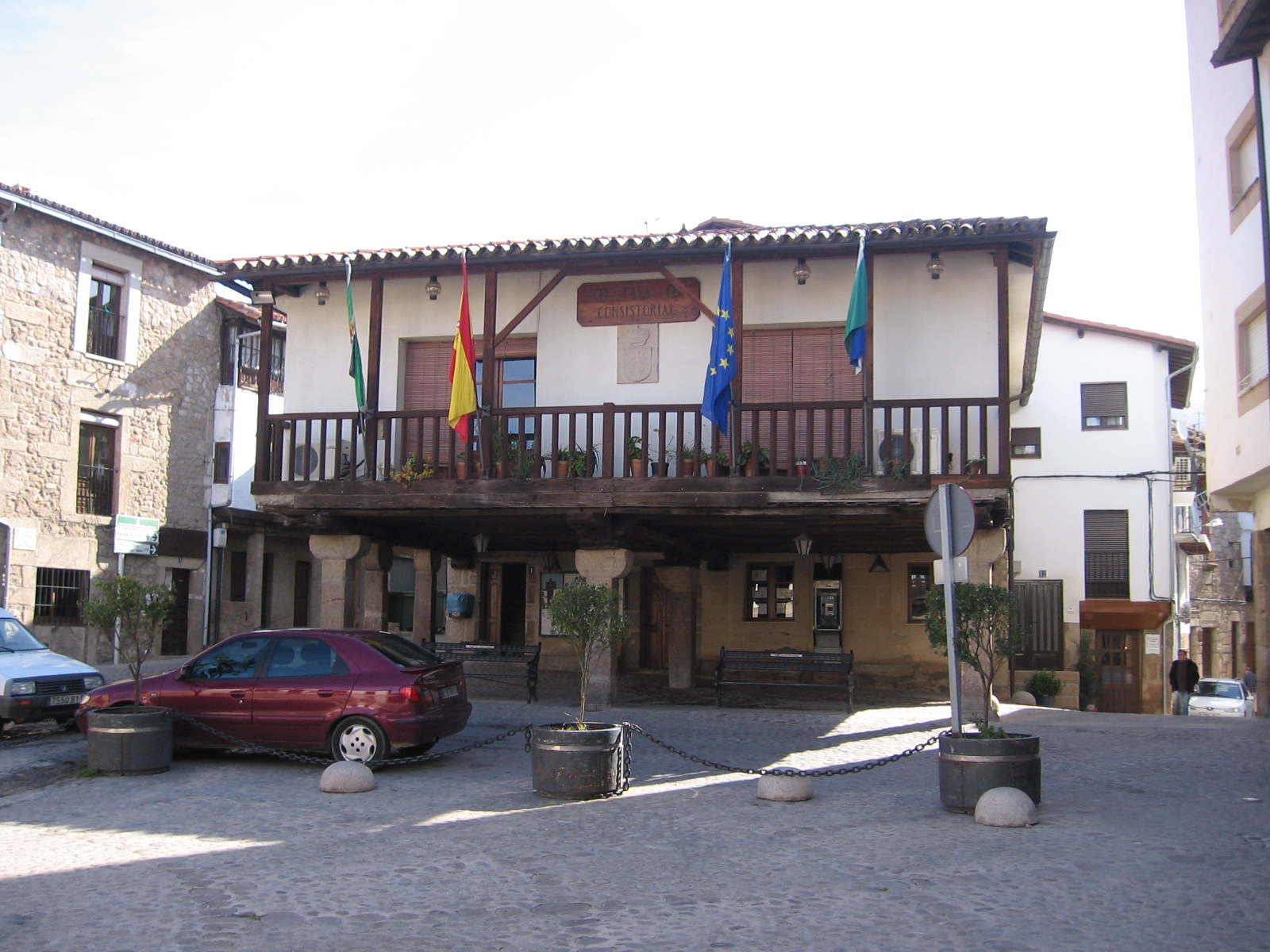
Trevejo isn't just the ruins — the whole medieval settlement has been recognized as a site of touristic interest. At the foot of the castle, next to the parish church, sit a set of mysterious anthropomorphic graves carved directly into the rock; local tradition holds that they once held the bodies of warrior-monks tied to the fortress. The village itself is a tight cluster of granite houses under Arabic-style tile roofs, largely unchanged since the 12th century — wandering its narrow lanes is an attraction in its own right.
How do you get there?
Trevejo sits within the municipality of Villamiel, Cáceres province, in Extremadura, close to the Portuguese border. The easiest way in is by car along the local roads of the Sierra de Gata — the mountainous terrain and tight switchbacks make it a slow drive, but one rewarded with views over terraced olive groves and river valleys. The castle stands on a rise above the village; from the nearest parking spot it's a short but steep walk up.
When should you visit?
Spring and autumn are the best seasons, since Extremadura's summer heat can be brutal while the Sierra de Gata's landscape turns especially vivid in the shoulder seasons. Because the ruins sit exposed on a hilltop, it's worth avoiding days with strong wind or rain — the ground around the walls can get slippery.
Frequently asked questions
Is entry to Trevejo castle free? Yes, the ruins are open to the public with no admission fee — they're an open site forming part of the village's historic layout.
How long does a visit take? The castle and viewpoint alone take around 30–45 minutes, but plan for 1.5–2 hours if you also want to walk through the village and see the anthropomorphic graves by the church.
Can you reach Trevejo without a car? Public transport to Trevejo is very limited given its remote mountain location — a private or rental car is by far the most practical option.
Why is the castle in ruins? It was deliberately destroyed during the war against Napoleon's forces in the early 19th century to prevent Spanish guerrillas from using it as a refuge.
Nearby places

Earn badges for the places you visit
Download NextOnTrip, discover new places and check off your trails.