About this place
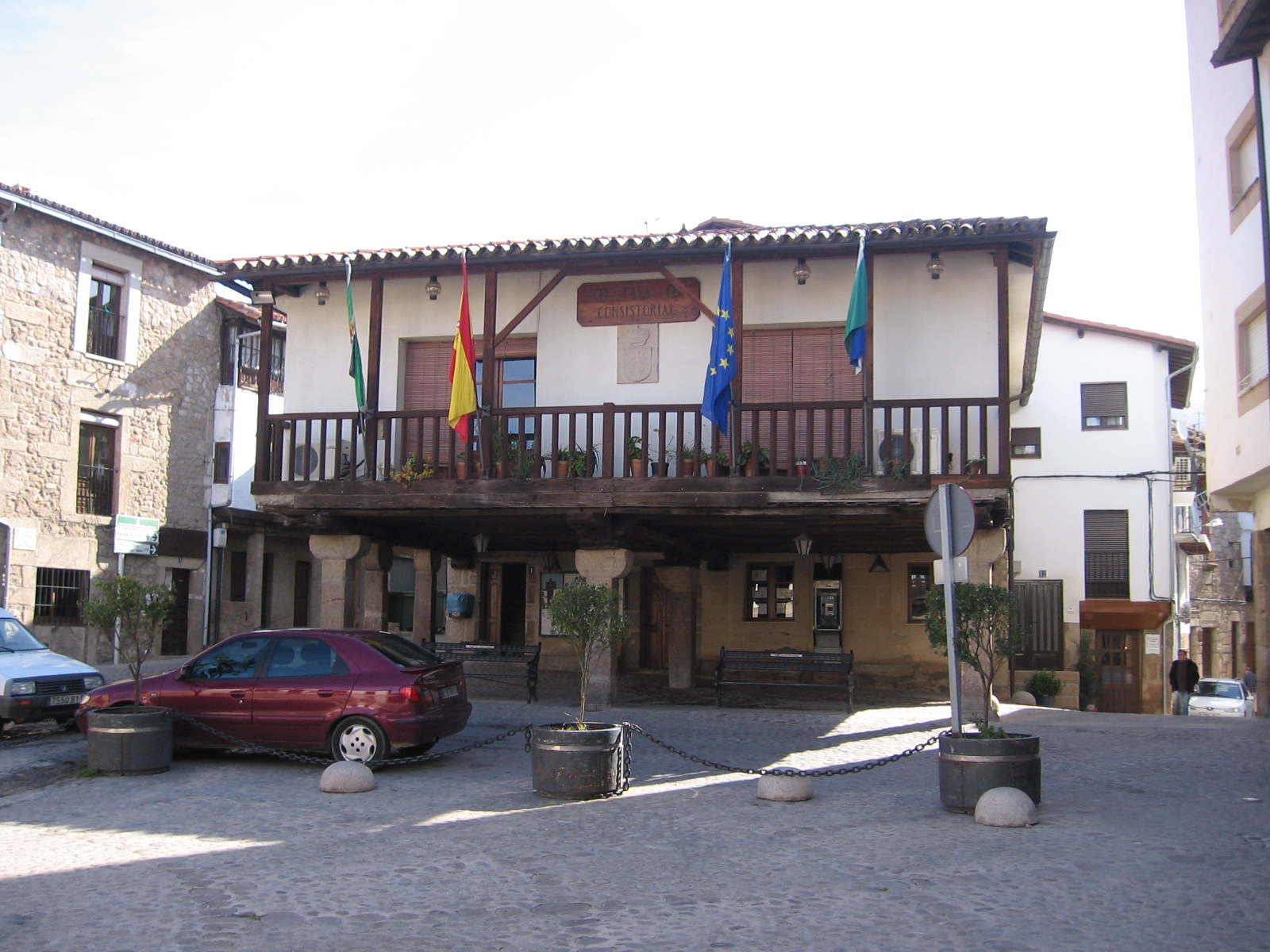
El Payo town hall is the small municipal building at the heart of El Payo, a village in the province of Salamanca, in the region of Castile and León, Spain. It serves as the administrative center of one of the smallest and most remote municipalities in the province, tucked right against the Portuguese border.
Where is El Payo located?
The village belongs to the El Rebollar area near Ciudad Rodrigo, roughly 135 km from Salamanca, the provincial capital. The municipality covers two settlements, El Payo itself and Villar de Flores, spread across barely 62 square kilometres. This is border country: stone-built hamlets, cork oaks and chestnut groves, with the wild Serra da Malcata rising just across the frontier in Portugal — one of the last strongholds of the Iberian wolf.
How do you get there?
The easiest way to reach El Payo is by car, following the local roads that branch off from Ciudad Rodrigo toward the Portuguese border. The town hall itself sits on Calle Los Caños, right in the village centre, easy to spot thanks to its modest façade bearing the municipal coat of arms and an information plaque. Given the distance from larger towns and the limited tourist infrastructure, it is worth allowing extra travel time and checking the office's opening hours in advance if the visit involves any administrative business.
What will you find on site?
El Payo is a classic, tiny El Rebollar village: stone houses, narrow lanes, and a stillness rarely found closer to the region's larger towns. The town hall is not a monumental sight in itself but rather a landmark for anyone passing through this quiet corner of Salamanca — the place where the municipality's administrative life is concentrated, in a community whose roots trace back to the medieval resettlement of these lands under the kings of León. The village has no bars or restaurants, so visitors should bring their own water and food, especially if planning a longer stay in the area. The real draw is the surrounding countryside: the El Rebollar hills offer walking routes through chestnut forests and granite outcrops, with views toward the Malcata range on the border.
When is the best time to visit?
Spring and autumn bring the most comfortable conditions, with mild temperatures and the surrounding hills either lush green or dressed in the russet tones of the chestnut trees. Summers can turn quite hot, while winters are cold and often misty — though that gives the village an atmospheric, secluded character some visitors specifically seek out. Town hall opening hours are limited, as is typical for a small rural municipality, so calling ahead before a visit is a sensible precaution.
Frequently asked questions
Can tourists visit El Payo's town hall? The building is an administrative office, so access inside is limited to office hours. The village itself and its surroundings, however, are freely accessible year-round.
How big is the municipality of El Payo? The whole municipal area, covering El Payo and Villar de Flores, spans just under 62 square kilometres, making it one of the least populated municipalities in Salamanca province.
Are there places to eat or stay nearby? The village has no bars or restaurants, so it is best to plan accommodation and meals in larger towns of the El Rebollar area, such as Ciudad Rodrigo.
What else is worth seeing nearby? The proximity to the Portuguese border and the Serra da Malcata makes El Payo a good base for nature lovers and hikers exploring this sparsely populated but scenic frontier landscape.
Nearby places

Earn badges for the places you visit
Download NextOnTrip, discover new places and check off your trails.