About this place
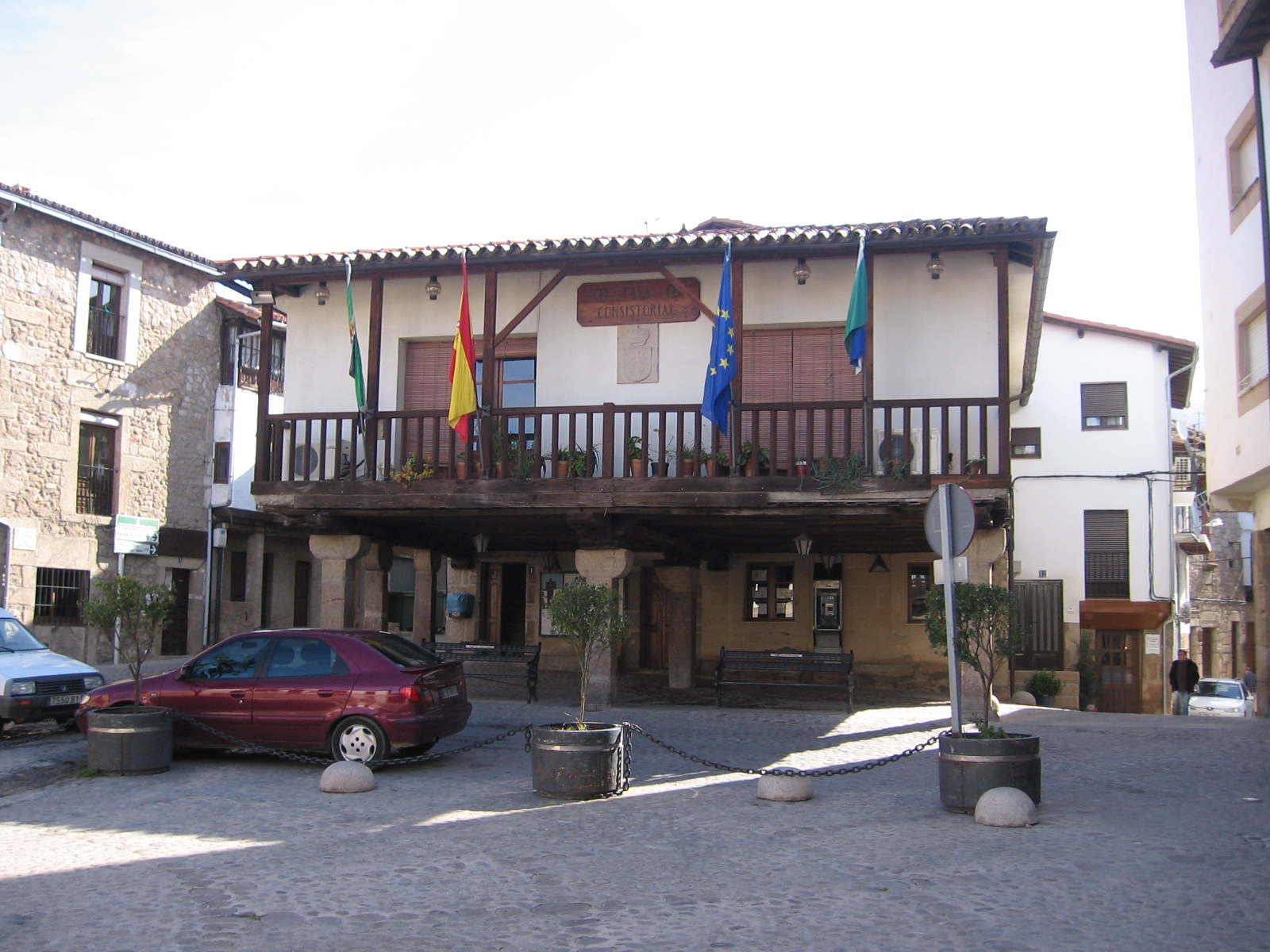
Eljas town hall sits on Plaza de la Constitución, right at the heart of this small village in the Sierra de Gata mountains, in the far northwest of Cáceres province near the Portuguese border. It's a working municipal building rather than a monument in its own right, but its position makes it a useful landmark for anyone exploring the old quarter, since the same square also holds a medieval castle and the parish church.
Where exactly is it?
The town hall stands at Plaza de la Constitución 1, immediately next to the castle raised in the 14th century by the Order of Alcántara. That fortress — of which two towers and stretches of the walls survive today — originally defined the historic core of the settlement, and the current seat of local government grew up around it over the centuries. Because of this central position, the building is easy to find on foot from anywhere in the old town.
What's worth knowing about Eljas itself?
Eljas traces its origins back to Roman times, when the settlement is said to have been called Ergastulum. Its real turning point came in the mid-14th century, when the Order of Alcántara took control of the area and built the castle to defend the frontier during the wars with Portugal. The village is also one of only three places in the region where "a fala" is still spoken — a Romance language rooted in Galician-Portuguese with Leonese influences. That linguistic detail alone makes Eljas an interesting stop for travelers curious about the Iberian Peninsula's cultural patchwork, not just its architecture.
What can you see around the town hall?
The square in front of the town hall is a natural starting point for a walk through the village. A few steps away stands the castle, protected as a site of historic and artistic value, and close by is the church of Nuestra Señora de la Asunción, built between the 15th and 16th centuries. Smaller chapels — the Ermita de la Divina Pastora and the Ermita de San Cristo — are scattered around the surrounding countryside. For travelers who prefer to be outdoors, Eljas is also a good base for hiking and horseback routes, including the Camino del Puerto trail that heads toward Salamanca.
When is the best time to visit?
The most distinctive time to come is the first Saturday of November, when Eljas holds its chestnut festival, locally known as "Borrallás." The event also carries a symbolic dimension, marking the village's twinning with Os Foios, a Portuguese village just across the border. Outside of that date, spring and early autumn are good choices, since temperatures in the Sierra de Gata make both village walking and longer mountain routes more comfortable.
How do you get to Eljas?
The village sits in a remote, mountainous corner of Cáceres province, so travelling by car is the most practical option. Plasencia and Coria are the nearest larger towns, with local roads connecting from there into the Sierra de Gata. Once in the village, the town hall's central spot on the main square makes it simple to reach on foot from wherever you're staying.
Frequently asked questions
Can you go inside Eljas town hall as a visitor? It's an active local government building, so public access is generally limited to office hours and administrative business rather than sightseeing — it's best appreciated from outside as part of the square's layout.
What's the main attraction in Eljas itself? The 14th-century castle on the same square as the town hall, followed closely by the church of Nuestra Señora de la Asunción just nearby.
Is a different language spoken in Eljas besides Spanish? Yes — some residents still speak "a fala," a local Romance language with Galician-Portuguese roots, which is unusual for the wider region.
What's the best way to plan a visit to Eljas? Pair it with a look at neighboring villages in the Sierra de Gata, and if your dates allow, time it around the November chestnut festival, which shows off local traditions best.
Nearby places

Earn badges for the places you visit
Download NextOnTrip, discover new places and check off your trails.