About this place
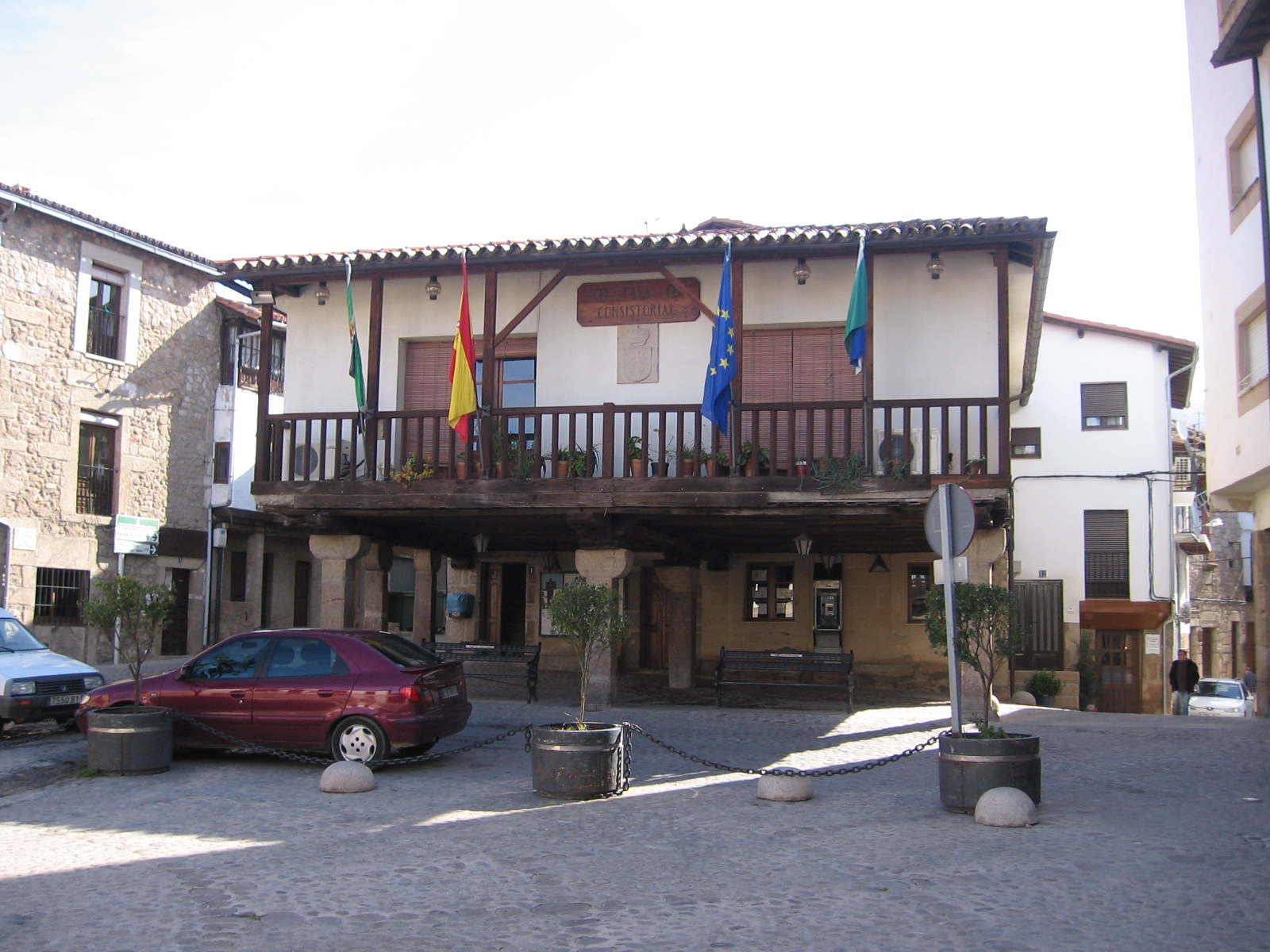
Navasfrías town hall sits at the heart of a small village in the far southwest of Salamanca province, right against the Portuguese border.
Where exactly is it?
The building stands on Plaza Mayor 1, the main square of Navasfrías, a village of just over 360 residents that belongs to the Ciudad Rodrigo comarca and the smaller El Rebollar area. This is one of those corners of Castile and León where everyday life still revolves around the square, the church, and the town hall, with the nearest larger towns a good drive away along winding mountain roads.
What's the building itself like?
The town hall is a working administrative building — home to the mayor's office and the local council. It isn't a grand historical monument, but rather a straightforward example of small-town civic architecture typical of the El Rebollar area: modest, functional, and blended into the main square's row of houses. For visitors, it works well as a starting landmark, since the streets worth exploring all branch out from this square.
Why does Navasfrías matter historically?
The area's roots trace back to the Order of Alcántara, which once held administrative and military sway here. For centuries the local economy also leaned on smuggling — the nearby Portuguese border and rugged terrain made informal cross-border trade easy — and later on wolfram mining, a strategic mineral especially sought after in the 20th century. Keeping these three threads in mind — the military order's legacy, the smuggling folklore, and the mining past — helps explain the character of the place far better than the buildings alone.
Another distinctive trait of Navasfrías is its local speech, a variant of the Leonese dialect that has survived here more vividly than in many neighboring villages. That's part of why linguists and ethnographers occasionally make the trip out to this remote corner of Spain.
What is there to see nearby?
Navasfrías lies within the protected El Rebollar area, which links up with the Sierra de Malcata nature reserve on the Portuguese side. That cross-border connection makes the surroundings appealing for hikers and nature watchers alike — cork oaks, rocky hillsides, and quiet valleys define a landscape typical of the Spanish-Portuguese frontier. Traces of old wolfram workings can also be found nearby, a reminder of the municipality's mining past.
How do you get there, and when's the best time to visit?
A car is really the only practical way in — Navasfrías has no train connection, and the nearest sizeable town, Ciudad Rodrigo, is roughly a 40-minute drive away. Local roads are winding but well maintained. Spring and early autumn are the best seasons to come, when temperatures in this part of Salamanca are mild and the trails through El Rebollar look their best — green in spring, golden in autumn.
Frequently asked questions
Can you go inside the town hall? It's a working administrative office, so access is limited to opening hours. If seeing the interior matters to you rather than just the building's facade from the square, it's worth checking current hours before setting off.
Is there anywhere to eat or stay in Navasfrías? The village is small, but it has a handful of rural guesthouses and a few places to eat local dishes, making it a reasonable base for exploring the El Rebollar countryside.
How long does it take to see the village itself? A relaxed walk around the main square and the surrounding streets takes about 30 to 60 minutes. Allow extra time if you're planning to head out into the El Rebollar trails afterward.
Is it worth combining with a trip into Portugal? Yes — the border is close, and the shared protected area with Sierra de Malcata means many visitors pair a stop in Navasfrías with a short excursion across into Portugal.
Nearby places

Earn badges for the places you visit
Download NextOnTrip, discover new places and check off your trails.