About this place
Rootmolen is a historic watermill on the Mombeek river in Vliermaalroot, a village within the municipality of Kortessem in Belgium's Limburg province. It stands as the last still-operational mill among a dozen or so that once lined the Mombeek — a stream whose very name derives from "Molenbeek," meaning "mill stream," a clear echo of how densely this waterway was once put to use.
How far back does its history go?
Evidence of a watermill at Vliermaalroot stretches back to the 13th century. The oldest surviving document referencing the mill dates from 1284 and describes it as a feudal mill, held under the authority of a local lord. From the early 14th century until the late 18th century, the building was known as the Vranckenmolen, a name tied to one of its former owners, Franco van Rendelborne. Only later did it come to be known by the name Rootmolen, which it still carries today.
How did the mill work, and what was it used for?
Rootmolen is an undershot watermill (onderslagmolen in Dutch), meaning its wheel was driven by water striking the lower part of the wheel rather than falling onto it from above. For centuries the building served as a grain mill, using the flow of the Mombeek to grind grain into flour. This kind of setup was typical of the many mills that once operated along this modest but heavily exploited river in the Haspengouw region.
What happened to the mill in the 20th century?
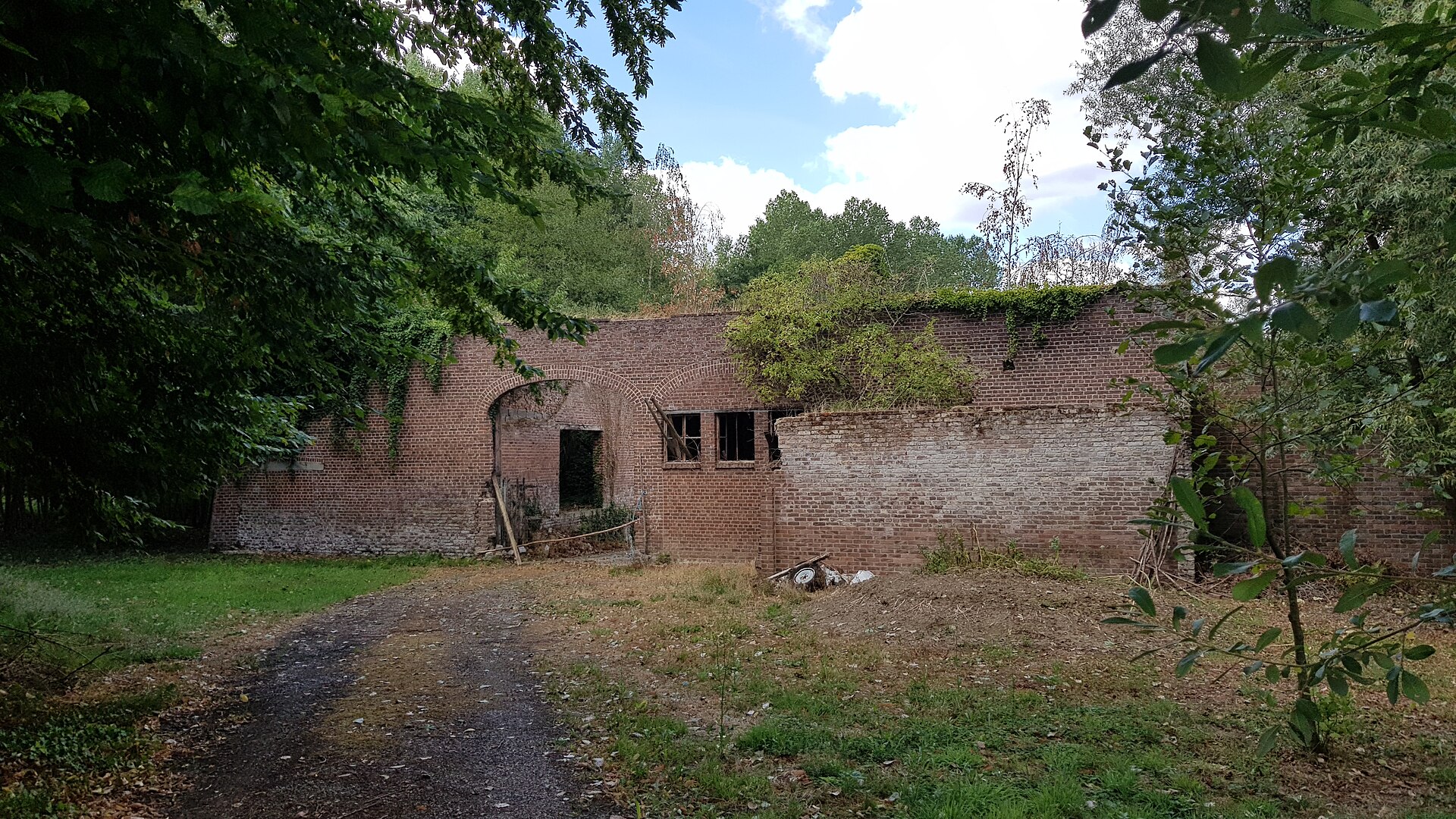
Rootmolen remained active until 1971. After milling operations ceased, the building began to deteriorate, a decline driven both by simple disuse and by acts of vandalism that accelerated the damage. For nearly two decades the mill stood neglected, gradually losing the condition it had maintained for generations.
When and how was it restored?
The turning point came in 1989–1990, when the mill's owner at the time, Ivan Jordens, carried out an expert restoration. The work brought the structure back into working order and rescued it from further decay. Thanks to this effort, Rootmolen survives today as a fully functional historic landmark rather than merely a ruin of the region's once-extensive milling infrastructure.
What makes Rootmolen distinctive today?
Rootmolen is now recognized as the last mill still capable of grinding grain among the dozen or so watermills the Mombeek once powered. The river's own name, echoing "Molenbeek," serves as a lasting reminder of an era when a whole network of watermills lined its course, serving the farms and villages of the surrounding Haspengouw region. Rootmolen stands today as a living trace of that once-dense milling infrastructure.
Where exactly is the mill located?
Rootmolen sits at Herestraat 11 in Vliermaalroot, a small village administratively part of the municipality of Kortessem in Limburg province. Its position directly on the Mombeek is no coincidence — for centuries, the course of this river determined where mills could be built in this part of the region.
Frequently asked questions
Can Rootmolen be visited or stayed in today? The mill building today serves a tourism-related function in Vliermaalroot, forming part of the local offering tied to the region's historic milling heritage.
How long did the mill sit unused before its restoration? Nearly two decades passed between the end of milling operations in 1971 and the restoration carried out in 1989–1990, during which the building fell into disrepair.
Where did the mill's earlier name, Vranckenmolen, come from? The name referred to Franco van Rendelborne, one of the mill's former owners, and was used from the early 14th century until the end of the 18th century.
Nearby places

Earn badges for the places you visit
Download NextOnTrip, discover new places and check off your trails.