About this place
Kasteel Jongenbos is a historic manor house standing in the village of Vliermaalroot, part of the municipality of Kortessem in the Belgian province of Limburg. Despite the word "kasteel" (castle) in its name, the building is in fact a grand neoclassical country residence rather than a fortified structure, set within an extensive park and once at the heart of a substantial rural estate.
Where does the name come from and how old is the site?
The story of this place stretches back long before the current building — records of an estate on this site date to as early as 1380. The Ferraris maps, drawn up in the late 18th century, still show only a farmhouse standing here, at the western edge of a large wooded area known as the Spissen Bosch. That forest is in fact the origin of the estate's name, "Jongenbos" referring to the surrounding woodland that once defined the landscape.
When was the current building constructed?
The building recognisable today only appears on cadastral maps in 1848, and was presumably erected shortly before that date. Its first recorded owner was Willem Joseph Gerard Van der Meer, a man of independent means from nearby Tongeren. It was under his ownership that the older farmstead gave way to a new residence, built in the neoclassical style that still defines the property's appearance.
How has the building's layout changed?
The castle was originally U-shaped, arranged around an open inner courtyard. That changed in 1882, when an extension was added that filled in the courtyard, giving the building a more enclosed, unified footprint. This 19th-century alteration remains one of the most significant changes in the structure's architectural history and still shapes the building's outline today.
Who owned the estate over the generations?
Following Van der Meer's death, the property passed to his daughter, Marie Victoire Alexandrine. In 1822 she married Willem Lodewijk Claes, and it was through this marriage and the resulting inheritance that the old farm building beside the farmstead was ultimately replaced by the new castle. The Claes family therefore played a decisive role in giving the estate the form it retains to this day.
How large was the estate?
Kasteel Jongenbos was never simply a building — from the outset it functioned as the centre of an extensive landed estate. When the current residence was built, the property comprised around 150 hectares of farmland and woodland. The estate continued to grow over the following decades, reaching 218 hectares by 1938, making it one of the larger private landholdings in this part of Limburg.
What can visitors see today?
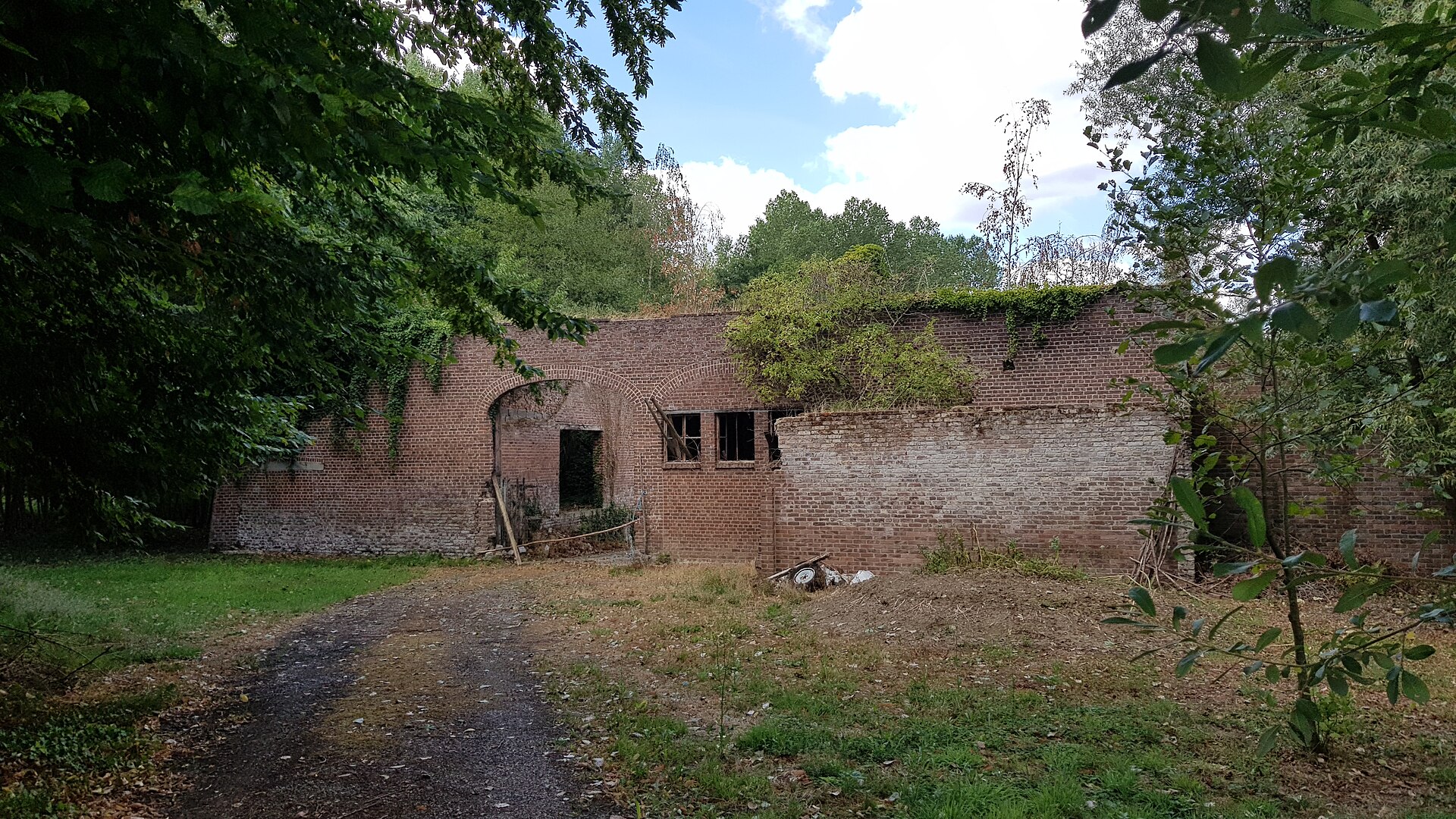
Today, Kasteel Jongenbos, together with its outbuildings and surrounding park, is listed as protected heritage in Belgium's Inventaris Onroerend Erfgoed. Its neoclassical architecture, landscaped grounds and rural setting make it a notable stop for anyone exploring the quiet countryside around Vliermaalroot and the wider municipality of Kortessem.
Frequently asked questions
Is Kasteel Jongenbos an actual fortified castle? No — despite the name, it is a neoclassical country manor house rather than a fortified structure with defensive walls or a moat.
When was the present building built? It first appears on cadastral records in 1848 and was likely constructed shortly beforehand, replacing an older farmhouse on the site.
How large was the surrounding estate? Initially around 150 hectares, later expanded to 218 hectares of farmland and woodland by 1938.
Where exactly is the site located? In the village of Vliermaalroot, part of the municipality of Kortessem in the Belgian province of Limburg.
Nearby places

Earn badges for the places you visit
Download NextOnTrip, discover new places and check off your trails.