About this place
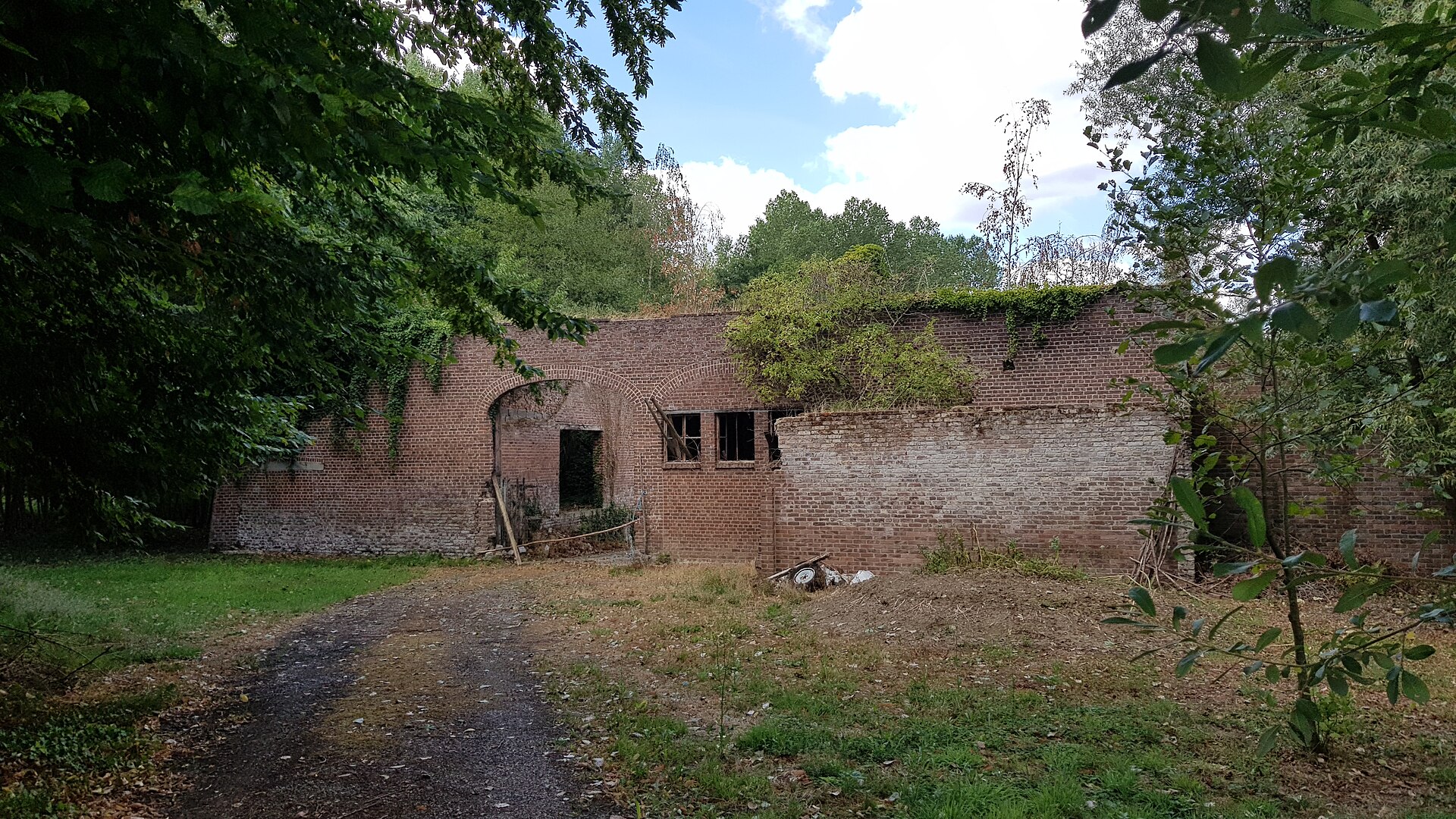
Wintershovenmolen is a former watermill standing on the Mombeek stream, on the northeastern edge of the village of Wintershoven, along Molenstraat. Wintershoven itself belongs administratively to the municipality of Kortessem, in the Belgian province of Limburg. The mill is also known as Coenegrachtsmolen, a name derived from the Coenegracht family, one of its former owner-millers.
What was this mill used for?
Wintershovenmolen operated as a grain mill, powered by an undershot waterwheel driven by the current of the Mombeek. Its purpose was to grind grain for the surrounding farms. The mill belonged to the estate of the Wintershoven jurisdiction and was closely tied to the castle farm of Dessener — a typical arrangement for old feudal mills, which functioned as the economic backbone of a larger landed estate.
How far back does its history go?
The history of milling on this site stretches back at least to the start of the 16th century — the first documented mention of a mill here dates from 1500. Over the following centuries the building was rebuilt and altered several times. A dated stone bearing the year 1775, preserved in a chimney of the older structure, points to a significant rebuild or renovation carried out in that period. The mill was originally built using timber-frame construction, a method typical of rural utility buildings of the era in this region.
What changed in the 20th century?
In 1927 a new oak waterwheel was installed, built by Eugène Asnong of Kuringen, a locality with a strong tradition of millwright craftsmanship. Some years later, in 1934 and again in 1941–1942, the timber-framed walls were replaced with brick, a common modernization step for rural watermills at the time, since brick offered better durability and fire resistance than the older frame construction.
What condition is it in today?
Wintershovenmolen is now in ruins. Despite its dilapidated state, it remains a recognizable piece of the local industrial and rural heritage of the Kortessem region, bearing witness to an economy once built around water-powered grinding. Mills like this one formed the backbone of local food production in Limburg for centuries, before industrial mills and electric grinding equipment took over.
Why does this mill matter?
Even in ruin, Wintershovenmolen illustrates a long continuity of settlement and economic activity in the small village of Wintershoven — from its medieval jurisdictional roots, through early modern rebuilding, to 20th-century modernization. For anyone interested in the history of technology, rural architecture, or the industrial heritage of Flanders, it is one of several well-documented watermills of the Kortessem area, part of a wider network of historic mills along the Mombeek and its tributaries.
Frequently asked questions
Where exactly is Wintershovenmolen located? It stands on the Mombeek stream, on the northeastern edge of the village of Wintershoven, along Molenstraat, within the municipality of Kortessem in the province of Limburg.
What is another name for this mill? Coenegrachtsmolen, named after a former family of millers.
Is the mill still operational? No, it is currently in ruins and no longer functions as a working mill.
How old is the mill? The first recorded mention of a mill on this site dates from 1500, although most of the surviving structure comes from 18th- and 20th-century rebuilds.
Nearby places

Earn badges for the places you visit
Download NextOnTrip, discover new places and check off your trails.