About this place
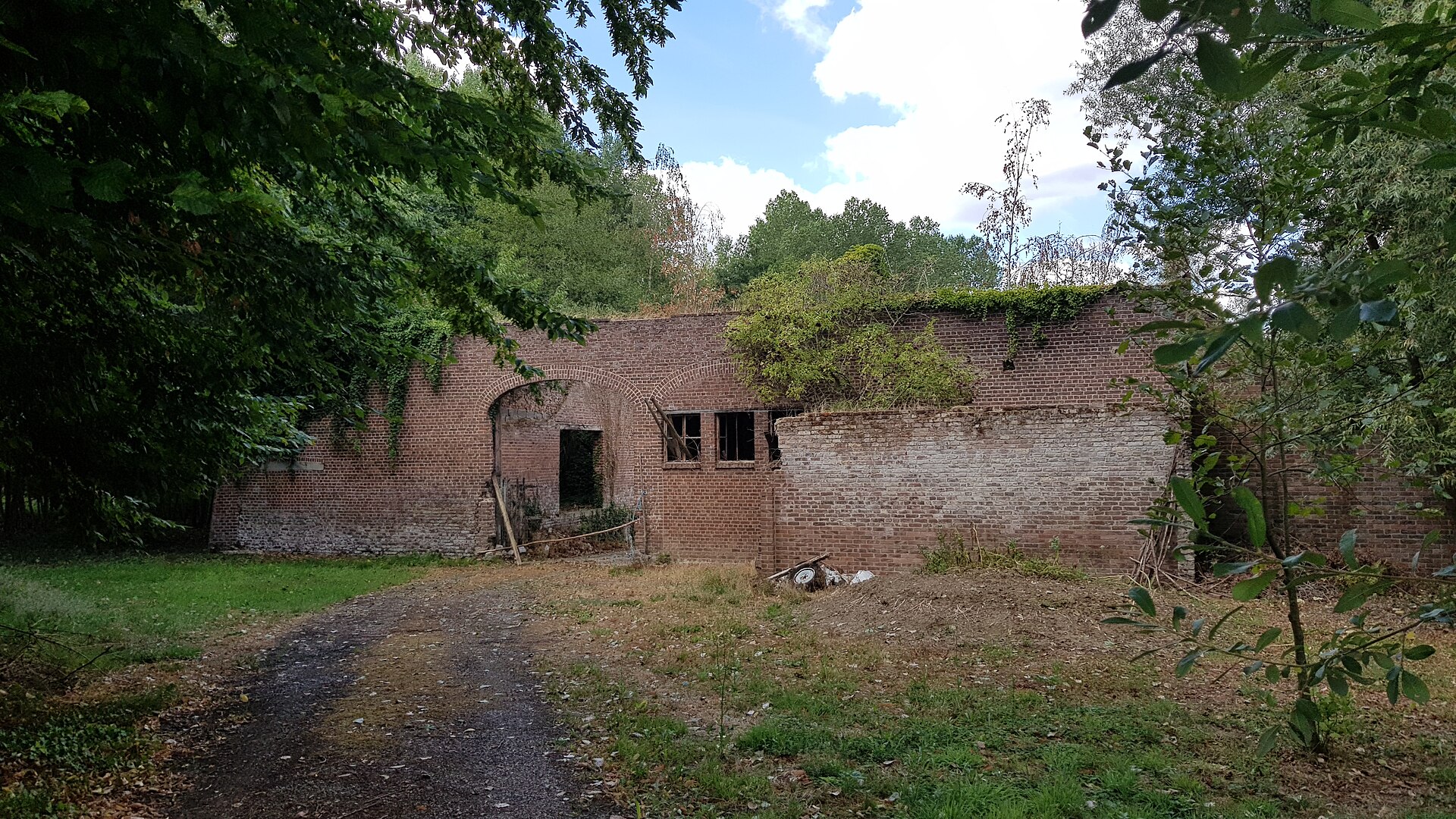
Kasteel Dessener is a castle-and-farmstead complex set in the valley of the Mombeek stream, just northwest of the village of Wintershoven, today part of the municipality of Kortessem in the Belgian province of Limburg. The site combines a stately manor house with a long adjoining farm building, forming the kind of compact estate layout typical of the historic Meuse region.
Where does the name come from and who built the first stronghold here?
The property takes its name from the van Desseneer family, and it was Willem van Desseneer who is credited with erecting the original fortified structure on this spot, back in 1264. That makes the site's roots more than seven centuries old, placing it among the older fortified locations around Wintershoven. Almost nothing of that first building survives above ground today, but a telling trace remains: in the gatehouse of the present, 17th-century castle, on its northeastern side, the curve of the old residential tower's wall can still be made out.
What happened to the castle over the following centuries?
Medieval strongholds in this area rarely had quiet histories, and Dessener was no exception — records describe it being besieged and captured on more than one occasion, a fate shared by many border fortifications in this part of what is now Belgium. A turning point came in 1557, when the estate passed into the hands of the de Lamboy family and became attached to the lordship of Wintershoven. It was this family that eventually gave the property the form still recognizable today.
Who was Willem van Lamboy, and why did he rebuild the castle?
The central figure in the castle's later history is Willem (III) van Lamboy, who became lord of Wintershoven in 1636. He had an unusually accomplished military career, serving as a commander during the Thirty Years' War on the side of the Holy Roman Empire and rising to the rank of field marshal. His achievements earned him first the title of baron and later that of count. In 1639, in keeping with his new standing, he had the old medieval castle converted into a much larger noble residence.
What makes up the estate as it stands today?
The complex visible today dates in its main form from 1640 and consists of a large castle building together with a long outlying farm structure built in the traditional Maas style (Maasstijl) characteristic of the Meuse valley region. Combining a manor house with working farm buildings into a single, unified estate was a common pattern for 17th-century Belgian landed properties, reflecting both defensive origins and an ongoing agricultural function.
Frequently asked questions
Where exactly is Kasteel Dessener located? The castle stands in the Mombeek valley, northwest of Wintershoven, a village belonging to the municipality of Kortessem in the province of Limburg.
How old is the castle? The first stronghold on the site dates to 1264, though the building's current form largely stems from the 1639–1640 reconstruction.
Are there any remains of the original medieval castle? Yes — the gatehouse of the present castle still shows, on its northeastern side, the rounded outline of the former residential tower's wall.
Who is most responsible for the castle's current appearance? Willem van Lamboy, a field marshal and count, who between 1639 and 1640 transformed the medieval stronghold into a large manor house with an attached farmstead in the Maas style.
Nearby places

Earn badges for the places you visit
Download NextOnTrip, discover new places and check off your trails.