About this place
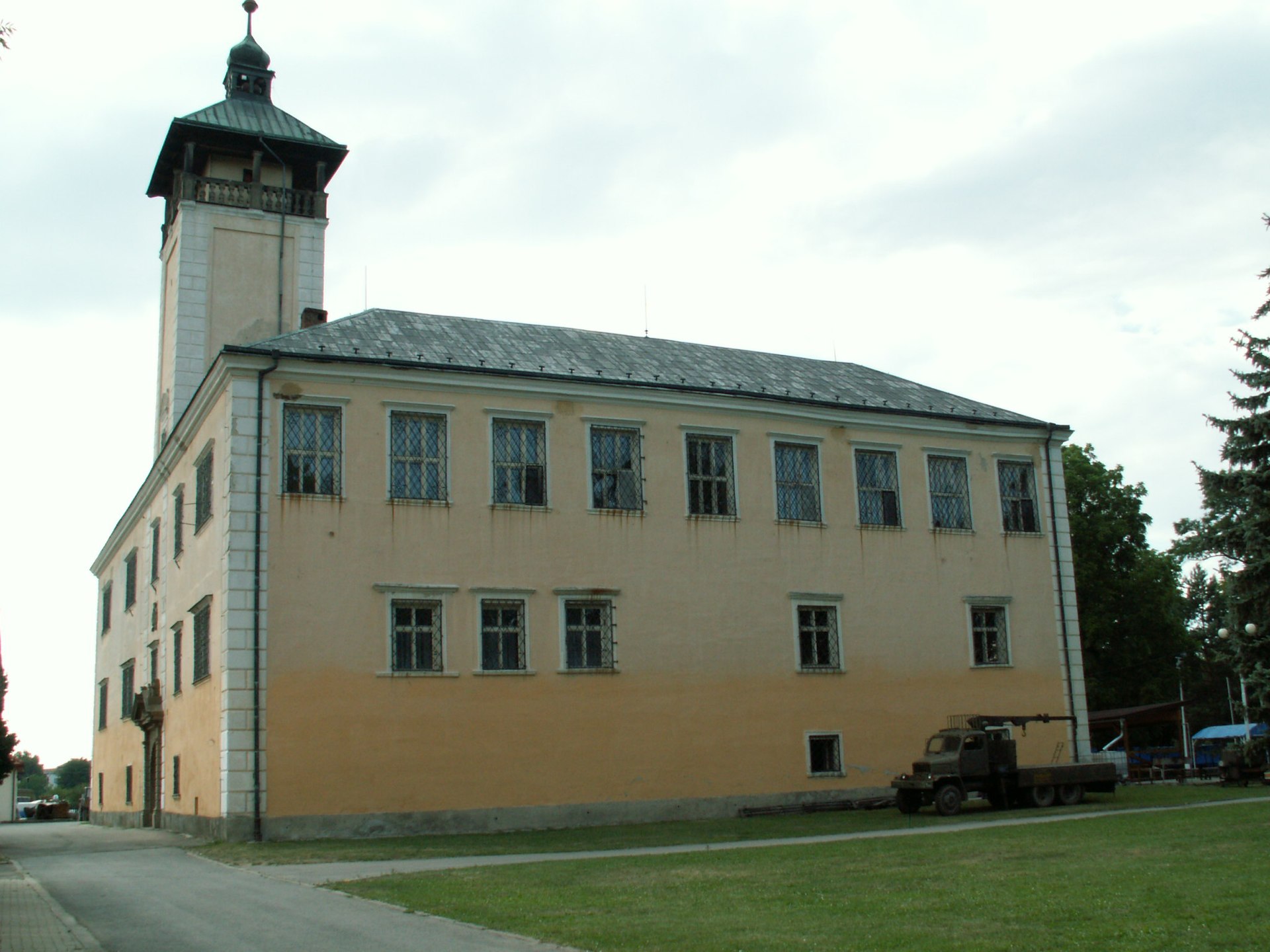
Přestavlky Chateau is a modest baroque residence in Moravia, in the Přerov district of the Czech Republic, a short distance from the town of Přerov itself. It is not a ticketed, heavily promoted tourist attraction — rather a stop for travelers interested in the quieter, lesser-known manor houses of the Czech countryside and the layered history behind them.
What stood here before the chateau?
The current building occupies the site of an earlier Renaissance fortified manor (tvrz), once held by the Říkovský family of Dobrčice. That older structure was most likely damaged during the Thirty Years' War. The last male heir of the Přestavlky branch of the family died in 1653, after which the estate began passing between different owners. In 1683, Count František of Magni purchased Přestavlky from Sidonie Kateřina of Scherfenberg, and it was the Magnis family that would eventually shape the estate into what stands today.
Who actually built the chateau?
It was only after 1760 that František's descendant, Count Antonín Magnis, had a new single-story baroque chateau built on the site of the former fortress. That building forms the core of the structure visible today. The Magnis family also funded a chapel dedicated to the Assumption of the Virgin Mary within the chateau grounds, underlining the residence's dual role as both a family seat and a place of worship.
How did ownership change over time?
The Magnis family held Přestavlky for several decades before selling the chateau in 1837 to Count Vincenc Vetter of Lilie. A more significant shift came in 1863, when the estate was bought by Bedřich Egon, Archbishop of Olomouc and Landgrave of Fürstenberg. He gave the chateau an entirely new purpose, establishing a convent for Ursuline nuns on the premises.
How long did the convent operate?
The Ursuline convent ran continuously within the chateau walls until 1950, when the property was nationalized under the communist regime. The nuns were forced to leave, and the building passed into state hands — a fate shared by many similar estates across Czechoslovakia, often followed by decades of neglect or repurposing unrelated to the original function.
What happened to the chateau after 1989?
The restitution of church property that followed the fall of communism in Czechoslovakia eventually reached Přestavlky as well. In 1998, the chateau was returned to the Archdiocese of Olomouc. It subsequently passed into private ownership, which it retains today. The residence is not set up for regular public tours — it functions primarily as a private property, with its history occasionally covered by regional press describing the fate of lesser-known or underused monuments around Přerov.
What should visitors know before going?
The chateau stands in the village of Přestavlky, within the Moravian landscape of the Přerov district — an area well suited to walking routes and short trips combining regional sightseeing with a look at less conventional manor architecture. Because the building is privately owned, access to the interior may be limited or unavailable without prior arrangement. It is best approached as a point of interest along a regional walk or drive, rather than as a museum with a ready-made visitor program.
Frequently asked questions
Can Přestavlky Chateau be visited? The building is privately owned and does not operate as a museum with regular opening hours for tourists.
Who built the current chateau? The baroque building that survives today was constructed after 1760 by Count Antonín Magnis on the site of an earlier Renaissance fortress.
What was the chateau used for in the 20th century? From 1863 to 1950 it housed a convent of Ursuline nuns, founded by Bedřich Egon, Archbishop of Olomouc and Landgrave of Fürstenberg.
Who owns the chateau today? After being returned to the Archdiocese of Olomouc in 1998, the property passed into private hands.
Where exactly is the chateau located? In the village of Přestavlky, in the Přerov district of Moravia, Czech Republic.
Nearby places

Earn badges for the places you visit
Download NextOnTrip, discover new places and check off your trails.