About this place
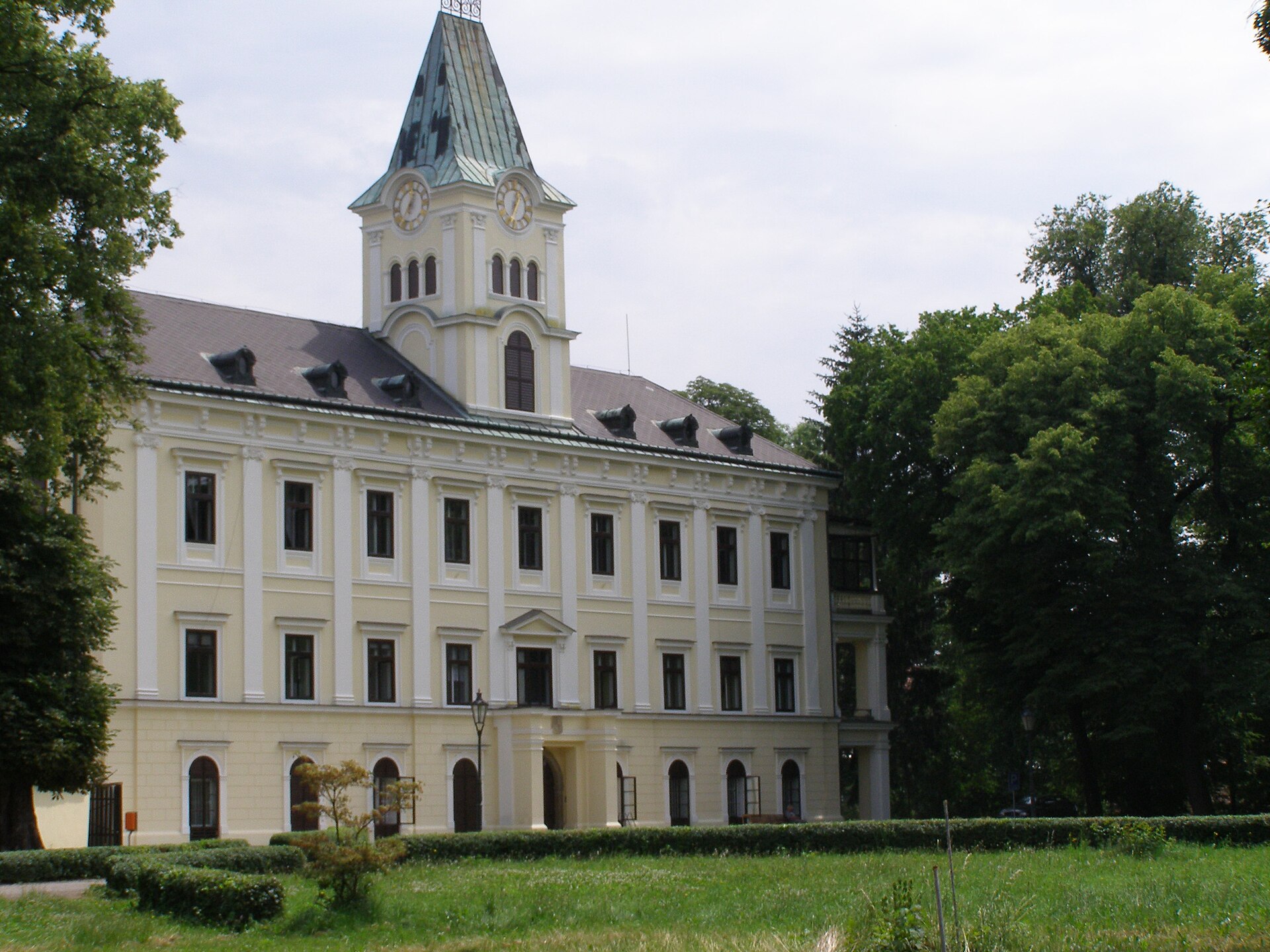
Archbishop's Palace in Kroměříž (Arcibiskupský zámek Kroměříž), also known as Kroměříž Castle, was the summer residence of the bishops and later archbishops of Olomouc, standing at the heart of the Moravian town of Kroměříž in the Czech Republic. Together with its two surrounding gardens, the complex was inscribed on the UNESCO World Heritage List in 1998 as one of Europe's most complete surviving examples of a Baroque prince-bishop's residence.
How did the palace come to be?
Kroměříž had already passed into the hands of the Olomouc bishops by the first half of the 12th century, becoming their principal representative seat in Moravia. The town and its castle suffered heavy destruction during the Thirty Years' War, and the building seen today is largely the result of a rebuilding campaign carried out between 1664 and 1695 under Bishop Karl von Liechtenstein-Castelcorn. He commissioned the Italian architects Filiberto Luchese and Pietro Giovanni Tencalla, who reshaped the residence into a grand Baroque complex of some forty rooms and ceremonial halls.
What is inside the palace?
Among its interiors, the Assembly Hall (Sněmovní sál) stands out as one of the finest Rococo rooms in the Czech Republic. Its painted ceiling and gilded decoration made it the chosen filming location for several scenes of Miloš Forman's Oscar-winning film Amadeus, a connection that still draws visitors curious to stand where the coronation scenes were shot. The palace also houses a picture gallery of considerable importance, bringing together Central European paintings dating from the 15th to the 18th century.
Why do the gardens matter so much?
The two gardens attached to the residence are inseparable from its UNESCO status. The Castle Garden (Podzámecká zahrada), laid out right beside the palace, began as a practical kitchen and flower garden before being transformed in the 17th century into an expansive landscape park; it now shelters more than 200 species of rare trees brought from Europe, America and Asia. A short walk away, beyond the old town walls, lies the Flower Garden (Květná zahrada), created on land that was once marshy and unproductive. Its strict geometric layout of colonnades, pavilions and parterres reflects late-Renaissance and early Baroque garden design, and is often likened to the formal gardens of Versailles.
Why was the site added to the UNESCO list?
In 1998, the entire complex — palace and both gardens together — was inscribed on the UNESCO World Heritage List as an exceptionally complete and well-preserved example of a European Baroque princely residence and its associated garden art. Three years earlier, in 1995, the same complex had already been declared a Czech national cultural monument.
Frequently asked questions
Where is the Archbishop's Palace in Kroměříž located? In the centre of Kroměříž, a Moravian town in the Czech Republic, roughly an hour's drive from Olomouc.
Who owned the palace? For centuries it belonged to the bishops, and later archbishops, of Olomouc, who used it as their summer residence of state.
Is the palace connected to the film Amadeus? Yes — the Assembly Hall served as a filming location for Miloš Forman's 1984 film.
How many gardens belong to the estate? Two: the naturalistic, English-style Castle Garden and the formal, geometric Baroque Flower Garden.
Since when has the site been on the UNESCO list? Since 1998, under the name "Gardens and Castle at Kroměříž."
Nearby places

Earn badges for the places you visit
Download NextOnTrip, discover new places and check off your trails.