About this place
Holešov Castle (Zámek Holešov)
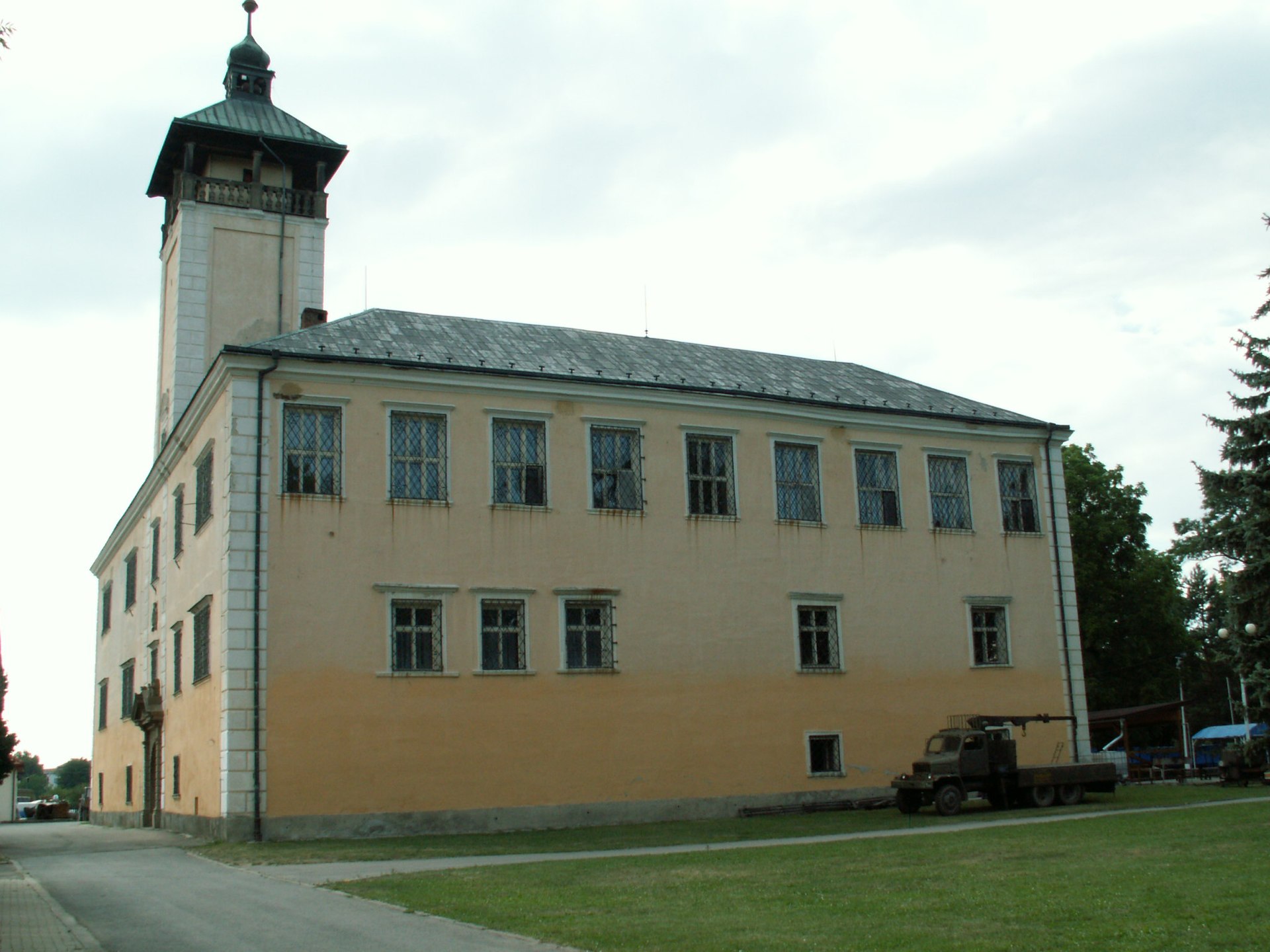
Holešov Castle is an early Baroque chateau in the town of Holešov, in the Zlín Region, built as the principal seat of the Moravian noble family of Rottal. It stands on the site of a late Gothic stronghold and a later Renaissance manor that had been plundered and burned by Swedish troops, and today it ranks among the most significant Baroque monuments of eastern Moravia.
How did the Rottal family come to rebuild the castle?
When Count Jan (Johann) Rottal purchased the Holešov estate in the mid-17th century, what he found on site was little more than a ruin — the former manor house, ravaged by Swedish forces during the Thirty Years' War. Shortly after 1650, having taken possession of the estate, he launched an ambitious reconstruction, bringing Italian architects and craftsmen to Holešov. He entrusted the project to Filiberto Lucchese, whose design gave the residence its representative early Baroque character. The building was largely completed in outline by 1658, although only the west wing, facing the town square, had been finished to its full two-story height at that point. After Lucchese's death in 1666, the Italian architect Giovanni Pietro Tencalla took over the work, gradually bringing the chateau to its final form.
Who were the Rottals, and why did Holešov become their center?
The Rottal family originated in Austria and had settled in Moravia by the early 17th century. During and shortly after the Thirty Years' War, they assembled extensive estates around the Hostýn Hills, including Napajedla, Otrokovice, Zlín, Tlumačov and Bystřice pod Hostýnem, and made Holešov their principal seat. In 1641 the family was raised to the rank of Imperial Counts. Jan Rottal himself held prominent offices at the Imperial court and in Moravian administration, serving among other roles as Imperial Privy Councillor and Supreme Provincial Judge of Moravia. Under his rule, the chateau became one of the region's cultural centers, hosting concerts and theatrical performances and drawing visitors from across Moravia. The Rottal family governed Holešov until 1762, when its last male-line representative, František Antonín Rottal, died without an heir.
What is there to see in and around the castle?
The chateau's interiors include representative spaces typical of the grandest European residences of the era: a cool ground-floor sala terrena and an upper piano nobile, where receptions and ceremonies once took place. The castle is surrounded by a French-style Baroque garden laid out in the same period, distinguished by a network of broad water channels arranged in the shape of a trident, a feature rarely seen elsewhere in this part of Europe. The wider residence complex also included the Church of the Assumption of the Virgin Mary, built alongside the chateau reconstruction and containing the Rottal family burial vault.
Can the castle be visited today?
The chateau remains an active cultural venue, with a historical exhibition open to the public. In recent years it has displayed items connected to the Rottal family, including pieces from their former armory. It functions both as a protected historical monument and as a living center of local culture.
Frequently asked questions
Who built Holešov Castle? Count Jan Rottal began rebuilding the earlier fortress into an early Baroque chateau shortly after 1650; the design was carried out by Italian architects Filiberto Lucchese and, after his death, Giovanni Pietro Tencalla.
Why did the Rottal family choose Holešov as their seat? Holešov lay at the center of the extensive estates the family assembled around the Hostýn Hills during the 17th century, and it remained their main residence until the family's male line died out in 1762.
What surrounds the castle? A French-style Baroque garden with a trident-shaped network of water channels, and the Church of the Assumption of the Virgin Mary, which houses the Rottal family tomb.
Is the castle open to visitors today? Yes, it operates as a cultural and exhibition venue, presenting the history of the Rottal family and the heritage of the former residence.
Nearby places

Earn badges for the places you visit
Download NextOnTrip, discover new places and check off your trails.