About this place
Plaza San Nicolás is a small, quiet square in Segovia, tucked into the northern edge of the old town between Calle San Quirce and Paseo del Obispo, right beside the city walls and the San Cebrián gate. It takes its name from the Romanesque church of San Nicolás standing on it, one of the many churches that give Segovia its reputation as a city of towers and apses.
How do you get to Plaza San Nicolás?
The square sits off the main route between the cathedral and the aqueduct, which is exactly why it stays quiet. The easiest approach on foot is along Paseo del Obispo, following the outer line of the city walls, or from Plaza San Esteban via Calle San Quirce. The surrounding streets are classic old Segovia: narrow, cobbled, lined with low stone houses, with views opening onto the Eresma river valley below. Driving is not recommended — the historic center has narrow one-way streets, and parking is limited to the edges of the old town.
What will you see there?
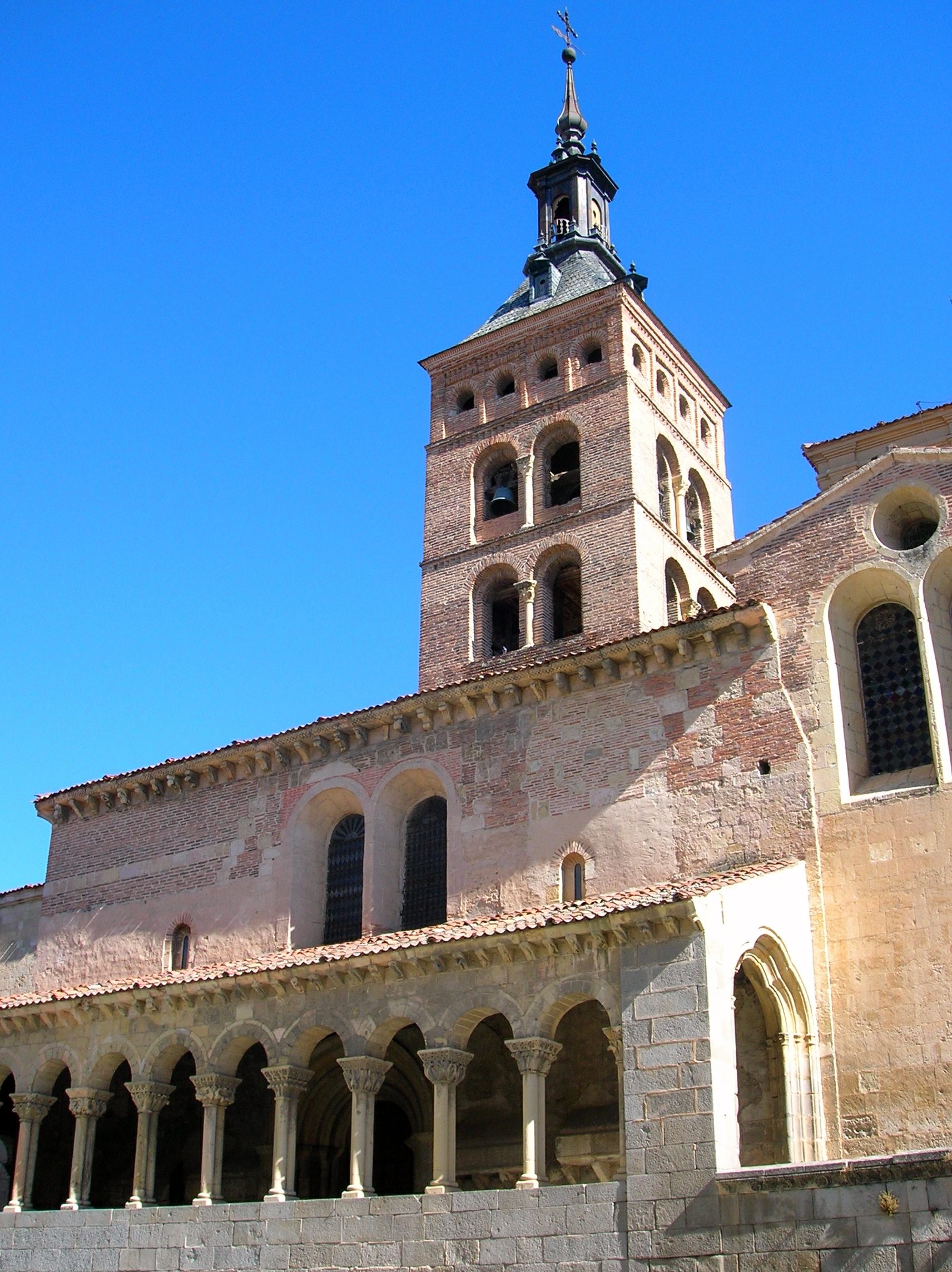
The centerpiece is the church of San Nicolás, built in the 12th century as a single-nave church of modest size, constructed in rough-cut stone (sillarejo) masonry with a timber roof frame. Despite its small footprint, the interior feels surprisingly spacious. In the apse, look for the semicircular window framed by small columns, their capitals carved with facing lions and seated figures — a typical example of Segovian Romanesque sculpture.
The church no longer functions as a place of worship. After it lost its religious use, it served for a time as the seat of the Real Academia de Historia y Arte de San Quirce, later housed a school, and since 1987 has operated as the Escuela Municipal de Teatro (Municipal Theatre School), run as a cultural activities center by Segovia's city council. Its original furnishings were dispersed elsewhere: the statue of San Nicolás de Bari now stands in the Campo chapel of the Trinidad church, and the Renaissance main altarpiece was moved to Segovia Cathedral. By the early 20th century, only one nave, two apses in good condition, and a shortened tower survived from the original structure — and these are the elements that still define the building's silhouette from the square today.
The square itself is small and framed by the stone houses typical of old Segovia — a good spot to pause for a moment, photograph the church facade against the city wall, and enjoy it without the crowds found at Segovia's headline sights.
When should you visit?
Segovia is at its best in spring (April–June) and autumn (September–October), when temperatures are mild enough for comfortable walking without the summer heat or winter cold. Plaza San Nicolás, being naturally quiet, is especially rewarding outside peak season and on weekdays, when the area empties out and the Romanesque church can be appreciated without any rush.
Frequently Asked Questions
Can you go inside the church of San Nicolás? The building now operates as a Municipal Theatre School and cultural center, not a church open to casual visitors — access depends on events and classes scheduled by Segovia's city council.
How long does it take to see the square? It's a small stop — 10 to 15 minutes is enough to take in the facade, the apse, and the nearby stretch of city wall.
Is the square accessible for visitors with limited mobility? The surface is typical old-town cobblestone, uneven in places, though the square itself has no significant slopes.
What else is nearby? Segovia's city walls and the San Cebrián gate sit right next to the square, and it's a short walk from there to Plaza San Esteban and on toward the historic center.
Nearby places

Earn badges for the places you visit
Download NextOnTrip, discover new places and check off your trails.