About this place
The Church of San Esteban stands among the most distinctive medieval churches in Segovia, the Spanish city whose old town and aqueduct form a UNESCO World Heritage Site. The church itself dates back to the 12th century, though it owes its fame mainly to a tower added a century later.
What can you see at the Church of San Esteban?
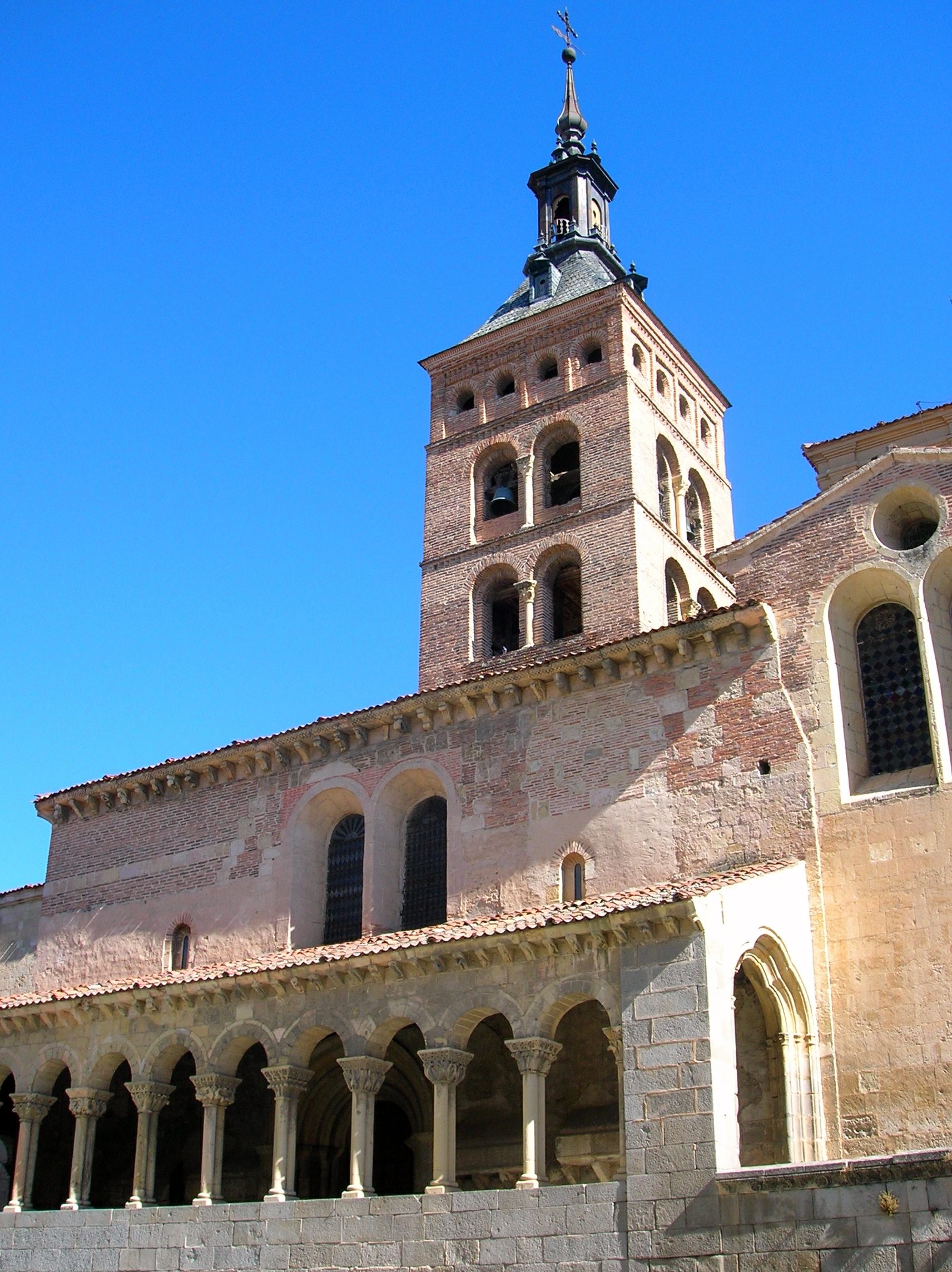
The star feature is the late-Romanesque bell tower, raised in the 13th century. At 53 metres, it is considered the tallest Romanesque tower in Spain, rising through five distinct levels above the rooftops of the old town. In front of the church, an atrium of arches carries capitals carved with medieval motifs — some of the best-preserved sculptural detail on the building, worth a slow look before heading inside.
The church itself mixes two eras: a Romanesque exterior wrapped around a Baroque interior, the result of restorations carried out over several centuries. That contrast between austere stone walls outside and a richer Baroque finish inside is common among Segovia's parish churches, many of which went through repeated repair campaigns after fires or structural damage.
What happened to the tower over the centuries?
A fire in 1896 damaged the church badly enough that the tower had to be partly dismantled. It was rebuilt in the early 20th century, and during that rebuild the original Baroque slate roof was replaced with the tiled spire visible today. That same year, 1896, the church was declared a National Monument, granting it formal legal protection that has kept its structure largely intact ever since.
Why is it part of Segovia's UNESCO listing?
Since 1985, the Church of San Esteban has been included in the UNESCO World Heritage designation covering the Old Town of Segovia and its Aqueduct. It is one of several Romanesque churches scattered through the walled town that, together with the cathedral, the Alcázar and the aqueduct itself, give Segovia's skyline its dense medieval character.
How do you get to the Church of San Esteban?
The church sits inside Segovia's old town, an easy walk from the Alcázar and the cathedral. Segovia is connected to Madrid by high-speed rail, with the journey taking around half an hour; from the station, a local bus or taxi covers the short distance into the historic centre. Once there, the old town is compact enough to explore entirely on foot, and the church fits naturally into a walking route linking the city's main landmarks.
When is the best time to visit?
Spring and autumn bring milder weather than Segovia's hot summers, making them the most comfortable seasons for walking the old town. The tower's stonework looks its best in morning or late-afternoon light, when the warm tone of the stone stands out against the sky. Visiting outside peak season also makes it easier to study the atrium's carved capitals without crowds.
Frequently asked questions
What is the Church of San Esteban known for? Its 13th-century Romanesque bell tower — at 53 metres and five storeys, the tallest of its kind in Spain.
How old is the church? The church building dates from the 12th century, while its landmark tower was added in the 13th century.
Is it part of a UNESCO World Heritage Site? Yes, it has been included since 1985 in the listing for the Old Town of Segovia and its Aqueduct.
What happened to the tower's original roof? After a fire in 1896, the Baroque slate roof was replaced during the early-20th-century rebuild with the tiled spire seen today.
Nearby places

Earn badges for the places you visit
Download NextOnTrip, discover new places and check off your trails.