About this place
Church of San Millán stands in Segovia, a Spanish city outranked in Romanesque architecture only by Zamora, and this building is widely regarded as one of the finest examples of that style in the whole city. It sits outside the old medieval walls, on a broad square that once housed Segovia's Moorish and weaver communities — a detail that still shapes the character of this quieter district today.
How old is the church of San Millán?
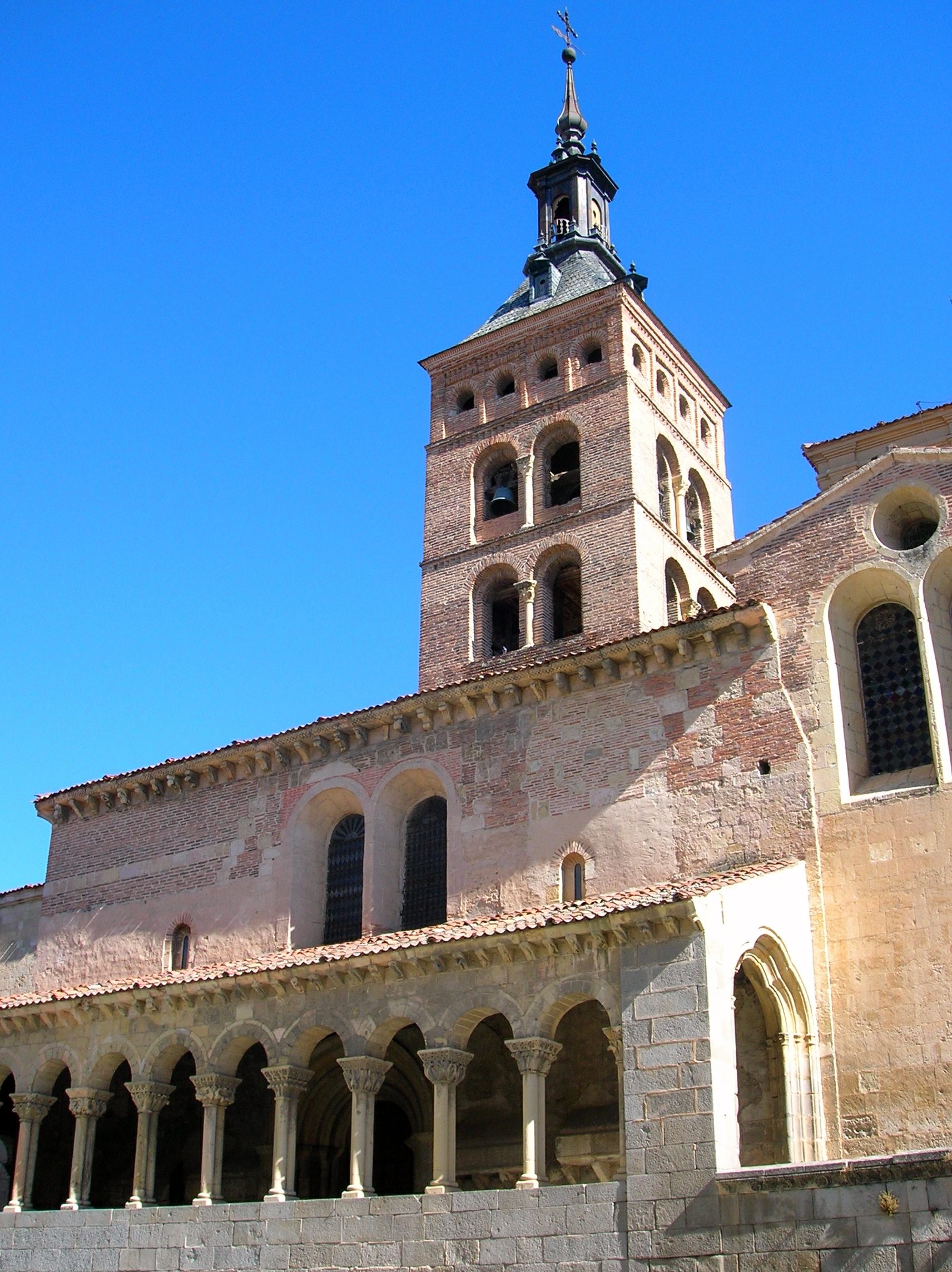
The main structure went up over roughly fifteen years, between 1111 and 1126. The tower, however, is older still: its lowest section dates back to the 11th century and shows Mudéjar features, making it the single oldest surviving part of the whole complex. Building a full church around an already-standing tower was an unusual sequence for the period, and it is one of the reasons San Millán reads as a layered, evolving structure rather than a single-phase project.
What makes the floor plan unusual?
Inside, San Millán follows a hall-church layout with three naves, each divided into five bays. Cruciform pillars with attached columns alternate along the naves, a structural solution typical of mature Spanish Romanesque work. Architectural historians note that the plan mirrors, at a reduced scale, the layout of the cathedral of Jaca in Aragon — a clear sign of how Aragonese building traditions were reaching Castile at the turn of the 11th and 12th centuries.
Why are the porticoes worth a close look?
The church's most distinctive exterior feature is a pair of Romanesque porticoes, one on the north side and one on the south, both opening onto the square. Each uses round arches carried on paired columns, topped with richly carved capitals. Those capitals date to the 13th century — later than the church walls themselves — which tells us the decorative program kept evolving long after the main construction was finished. In the Middle Ages, porticoes like these doubled as gathering spots, hosting both religious functions and everyday community business.
What is the church's status today?
San Millán was declared a Spanish National Monument on 3 June 1931, formal recognition of its importance well beyond Segovia. It remains an active parish church, with regular services, while also staying open to visitors drawn by its Romanesque architecture. That dual life as working parish and heritage site is common among Segovia's churches, but it is especially pronounced here given the building's scale and state of preservation.
Why does it matter within Segovia's Romanesque landscape?
Segovia holds one of Spain's densest concentrations of Romanesque churches, and San Millán is consistently cited as among the most representative. Unlike the Gothic cathedral or the Alcázar, which pull in most of the city's visitor traffic, San Millán offers a look at Segovia during its earlier medieval expansion, when the city was growing into a major Castilian center after the reconquest of the region. The quiet square in front of the church, largely free of crowds, makes it an easy place to study the architectural details at an unhurried pace.
Frequently Asked Questions
Where exactly is the church of San Millán in Segovia? It stands outside the old city walls, on a large square in a historic part of Segovia once home to the city's Moorish and weaver communities.
Which part of the church is the oldest? The tower is oldest, with its lower Mudéjar-style section dating to the 11th century, predating the rest of the building constructed between 1111 and 1126.
Can visitors go inside the church of San Millán? Yes. It functions as an active parish with regular services and is also open to visitors interested in its Romanesque architecture.
What is the most distinctive architectural feature of San Millán? Its two Romanesque porticoes, on the north and south sides, with paired columns and 13th-century capitals, combined with a three-nave hall-church plan modeled on the cathedral of Jaca.
Nearby places

Earn badges for the places you visit
Download NextOnTrip, discover new places and check off your trails.