- City Parks
- Recreation and entertainment
Parmentier Park
About this place
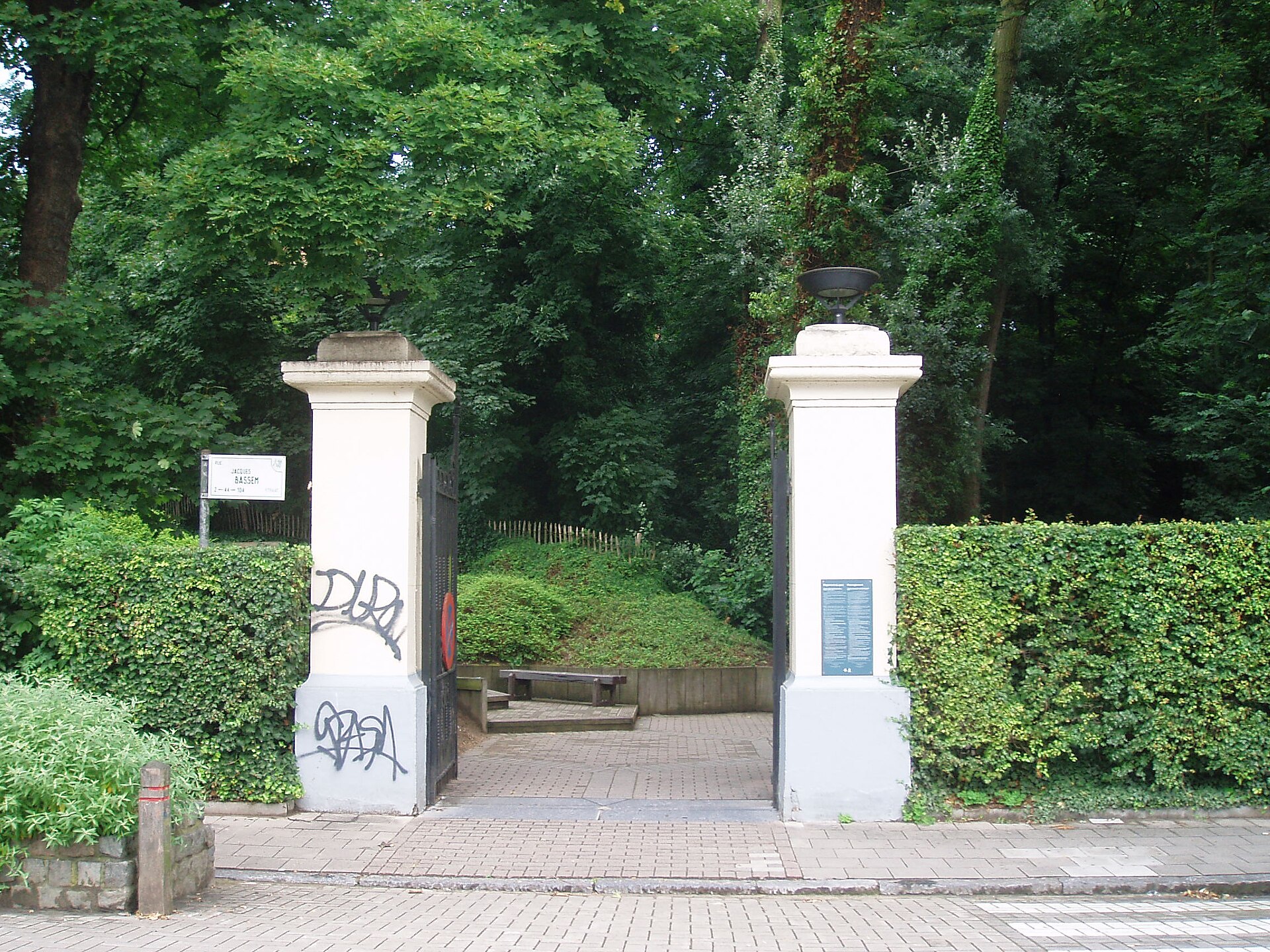
Parmentier Park is a small but historically rich green space straddling Woluwe-Saint-Pierre and Sint-Pieters-Woluwe, stretching along Avenue de Tervueren and Avenue Edmond Parmentier in the valley of the Woluwe river.
Where does the park's name come from?
The park is named after Edmond Parmentier, a building contractor who laid out Avenue de Tervueren in 1895 and, in the process, acquired a roughly 12-hectare plot of land along the avenue and the Woluwe valley. It was on his initiative that the estate which now bears his name was created, and its traces are still visible in the park today.
How was the park created?
The land where the park now lies was originally a wetland dotted with ponds. It was raised using surplus soil generated during the construction of Avenue de Tervueren. The park itself was designed and laid out in the English landscape style between 1897 and 1899, under the direction of French landscape architect Emile Lainé — the same designer responsible for the neighboring Woluwe Park.
The park formed part of a broader, harmonious landscape scheme that King Leopold II wanted to see along Avenue de Tervueren and its connection to Boulevard du Souverain.
What survives from Parmentier's original estate?
Several traces of the original estate remain within the park. The most distinctive is a covered bowls court (boulodrome) built in neo-Gothic style in 1909, which was converted into a chapel during the First World War. Alongside it stand former stables and a former gatekeeper's lodge built in 1906 in the English cottage style.
The park is also notable for its remarkable plantings: two giant sequoias with trunks over four meters in circumference, a row of copper beeches, two lime trees, and a red oak with a trunk nearly three meters around.
What happened to the estate after that?
During the First World War, the estate's buildings served as a hospital for disabled soldiers. In 1919 the property passed under the control of the Belgian state and became a military hospital. In 1925, a fire destroyed most of the largely wooden buildings, putting an end to the hospital's operations there.
From 1930 onward, the estate was entrusted to Abbot Froidure, and his successor organization, the "Stations de Plein Air," still occupies part of the property today.
Is the park open to visitors?
The park covers 2.29 hectares and has been a listed heritage site since December 7, 1981. Only the lower section of the park, running along Avenue de Tervueren, is open to the public — and even that stretch is rarely visited, owing to its narrow, elongated shape, the noise from the busy avenue, and its difficult access.
Frequently asked questions
Who designed Parmentier Park? French landscape architect Emile Lainé designed the park between 1897 and 1899, commissioned in connection with building contractor Edmond Parmentier's estate.
Is the whole park open to the public? No — only the lower section along Avenue de Tervueren is publicly accessible, and it sees little foot traffic due to noise and difficult access.
What historic buildings can be seen in the park? Surviving structures include a neo-Gothic covered bowls court from 1909 (turned into a chapel during the war) and a former gatekeeper's lodge in the English cottage style from 1906.
Since when has the park been legally protected? The park was classified as a protected heritage site on December 7, 1981, and covers an area of 2.29 hectares.
Nearby places
-

Mellaerts Ponds
Woluwe-Saint-Pierre - Sint-Pieters-Woluwe
-
Parc Crousse - Croussepark
Woluwe-Saint-Pierre - Sint-Pieters-Woluwe
-
Woluwe Park
Woluwe-Saint-Pierre - Sint-Pieters-Woluwe
-
Monsanto Park
Woluwe-Saint-Pierre - Sint-Pieters-Woluwe
-
Bergoje Park
Auderghem - Oudergem
-
Georges Henri Park
Woluwe-Saint-Lambert - Sint-Lambrechts-Woluwe
Earn badges for the places you visit
Download NextOnTrip, discover new places and check off your trails.