About this place
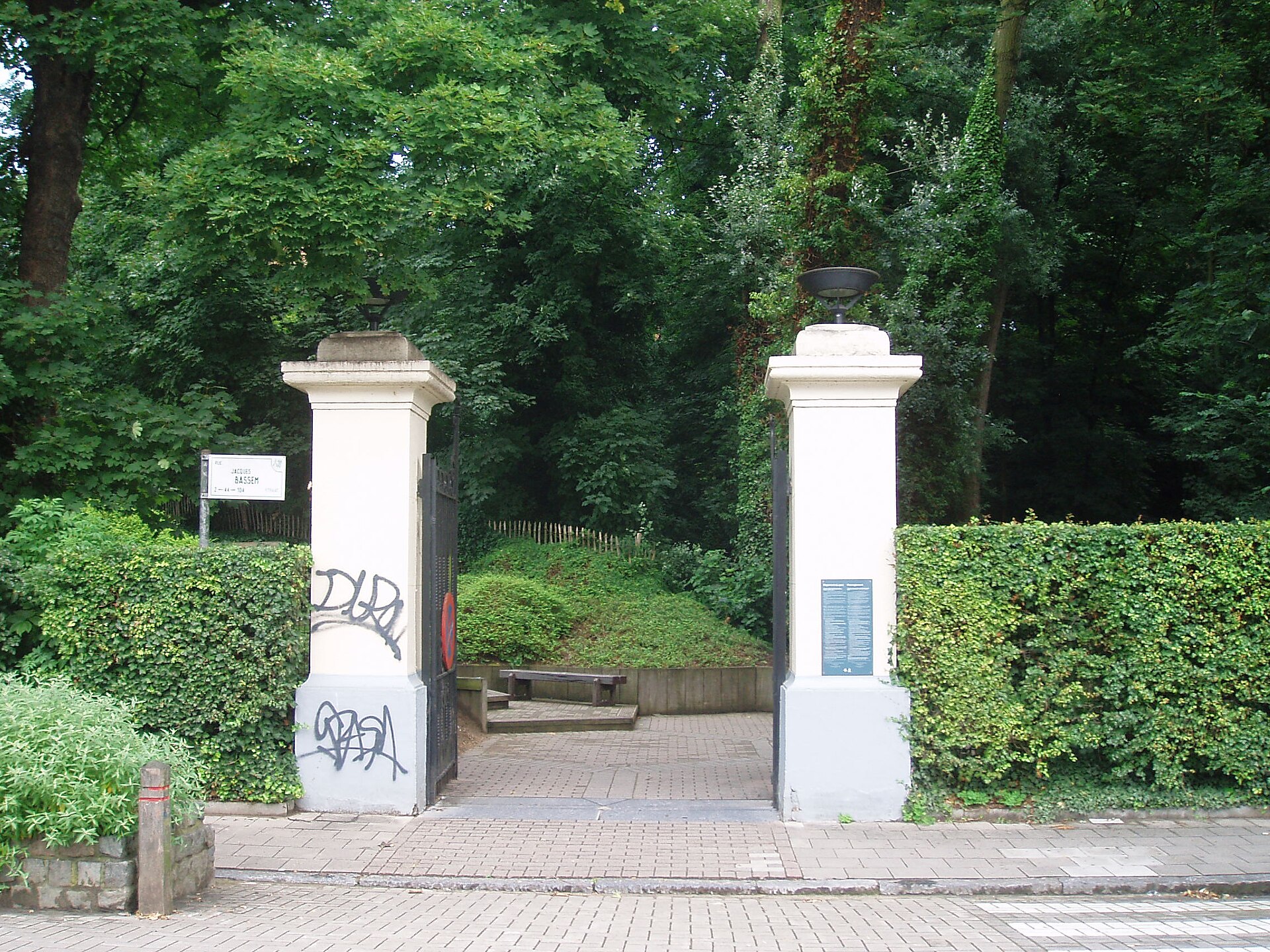
Bergoje Park is a small but striking green enclave in the Auderghem (Oudergem) district of Brussels, tucked between Avenue Hermann-Debroux, Chaussée de Wavre and Rue Jacques Bassem. The main gate sits on Rue Jacques Bassem, between numbers 28 and 42, and the park is easily reached by bus line 72 (Jardin Massart stop). Here the surrounding city suddenly gives way to a steep, wooded slope dropping into a damp stream valley.
Where does the park come from historically?
The land now occupied by Bergoje Park once belonged to the vast Sonian Forest. It was cut off in 1729, when the road linking Brussels to Wavre was built, and this made the Bergoje area one of the first inhabited corners of Auderghem. Maps from around 1770 still show ponds and kitchen gardens on the site, but as the surroundings urbanized, the ponds were gradually filled in and the streams in the lower, built-up sections were culverted underground. A mansion known as Villa de la Bruyère once stood at the top of the hill; it was demolished in 1986. The park in its current form dates from 1994, created by Bruxelles Environnement with the explicit aim of preserving the site's natural character.
What can visitors see in the park?
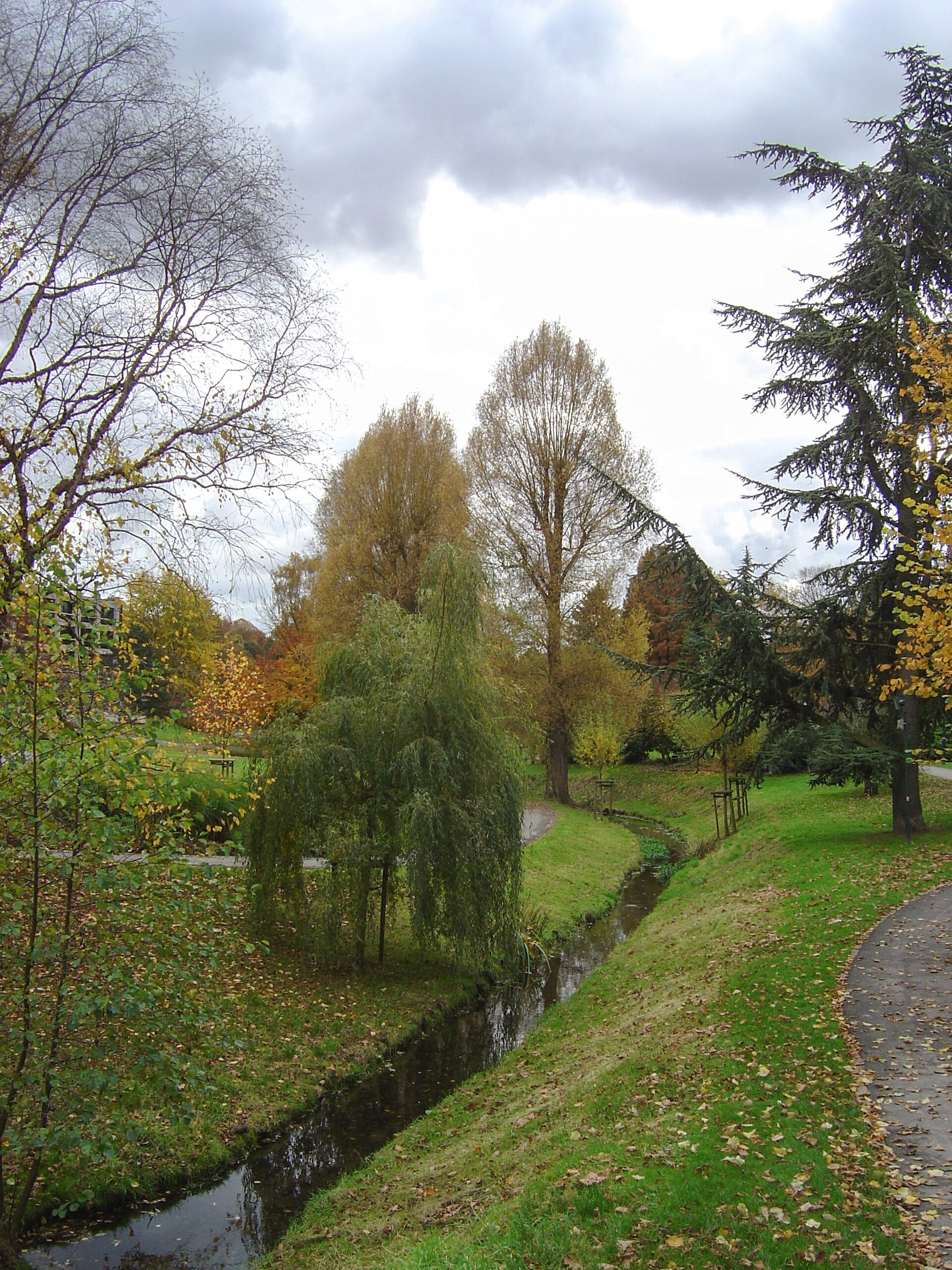
The defining feature of Bergoje is the contrast between the steep, wooded slope and the marshy valley floor below, through which the Roodkloosterbeek stream flows in the open air. Along the ridge stands a striking row of century-old sweet chestnut trees, listed by the Monuments and Sites Commission, alongside pedunculate oaks, beeches, and a distinctive mix of woodrush and beech typical of this spot. The forest floor is carpeted in ivy, with wood anemones and lily-of-the-valley emerging in spring. Stairs lead from the upper section of the park down toward the wet meadows, where an observation platform overlooks the marshland, letting visitors watch wildlife without stepping onto the sensitive wetland itself. Benches, waste bins and lighting are provided in the lower parts of the park.
What wildlife lives in Bergoje Park?
The mix of habitats, from the dry hillside to the damp stream valley, supports a surprisingly rich range of species. Sparrowhawks, several duck species, herons and kingfishers can all be spotted here, while bats hunt over the stream at dusk. Frogs live in the wetter corners, and the trees and undergrowth are filled with the song of numerous songbirds. The observation platform was built specifically to let visitors take in this diversity from a respectful distance.
What protected status does the park hold?
Because of its ecological value, Bergoje has been designated a Natura 2000 special conservation area, and the site itself carries protected heritage status. The park is open daily, though opening hours shift with the seasons, generally running from around 7am to 10pm. Dogs are welcome but must be kept on a leash at all times, a rule meant to protect the fragile habitats and the wildlife that nests there.
Frequently asked questions
Is entry to Bergoje Park free? Yes, the park is open to the public free of charge and is managed by Bruxelles Environnement.
Can I walk my dog in the park? Yes, but dogs must be kept on a leash at all times due to the protected fauna and the site's Natura 2000 status.
How do I get to Bergoje Park? The easiest way is bus line 72 to the Jardin Massart stop; the main entrance is on Rue Jacques Bassem.
What is the park's main natural highlight? The row of century-old chestnut trees along the ridge and the observation platform over the marshy valley, from which visitors can watch birds and other wildlife.
Nearby places

Earn badges for the places you visit
Download NextOnTrip, discover new places and check off your trails.