- City Parks
- Recreation and entertainment
Woluwe Park
About this place
Parc de Woluwe is one of the largest urban parks in Brussels, stretching across the municipalities of Woluwe-Saint-Pierre and Auderghem, bordered by Boulevard du Souverain, Avenue de la Woluwe and Avenue de Tervueren. Covering several dozen hectares, it ranks among the most valued green spaces on the eastern side of the city.
How did the park come about?
The park was created on the initiative of King Leopold II, who wanted greenery to line the newly built Avenue de Tervueren, laid out for the 1897 World Exposition. Construction work took place between 1896 and 1899, and the park underwent restoration after the damage of the First World War.
What landscape style does it follow?
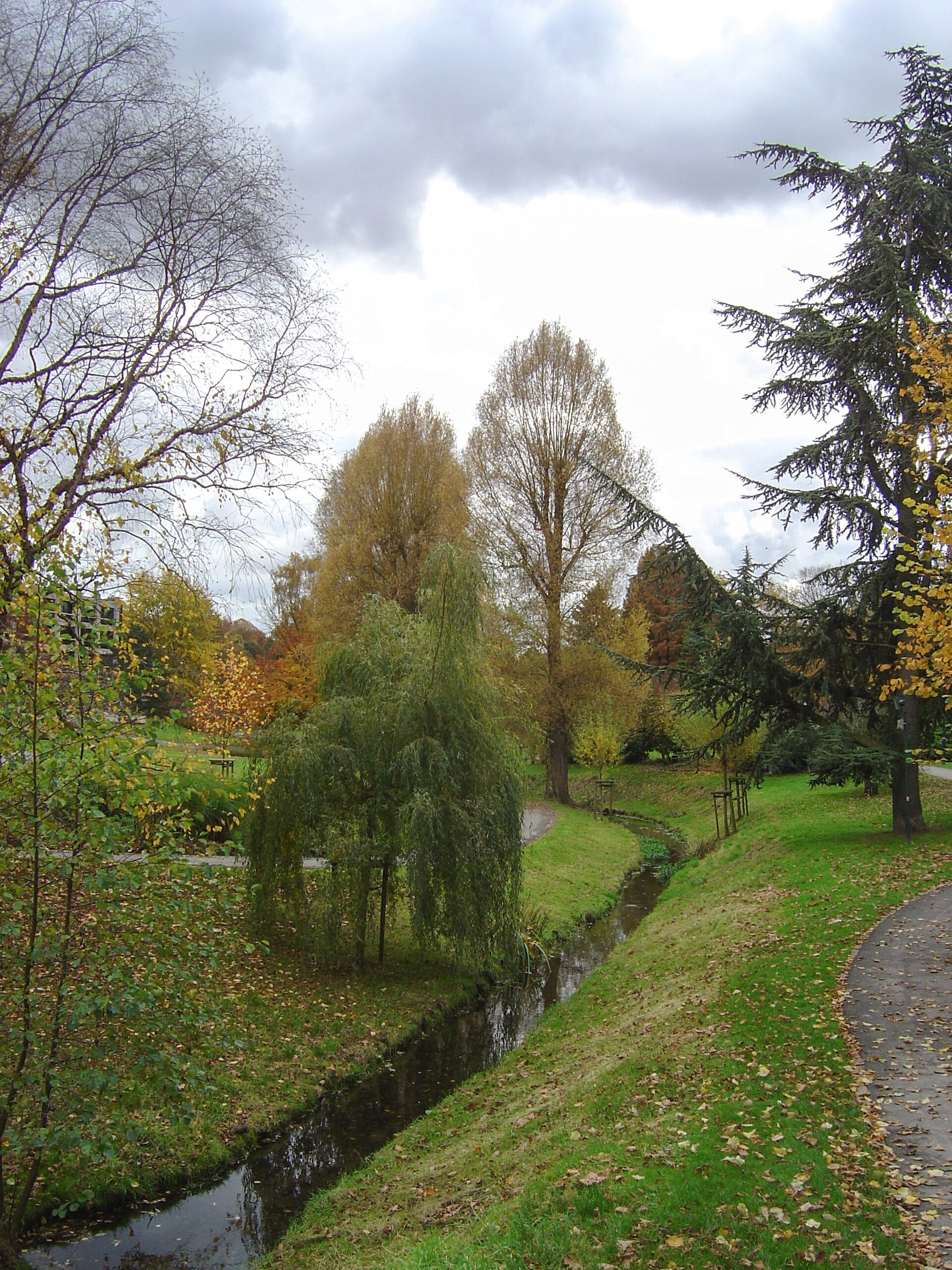
The design was the work of landscape architect Emile Lainé, who laid out a vast composition in the spirit of an English landscape garden: rolling hills and valleys, winding paths, and large bodies of water framed by clusters of trees. Extensive earthworks allowed him to shape a varied terrain that reads as a natural, asymmetrical landscape — a deliberate contrast to the geometric formality of French-style gardens.
How many ponds does the park have, and where does the water come from?
A defining feature of the park is its series of ponds, fed by the Woluwe stream and its tributary, the Bemel. Along Avenue de Tervueren lie two ponds supplied by the Bemel: the smaller one, known as the Bemel pond, and a considerably larger one referred to as the "long pond". In another section of the park, between the railway embankment and Avenue du Parc, two further spring-fed ponds can be found — the smaller Denis pond and, downstream, the round pond. This network of water bodies gives the park the feel of a natural river valley rather than an artificially shaped garden.
What grows in the park?
Parc de Woluwe is known for the richness of its tree collection — around 180 different species grow within its grounds, ranging from common native varieties to exotic and very rare specimens. This diversity means the park changes noticeably with the seasons and draws both casual walkers and visitors with an interest in trees.
How large is the park?
The park's total area is estimated at several dozen hectares, making it one of the larger public parks in the Brussels region. It spans two municipalities — Woluwe-Saint-Pierre and Auderghem — a fact also reflected in cadastral records covering its location.
Frequently asked questions
Who designed Parc de Woluwe? The park's landscape layout was designed by landscape architect Emile Lainé, commissioned in connection with King Leopold II's initiative.
What style was the park designed in? The park follows the English landscape garden tradition — rolling terrain, winding paths and naturalistic ponds — in contrast to the symmetrical formality of French gardens.
How many ponds are there in the park? The park contains at least four ponds: the Bemel pond, the "long pond" along Avenue de Tervueren, and the Denis pond and round pond in another section of the grounds.
When was the park created? Construction ran from 1896 to 1899, and the park was later restored following damage sustained during the First World War.
Where exactly is the park located? The park lies between Boulevard du Souverain, Avenue de la Woluwe and Avenue de Tervueren, within the municipalities of Woluwe-Saint-Pierre and Auderghem in eastern Brussels.
Nearby places

Earn badges for the places you visit
Download NextOnTrip, discover new places and check off your trails.