About this place
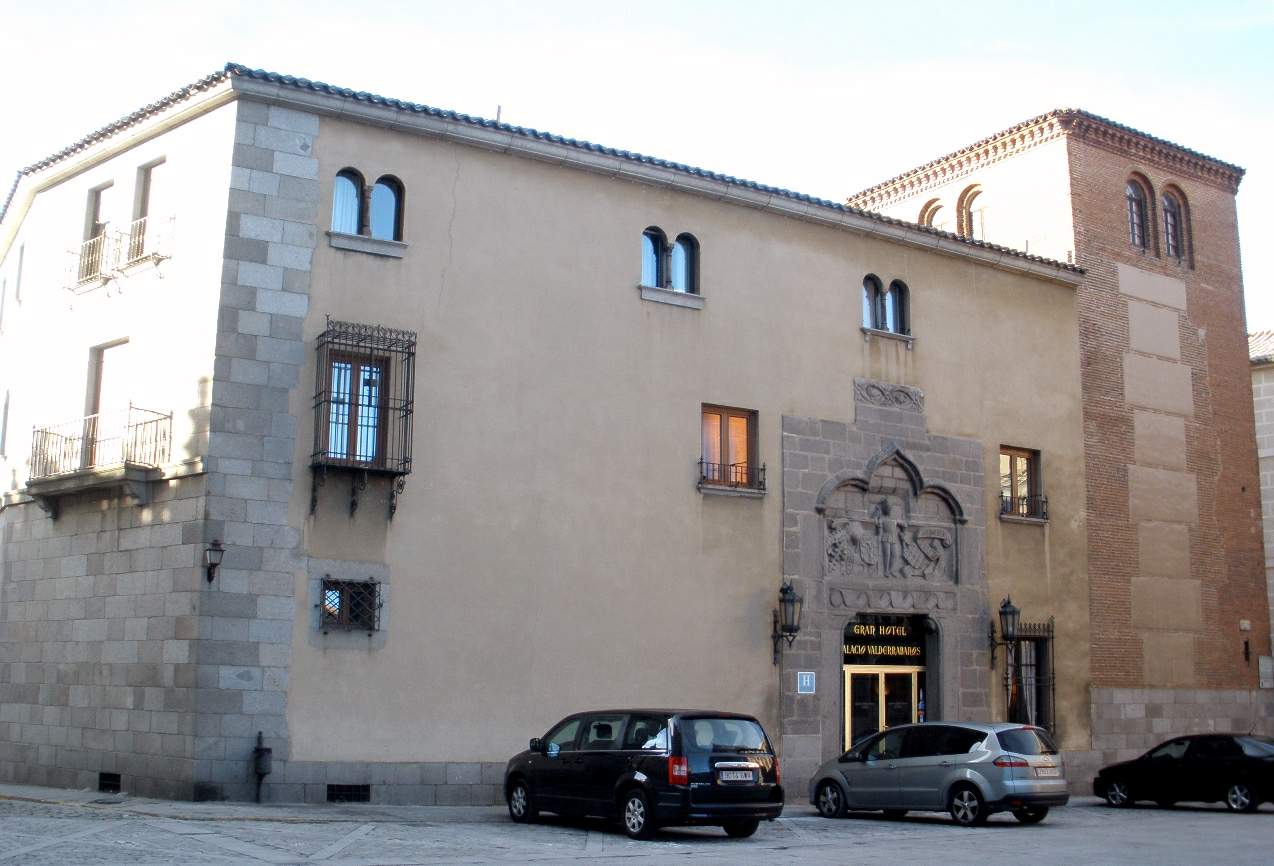
Palacio de Valderrábanos is a 14th-century palace standing right next to the cathedral of Ávila, today converted into an intimate hotel set within the walls of the medieval city.
Where exactly does the palace stand?
The building occupies one of the most prominent spots in the city — the square beside Ávila's cathedral, part of the UNESCO World Heritage listing that covers the entire walled old town. It's a location impossible to miss: the palace's stone façade sits almost flush against the cathedral's apse, forming one of the most photographed corners of the historic centre. Walking the main street that runs from the Alcázar Gate toward the cathedral, visitors come across it almost inevitably.
Who built it?
The building's history goes back to the 14th century and is tied to Gonzalo Dávila de Ágreda, a knight who served as master of ceremonies at the court of the Catholic Monarchs, governor of the Order of Calatrava, and magistrate in Jerez. The residence was raised for him in the very heart of medieval Ávila, a city that was then one of the key centres of Castilian nobility. The founder's social standing explains why the palace was built in such a prominent spot, right beside the city's main church.
What survives from the original structure?
Despite centuries of history and later alterations, the façade still preserves a distinctive relief above the entrance, showing a young figure supporting the composition beneath a trefoil arch — a detail typical of Gothic ornamentation from the period and one of the few elements that still let visitors read the building's medieval origins today. The original wooden ceilings and beam-work (known as alfarje) that once decorated the palace's interiors, however, didn't stay on site: after the renovation they were moved to the Ávila Museum, where they can be seen separately as an example of period woodcarving.
How did the palace become a hotel?
The building underwent a full renovation adapting it for use as a hotel, while keeping its medieval character and its location right in the heart of the old town. A symbolic moment in this new chapter came with its first guest after the renovation: Adolfo Suárez, at the time a politician who would later become Spain's first democratic prime minister, stayed in room 126 in 1971. That episode is often mentioned today alongside the building's medieval roots as part of its story.
What's nearby?
Standing at the palace entrance puts Ávila's defensive walls, the cathedral, and the dense web of narrow old-town streets all within easy reach. It's an ideal base for exploring on foot, close both to the main city gates and to the viewpoints along the walls that look out over the Castilian countryside surrounding the city.
When's the best time to visit?
Ávila sits at over 1,100 metres above sea level, so summers here tend to be pleasantly cooler than in much of the rest of Spain, while winters bring low temperatures and occasional snow. Spring and early autumn offer the most stable weather for walking the walls and old town on foot, without the crowds typical of high summer.
Frequently asked questions
Can you visit Palacio de Valderrábanos, or is it hotel-only? The building currently operates as a hotel, so access to the interior is mainly reserved for guests. The façade with its preserved relief, however, is fully visible from the cathedral square, which is open to everyone.
Where can you see the palace's original decorative elements? The historic wooden ceilings and beam-work from the palace were moved to the Ávila Museum, where they're displayed as a separate exhibit showcasing period craftsmanship.
How far is it from here to Ávila's cathedral? The palace stands directly beside the cathedral, practically wall to wall — one of the shortest possible distances between a landmark and a place to stay anywhere in the city.
Who was the hotel's first guest after it opened? Adolfo Suárez, who stayed in room 126 in 1971, several years before becoming Spain's prime minister.
Nearby places

Earn badges for the places you visit
Download NextOnTrip, discover new places and check off your trails.