About this place
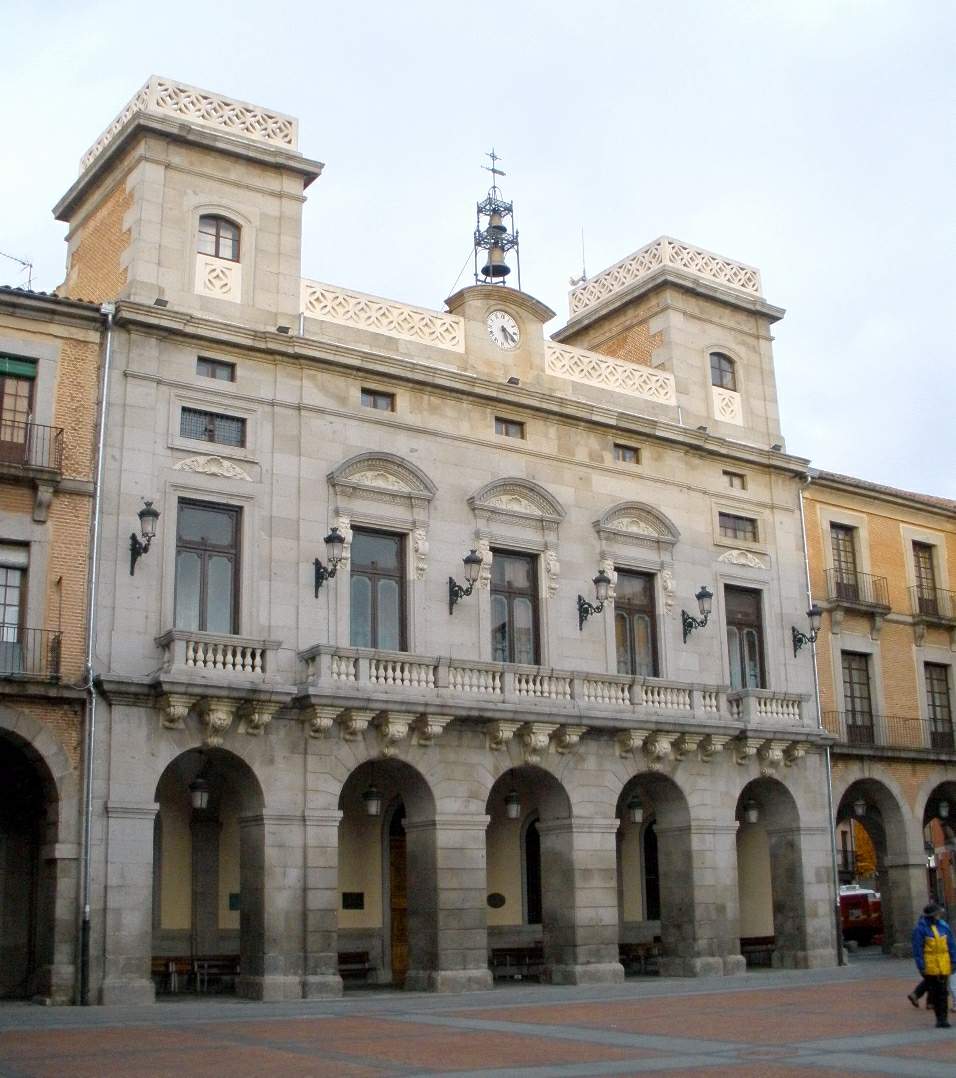
Ávila Town Hall (Ayuntamiento de Ávila) stands on Plaza del Mercado Chico, the main square of the old town, fully enclosed within the medieval city walls that make Ávila a UNESCO World Heritage Site. The building is still the working seat of the city council and one of the natural stops on any walk through the walled centre.
Where exactly is the town hall, and what's around it?
The town hall occupies one side of Plaza del Mercado Chico, a Castilian-style square right inside the city walls. The square itself began to take shape at the end of the 11th century, when Ávila was being repopulated, and together with Plaza del Mercado Grande and Plaza de San Vicente it formed the city's main public spaces at the time. Today it's a natural meeting point and a good place to pause between sights, with the town hall's towers as a backdrop.
How has the building changed over the centuries?
The first town hall on this spot was ordered by the Catholic Monarchs, for a very practical reason: the city council had nowhere to meet and had been holding its sessions "at the door" of the nearby church of San Juan, which also faces the square. The square's medieval arcades originally rested on brick pillars with brick lintels; these were replaced with stone in 1518. By the mid-18th century both the square and the town hall had fallen into serious disrepair, prompting a major overhaul that regularized the layout of the plaza and gave it a unified colonnade. The building seen today was constructed between 1839 and 1845, then altered and extended between 1862 and 1868, which is when it took its current form.
What should you look for on the facade?
The town hall is built in dressed granite with a strongly geometric composition, in the Isabelline style — a decorative strand of 19th-century Spanish architecture associated with the reign of Queen Isabella II. The facade reads in three horizontal bands: a ground-floor colonnade with semi-circular arches on a square-cut base, a middle level with three doors opening onto balconies, and, at the top, twin towers flanking the sides with a clock set between them. Look closely at how the arcade of the town hall lines up with the arcades running around the rest of the square — a signature feature of Castilian market squares.
When is the best time to visit?
Plaza del Mercado Chico is animated year-round, but spring and autumn are the most comfortable seasons, since Ávila — Spain's highest provincial capital — can get uncomfortably hot in midsummer and cold in winter. The square regularly hosts local markets and events, so it's worth checking the city's calendar before a visit; stumbling on an open-air market or a concert in front of the town hall is a common experience for visitors. The exterior can be admired at any hour, with no opening times to work around.
Frequently asked questions
Can you go inside Ávila's town hall? The building is an active administrative office and the seat of the city council, so interior access is limited to official business. Most visitors experience it from the square, looking at the facade.
Why was the town hall built on Plaza del Mercado Chico specifically? Because the square had already been the city's civic centre since its repopulation in the 11th century, and the council was already meeting nearby, next to the church of San Juan on the same square.
How old is the current town hall building? The structure standing today dates from 1839–1845, with further alterations and extensions completed between 1862 and 1868 — meaning the building on the square is well over 180 years old.
What else is worth seeing near the town hall? Plaza del Mercado Chico itself is lined with arcaded old-town buildings, and it's a short walk from there to Ávila's defensive walls and the other UNESCO-listed monuments inside the historic centre.
Nearby places

Earn badges for the places you visit
Download NextOnTrip, discover new places and check off your trails.