About this place
Palacio de los Dávila is a fortified Gothic-Renaissance mansion built into the town walls of Ávila, and one of the best-preserved noble residences in the city. Also known as Palacio de Abrantes, it belonged for centuries to the Dávila family, one of the region's most powerful lineages and a loyal supporter of the crown during the Reconquista.
Where is it and why does it look fused with the walls?
The palace stands on the southern edge of the old town, built directly against the inner face of Ávila's medieval walls, at the point that once guarded the Rastro Gate (Puerta del Rastro). That position is no coincidence: the building was designed from the start as a defensive structure reinforcing this stretch of fortifications, not just as a family residence.
Its oldest section dates to the 13th century and was raised using the same granite as the city walls, which is why the palace visually blends into them. Builders kept adding to it through the 16th century, so a single facade today layers several centuries of construction on top of each other.
What should you look for on the facade?
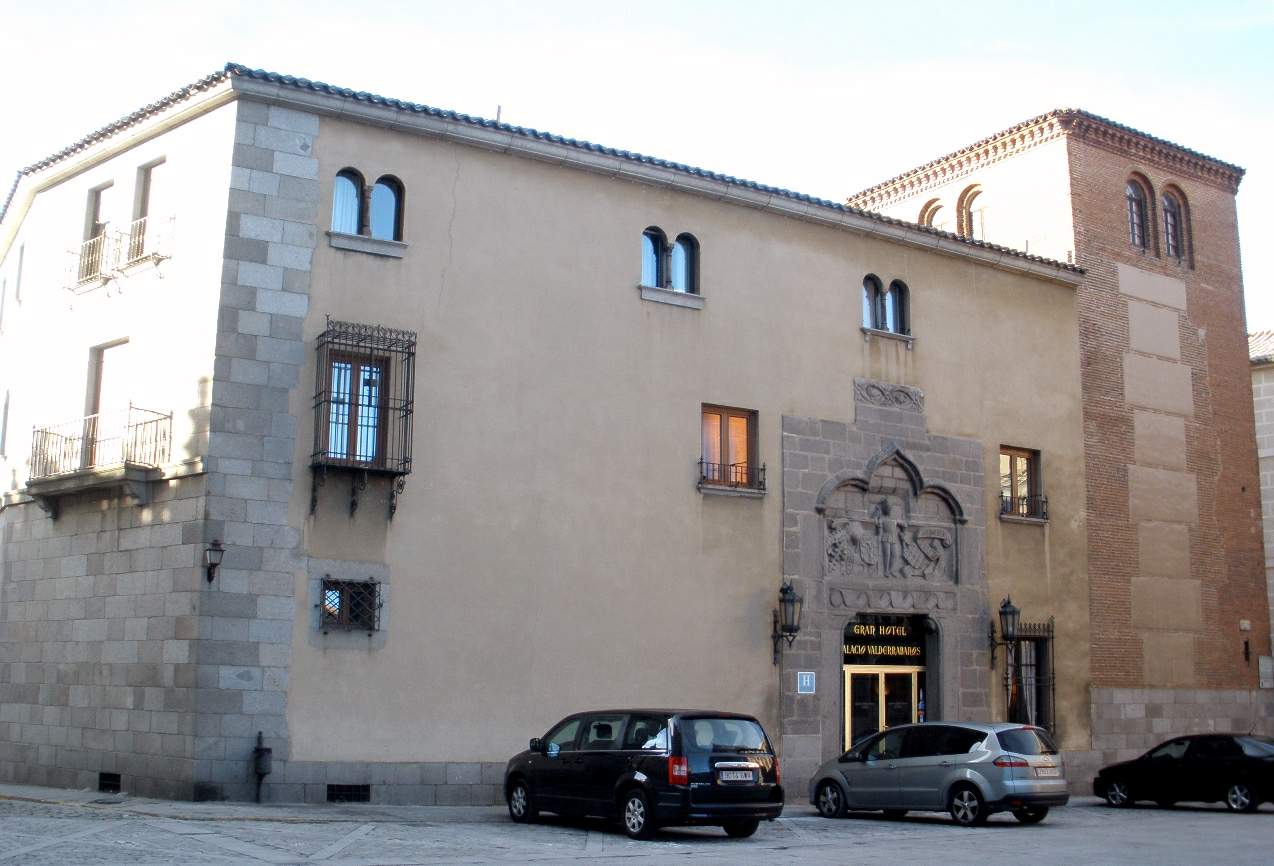
The west front is the most photogenic part of the complex. Its upper floor has paired 13th-century twin (geminate) windows, and the entrance is framed by a pointed Gothic porch. Next to it sits a second, lintelled doorway added in the 14th century, evidence of a later building phase.
The newest and most decorative feature is a Renaissance window from 1541, commissioned by Pedro Dávila. Framed by slender columns, it is crowned with the Dávila family coat of arms. Above the window runs the inscription "Donde una puerta se cierra, otra se abre" ("Where one door closes, another opens") — a phrase tradition ties to Pedro Dávila's defiant stance toward the authorities of his time.
The facade also shows machicolations — projecting defensive galleries with openings in the floor for dropping objects on attackers below. It's a purely military detail, typical of noble residences built for defense as much as for status.
What's inside the courtyard?
The palace's inner courtyard holds one of Ávila's more unusual details: stone animal figures known as verracos, carved by the pre-Roman Vettonian (Celtiberian) culture. These weathered sculptures of bulls and boars turn up across the wider Castile and León region, and finding them inside the palace grounds links the medieval defensive architecture to a much older layer of local history.
How do you get there, and when's the best time to visit?
The palace sits inside Ávila's walls, within walking distance of the main city gates and the cathedral — the easiest way to reach it is on foot while exploring the old town. The exterior, including the Dávila window and the adjoining stretch of city wall, can be admired year-round with no restrictions, whether from the street running alongside the fortifications or from the walkway along the walls themselves.
Access to the interior and courtyard can be limited, since the building today serves institutional functions and isn't always open to visitors on the same terms as other monuments in the city. It's worth checking current access details at Ávila's tourist information office before your visit, especially if seeing the verracos in the courtyard matters to you.
Early morning or late afternoon are the best times to explore the surrounding streets: the light brings out the texture of the stone facade, and the narrow lanes along the walls are noticeably quieter than at midday.
Frequently Asked Questions
Can you go inside Palacio de los Dávila? Interior access is often limited because the building serves institutional purposes. The facade, the Renaissance window, and the stretch of city wall are always visible from outside; if you want to see the courtyard's verraco sculptures, confirm current access at the local tourist office beforehand.
Why is the palace also called Palacio de Abrantes? This second name comes from the noble titles later associated with the family that held the residence. Both names appear interchangeably in guides and on information signs around the city.
What are the verracos in the courtyard? They are prehistoric stone sculptures of bulls and boars, carved by the Vettonian (Celtiberian) peoples before the Roman conquest. Several examples survive across the Ávila region, and their presence inside the palace bridges two very different eras of local history.
How much time should you set aside for the palace? Walking around the building and the adjoining walls takes about 15–20 minutes. If you combine it with the rest of the old town and a walk along Ávila's city walls, plan for half a day.
Nearby places

Earn badges for the places you visit
Download NextOnTrip, discover new places and check off your trails.