About this place
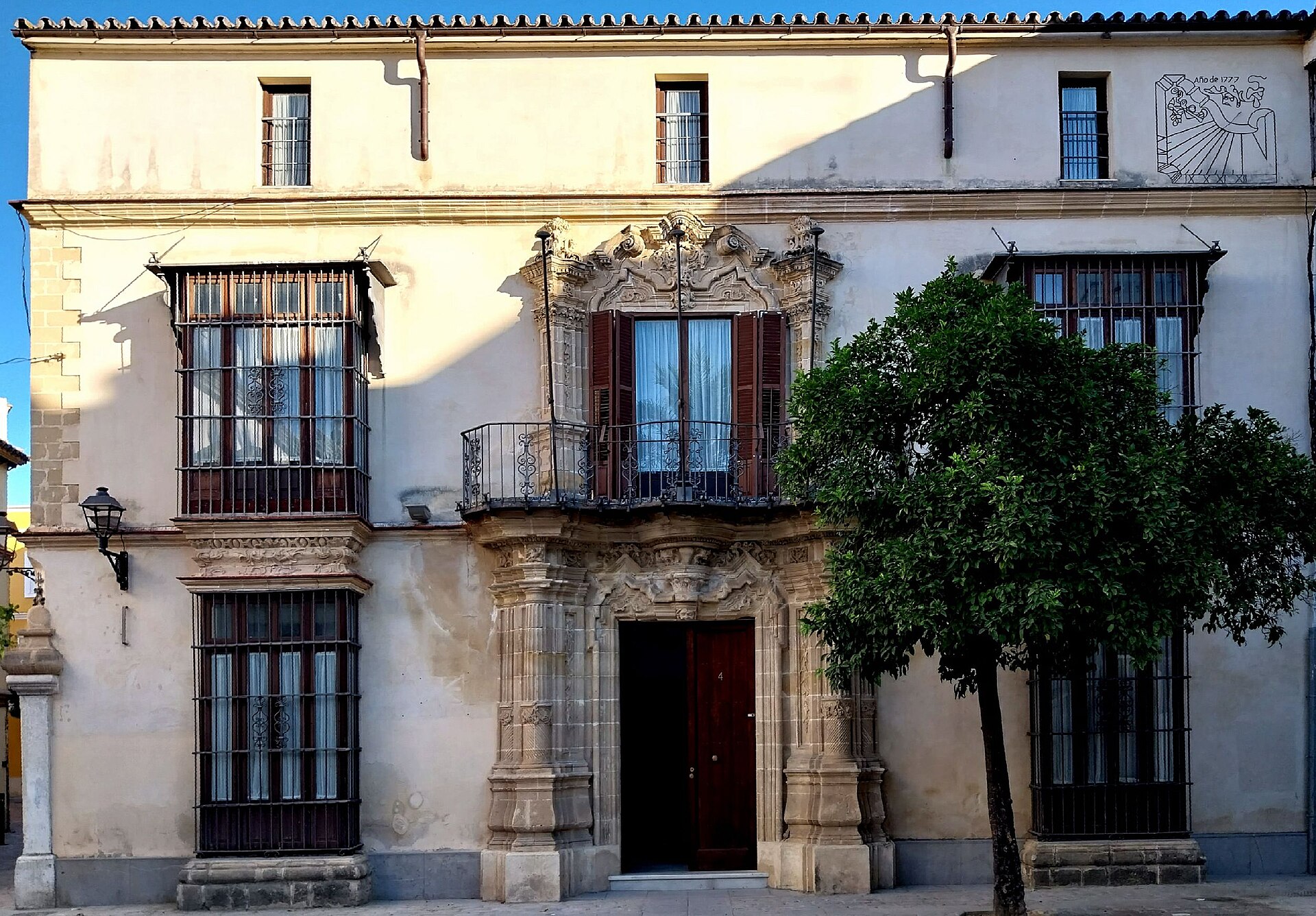
Palacio de Luna is an 18th-century urban palace standing on Plaza Rafael Rivero, one of the most striking squares in the old town of Jerez de la Frontera. Also known as Palacio de los Pérez-Luna, it stands out for its Baroque facade and belongs to a group of historic mansions that give this Andalusian city its aristocratic character.
What is the history behind the palace?
The building was constructed in 1777 in the Baroque style typical of residential architecture in Jerez during that period. Among its former residents was José Antonio Menchaca, a canon of the local Collegiate Church, reflecting the palace's ties to the city's ecclesiastical and bourgeois elite. Over the following decades ownership and use of the building changed several times, though it remained in private hands and largely closed to visitors for a long time.
In the 21st century the palace briefly opened for public use, housing the headquarters of the Teresa Rivero Foundation. After the foundation closed, the property was transferred to Building Center, a real estate company belonging to the CaixaBank group, as part of bankruptcy proceedings involving the previous owner. This ownership history illustrates how the fate of historic townhouses in Spanish city centers is intertwined with modern economic processes.
What will you see standing in front of the palace?
The facade draws the most attention: an ornate portal leads the eye up to a projecting, richly decorated balcony, a classic feature of Baroque architecture in Jerez. A distinctive detail is the sundial mounted on the facade, a rare feature that sets Palacio de Luna apart from other palaces in the city. Stone window and door frames, the building's proportions, and its restrained color palette together create a coherent picture of an 18th-century bourgeois-aristocratic residence.
The square itself, Plaza Rafael Rivero, is one of the most atmospheric spaces in old Jerez. It is surrounded by other historic townhouses, and its proximity to the Collegiate Church and other palaces makes the area ideal for a quiet walk through the architecture of the city's golden age of wine and horses.
How to get there and when to visit?
Palacio de Luna sits right in the historic center of Jerez de la Frontera, within walking distance of the city's main landmarks, including the Cathedral and the Alcázar. The best way to reach it is on foot — the old town is compact, and its narrow streets and squares are best explored without a car. The city is accessible by train or bus from Seville or Cádiz, and Jerez airport handles domestic and some European connections.
Since the palace is currently privately owned and serves purposes other than a museum, plan your visit around admiring the facade from the outside and combine it with a look at the neighboring monuments. Spring and autumn are the best times for walking, as temperatures in Andalusia are milder than during the hot summer months.
Frequently asked questions
Can you go inside Palacio de Luna? The building currently belongs to a private entity and does not operate as a museum, so visits are usually limited to viewing the facade from outside.
What is the most distinctive feature of the palace's appearance? The ornate balcony above the entrance portal and the sundial on the facade, a rare detail among the historic palaces of Jerez.
When was the palace built? It was constructed in 1777 in the Baroque style.
How can you best combine a visit with other Jerez attractions? Plan a walk through the old town covering Plaza Rafael Rivero, the Collegiate Church, and nearby historic palaces — all within a short walking distance of each other.
Nearby places

Earn badges for the places you visit
Download NextOnTrip, discover new places and check off your trails.