About this place
Palacio de los Marqueses de Bertemati is an 18th-century urban palace right in the heart of Jerez de la Frontera, standing beside the cathedral in the district once known as del Arroyo. It ranks among the finest surviving town residences built by the wine-trading elite of Jerez.
How do you get there?
The palace sits in the old town, directly next to Jerez Cathedral, so the easiest way to reach it is on foot as part of a walk through the historic centre. From the train and bus stations it's a walk of roughly fifteen minutes, and it's worth leaving any car on the edge of the old quarter, since the narrow streets around the building are essentially pedestrian.
What will you see?
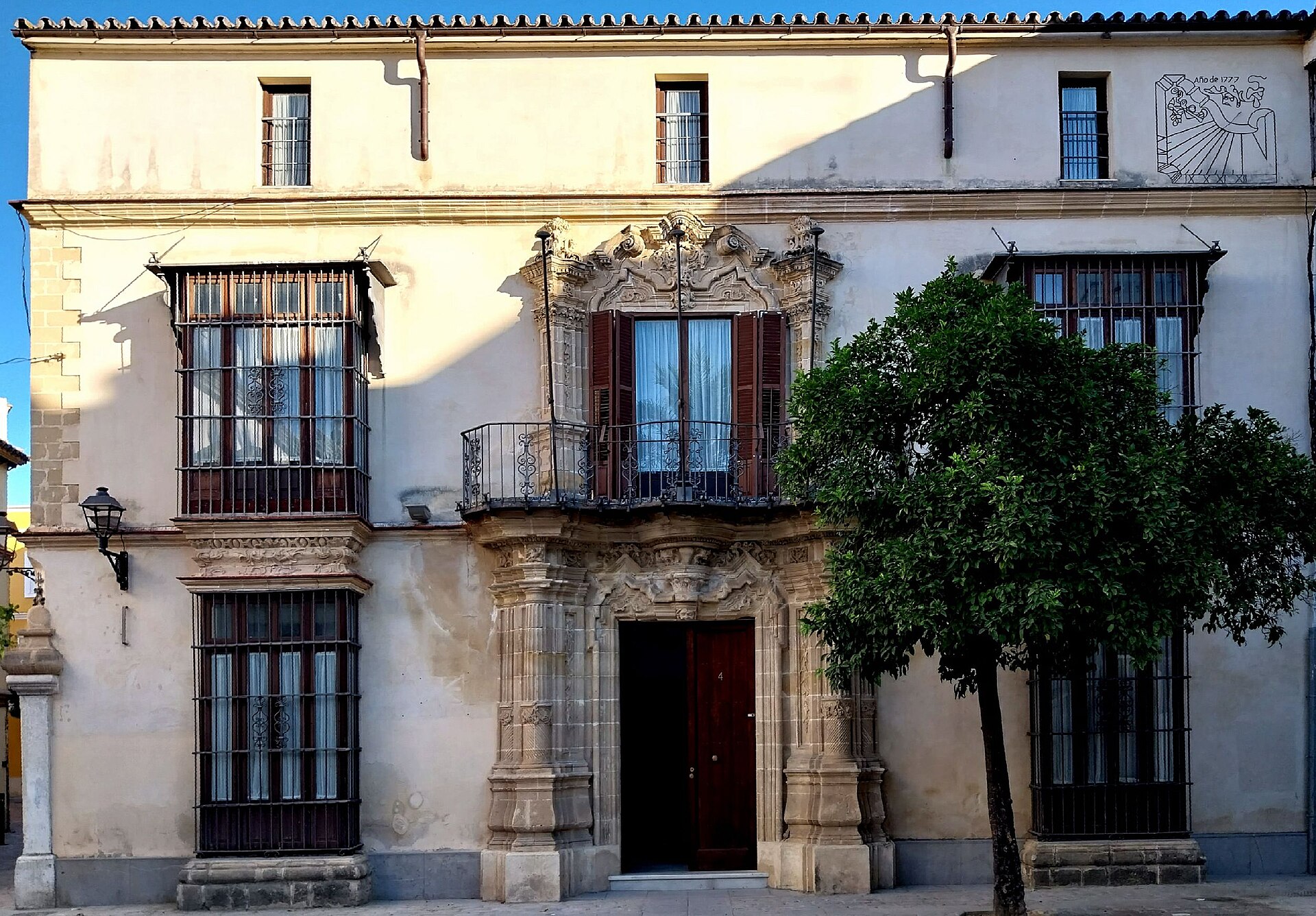
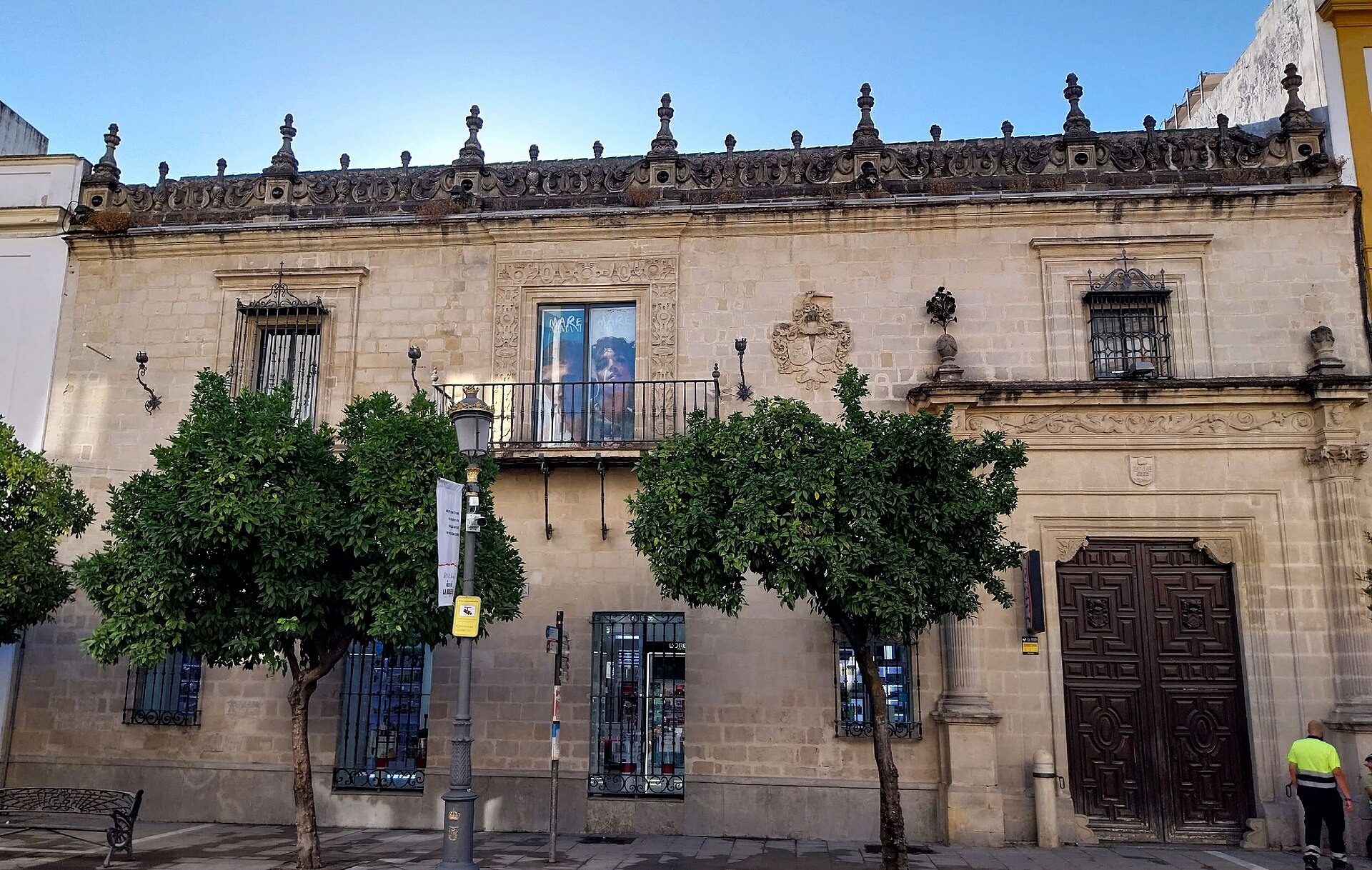
The building went up around 1785, commissioned by the Sopranis-Dávila family. It follows an elongated rectangular plan across two storeys, arranged around an internal courtyard and an adjoining garden — a layout typical of the grand houses built by Jerez's bourgeois families in that era. The facade is long and low, dominated by monumental entrance doors that immediately signal the status of the original owners.
The heart of the building is a square inner courtyard, framed by a two-storey elevation topped with an iron-railed terrace. Arcaded galleries run along three sides, and the arches are decorated with plasterwork in wavy, vegetal patterns — this is usually the detail that catches visitors' and photographers' attention first.
The palace's story didn't end with its founding family. In the early 19th century the property changed hands: the larger building was bought by Jose Bertemati, a wealthy merchant, who remodelled it in a neoclassical style, giving it a more restrained, symmetrical look than its original baroque decoration. In 1942, under the direction of Monsignor Bertemati, ownership passed to the Diocese of Jerez, and the rooms were handed over for use by the Franciscan Sisters of Mary Immaculate. Today the palace houses the seat of the Bishopric of the Diocese of Jerez, which keeps it a living, functioning building rather than a museum piece.
When should you visit?
Because the palace now serves as a church administrative seat rather than a ticketed attraction with fixed opening hours, it's best visited as part of a walk that also takes in the neighbouring cathedral and the old town. Spring (March–May) and early autumn (September–October) are the most pleasant times, thanks to Jerez's milder weather in those months. Summer in Andalusia can bring very high temperatures, so it's worth planning midday walks around that.
Frequently asked questions
Can you go inside the Bertemati Palace? Since the building now functions as the seat of the Diocese of Jerez's bishopric, access to the interior is limited. The safest bet is to admire the facade and courtyard architecture from outside, and check locally or with the tourist information office for any current access options.
Why is the palace named "Bertemati" if a different family built it? The Sopranis-Dávila family constructed the building around 1785, but in the early 19th century it was bought by Jose Bertemati, a wealthy merchant who remodelled the residence — and the palace has carried his family name ever since.
What's the most striking architectural feature? The square central courtyard, with its two-storey elevation, iron-railed terrace, and arcades decorated with wavy, plant-motif plasterwork, is the building's most distinctive and photographed feature.
Is the palace close to other Jerez landmarks? Yes — it stands right next to Jerez Cathedral in the historic del Arroyo district, making it a natural stop on any walk through the old town.
Nearby places

Earn badges for the places you visit
Download NextOnTrip, discover new places and check off your trails.