About this place
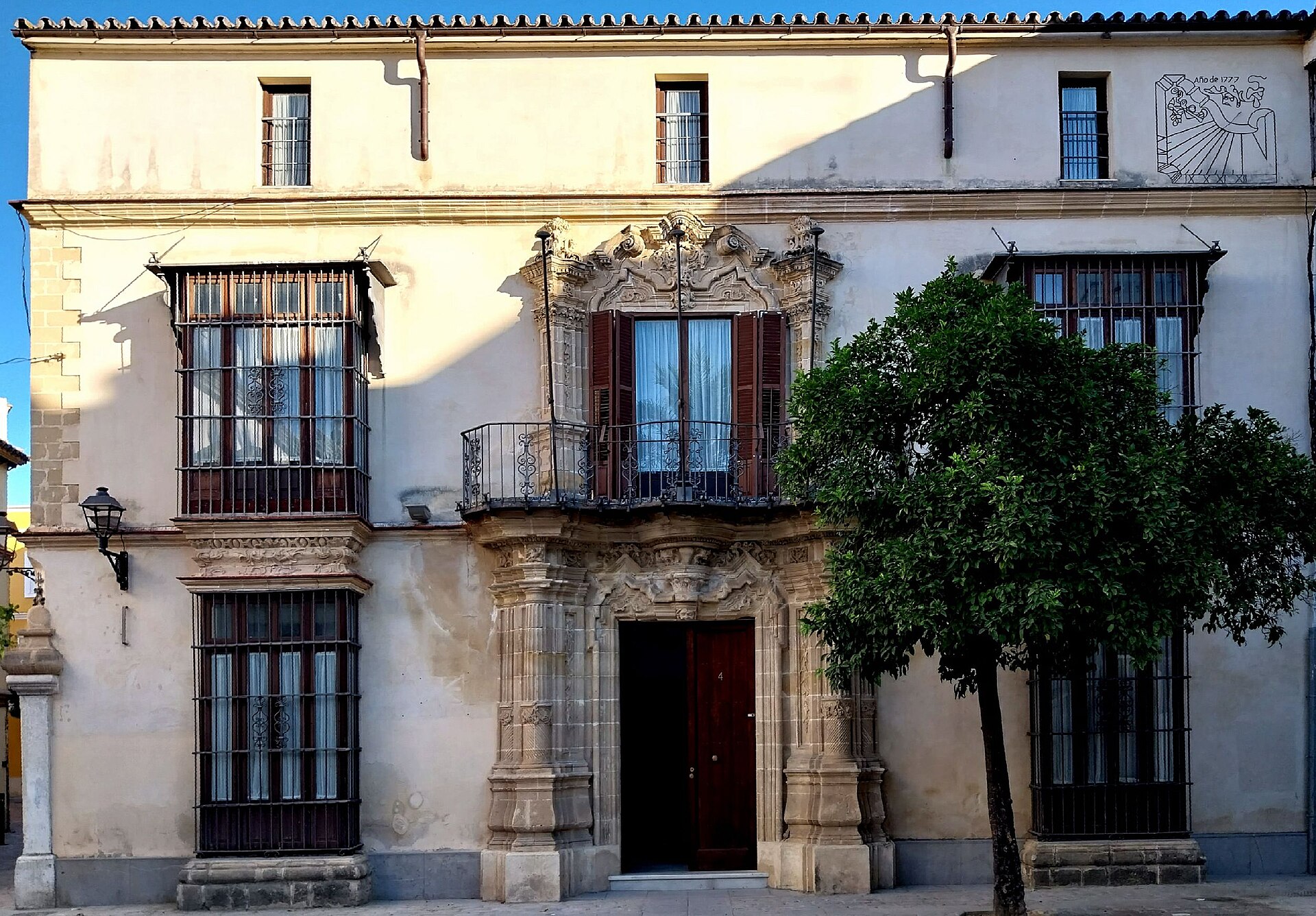
Palacio de Camporreal is a historic palace in Jerez de la Frontera, in the province of Cádiz, Andalusia. The building dates back to 1545, and its heritage value is confirmed by its designation as Bien de Interés Cultural (BIC) — Spain's highest level of legal protection for cultural monuments.
What is Palacio de Camporreal?
The palace was built in the mid-16th century, at a time when Jerez de la Frontera was growing into a major trading and agricultural hub of southern Spain. Buildings from this period in the city typically combine Renaissance architectural elements with local Andalusian tradition — thick walls, interior courtyards, and comparatively modest street-facing façades. The BIC designation means the building is subject to strict legal protection: any renovation work or changes to its surroundings require approval from heritage conservation authorities.
Where exactly is it located?
The palace stands in the historic centre of Jerez de la Frontera, a city best known for sherry production, equestrian tradition, and flamenco. Its coordinates are approximately 36.684°N, 6.143°W, placing it within the dense, well-preserved old town, surrounded by other 16th- and 17th-century buildings.
How do you get to Jerez de la Frontera?
Jerez has its own airport (Aeropuerto de Jerez), serving domestic routes and a number of seasonal European connections. The city is also well connected by train and bus to Seville (about an hour away) and Cádiz (around thirty minutes). Once in the city, the historic centre where the palace stands is best explored on foot — most landmarks lie within a short walk of one another.
What else is worth seeing nearby?
Jerez de la Frontera has a dense concentration of historic sites. Nearby, it's worth visiting San Salvador Cathedral, the Alcázar fortress, and one of the traditional bodegas producing sherry — the wine that takes its name directly from the city itself. Anyone interested in horsemanship should also visit the Real Escuela Andaluza del Arte Ecuestre, renowned for its equestrian dressage shows.
When is the best time to visit?
Spring (March–May) and early autumn (September–October) are the most comfortable seasons for exploring Jerez, with milder temperatures than the peak summer heat typical of Andalusia. It's also worth checking the local events calendar — the Feria del Caballo in May is one of the region's most important festivals, though the city gets notably crowded during that period.
Frequently asked questions
Is the palace open to visitors? Access to the interior depends on the building's current use and any scheduled events — it's best to check current information locally or with the tourist office before planning a visit.
What does the Bien de Interés Cultural status mean? It's Spain's highest category of heritage protection, granted to sites of exceptional historical, artistic, or cultural value. Buildings with this status are subject to strict conservation regulations.
How old is Palacio de Camporreal? The palace was built in 1545, making it nearly five centuries old.
Is it easy to reach without a car? Yes — the centre of Jerez de la Frontera is compact and very walkable, and the city itself has good rail and bus links to the rest of Andalusia.
Nearby places

Earn badges for the places you visit
Download NextOnTrip, discover new places and check off your trails.