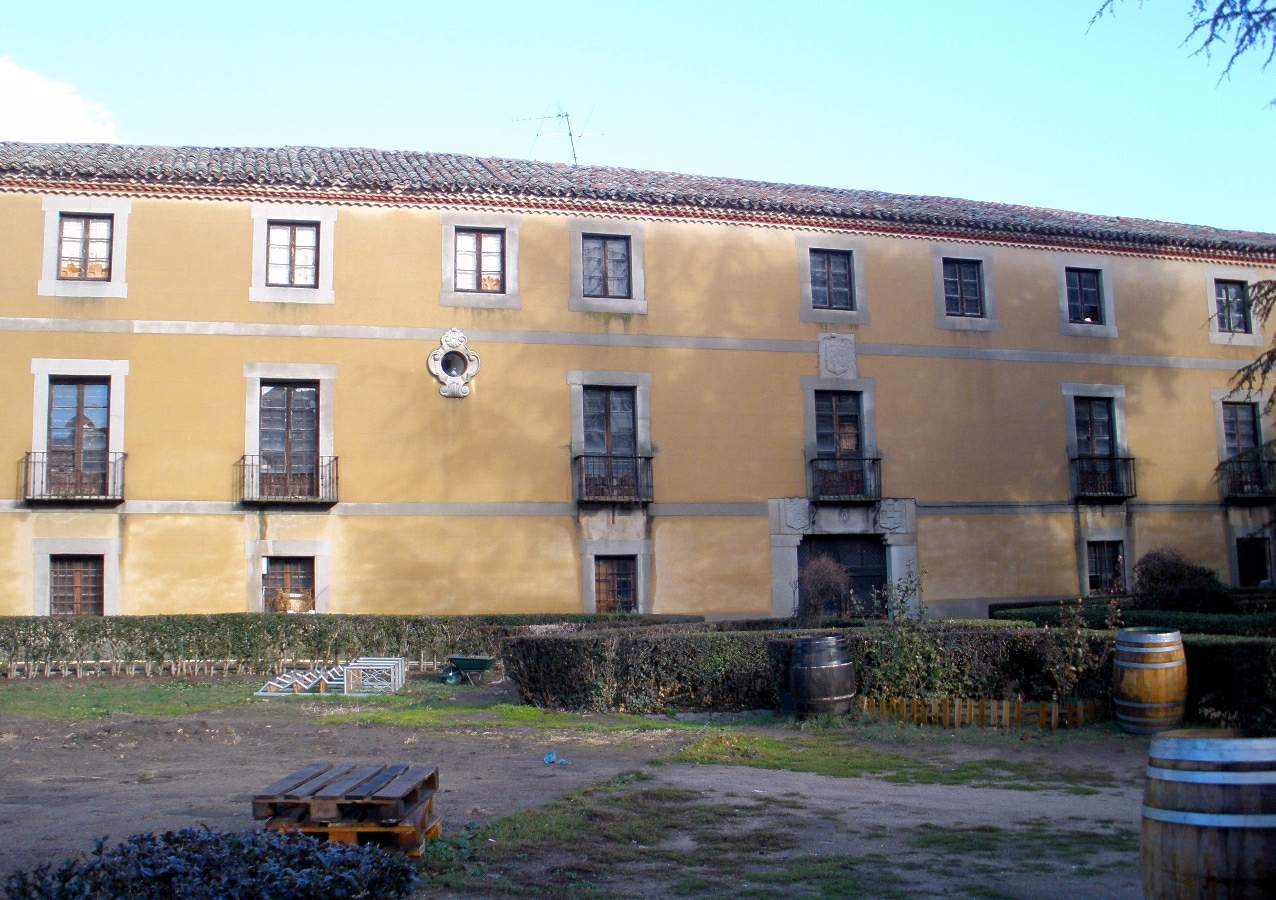
About this place
Palacio de Don Diego del Águila is a 16th-century palace built directly into the city walls of Ávila, one of Spain's best-preserved medieval towns. Standing along the eastern stretch of the walls near the San Vicente gate, the building has for centuries combined the role of a noble family residence with that of a guardian post for the city's fortifications.
How do you get there?
The palace sits within Ávila's walled old town, in an easily reachable part of the historic center. The simplest approach is on foot from the San Vicente gate, one of the main entrances into the historic quarter. From Ávila's train station it's roughly a 15–20 minute walk to the walls, and Ávila itself is under an hour from Madrid by train, making it a popular day-trip destination. Drivers will find parking near the walls, just a short walk from the palace itself.
What will you see?
Palacio de Don Diego del Águila is an example of the defensive-residential architecture typical of Castilian nobility at the close of the Middle Ages. The palace was the seat of the Águila family, descendants of Sancho de Estrada, one of the settlers who accompanied Don Raimundo of Burgundy in resettling the region after the Reconquista. The whole complex takes its name from this family and is also known as Palacio de los Águila.
Members of the Águila family bore responsibility for defending one of the most important sections of the city's fortifications: access through the San Vicente gate, the entire eastern wall as far as the Torreón de la Mula, and a significant stretch of the wall's northern slope. The building was therefore not only a home but a strategic defensive point, fortified against potential attacks.
In the 16th century, Diego del Águila offered buildings on Sofraga Square as a temporary home for the Poor Clare nuns before they found a permanent site in Ávila — an episode that still recalls the palace's ties to the city's religious life. The structure and gardens as they appear today date from a restoration carried out in the late 19th century, when both the palace itself and its surrounding grounds were renovated.
Today the complex operates as Palacio Sofraga, a hotel and restaurant, allowing visitors to do more than admire the historic architecture from outside — they can step inside and experience the atmosphere of a noble residence built into the city's defensive walls.
When should you visit?
Ávila is best explored in spring (April–June) or early autumn (September–October), when temperatures are mild and the town sees fewer crowds than at the height of summer. Summers can turn hot, especially at midday, making long walks along the walls uncomfortable. In winter, Ávila — sitting at over 1,100 meters above sea level — turns quite cold, but offers a quieter, more atmospheric visit, particularly when frost settles on the walls.
Frequently asked questions
How does Palacio de Don Diego del Águila differ from other Águila family palaces in Ávila? This was the family's main historic seat along the city walls, closely tied to defending the stretch from the San Vicente gate to the Torreón de la Mula, unlike the family's other residences scattered around the city.
Can you visit the inside of the palace? Yes. The building now houses the Sofraga hotel and restaurant, so visitors can step inside and experience its historic atmosphere rather than only viewing the facade from the street.
What was the Águila family's significance in Ávila's history? The Águila family, descended from Sancho de Estrada, was responsible for defending one of the key sections of the city walls and ranked among the most important noble families of medieval Ávila.
How much time should you set aside for the palace and its surroundings? Viewing the palace's exterior and the adjoining stretch of wall takes about 20–30 minutes, but it's worth combining with a visit to the full circuit of Ávila's walls, for which 2–3 hours is a good allowance.
Nearby places

Earn badges for the places you visit
Download NextOnTrip, discover new places and check off your trails.