About this place
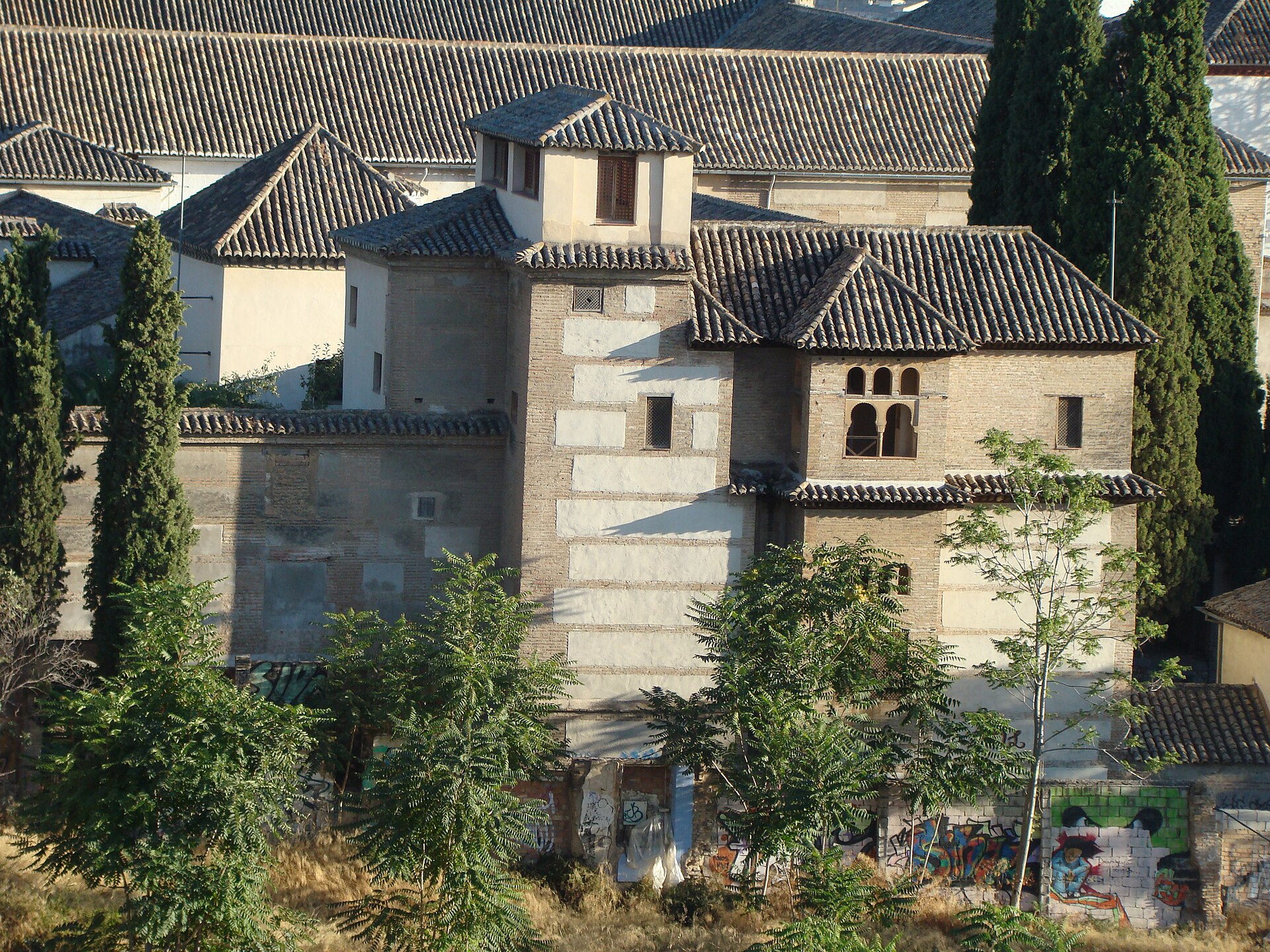
Palacio de Dar-Al-Horra is a compact but historically significant Nasrid palace tucked away in the Albaicín quarter of Granada. Unlike the crowded Alhambra just across the valley, this quiet monument offers a genuine feel for 15th-century Moorish Granada without the queues.
What is this place?
The palace was most likely built during the reign of Sultan Yusuf III, between 1408 and 1417, on the foundations of an even older Zirid-era palace from the 11th century. Its name, "Dar al-Horra," translates roughly as "house of the honest woman" or "house of the free woman," a reference to its most famous resident, Aixa al-Horra, mother of Boabdil, the last Nasrid sultan of Granada.
Aixa was the legitimate wife of Sultan Muley Hacén, but she lost his favor when he fell for a Christian slave, Isabel de Solís, who converted to Islam and took the name Zoraya. To defuse the tension this caused at court, Aixa was moved from the Alhambra to this palace, which became the effective political center of the last Nasrid kingdom during that turbulent period.
What will you see inside?
The building has two floors and a tower, arranged around a central courtyard with a rectangular reflecting pool at its heart — a classic feature of Andalusian domestic architecture that served both a decorative and cooling purpose in Granada's hot climate. Surviving fragments of stucco work and wooden ceilings show the geometric ornamentation typical of Nasrid design.
From the upper terrace, visitors get one of the best lesser-known views over the Alhambra hill and the rooftops of the Albaicín, rivaling the more famous viewpoints nearby but with far fewer people around.
What happened after the conquest?
After the Catholic Monarchs took Granada in 1492, the palace was granted to Hernando de Zafra, secretary to the royal court. It later became part of the Santa Isabel la Real convent complex, and in the 20th century passed into state ownership. Today it is managed by the Patronato de la Alhambra y Generalife, the same body that oversees the Alhambra itself.
How do you get there?
The palace sits in the heart of the Albaicín, among the narrow lanes of Granada's old Moorish quarter, a UNESCO World Heritage site. The most pleasant way to arrive is on foot — it's roughly a 15–20 minute uphill walk from Plaza Nueva in the city center. Local buses on lines C1 and C2 also climb the steep, winding streets of the neighborhood if you'd rather skip the walk.
When should you visit?
Early morning or late afternoon are the best times, when the sun is gentler and the Albaicín's narrow streets are quieter. Spring (April–May) and autumn (September–October) bring comfortable temperatures for exploring the hilly neighborhood on foot. In summer, it's worth avoiding the midday heat.
Frequently asked questions
Is there an entrance fee? Yes, there's a small admission charge, considerably lower than an Alhambra ticket. Check opening hours before visiting, as they can be limited.
How long does a visit take? Given its modest size, a visit typically takes 30–45 minutes, making it an easy addition to a longer walk through the Albaicín.
Should I combine it with other Albaicín sights? Definitely — the neighborhood's famous Alhambra viewpoints and its maze of old lanes are right nearby, so it's worth setting aside a whole afternoon to explore the area.
Is the palace connected to the Alhambra? Yes, both monuments date from the same Nasrid era and are managed by the same institution today, though Dar-Al-Horra remains a far quieter and lesser-known site.
Nearby places

Earn badges for the places you visit
Download NextOnTrip, discover new places and check off your trails.