About this place
Antiguo Monasterio de Santa Paula is a former Hieronymite convent in the heart of Granada, now hidden behind the facade of an elegant hotel.
How do you get there?
The building sits on Gran Vía de Colón, the main avenue linking Granada Cathedral with Plaza de la Trinidad, in what was once the northwestern sector of the city's Muslim medina, known as Saqayat al-Bazzarin (the Fuente de los Abaceros district). It's an easy walk from the cathedral, Plaza Nueva, or the Alcaicería — just a few minutes on foot. Bus stops line Gran Vía directly outside, and underground parking is available within a few hundred meters.
What will you see?
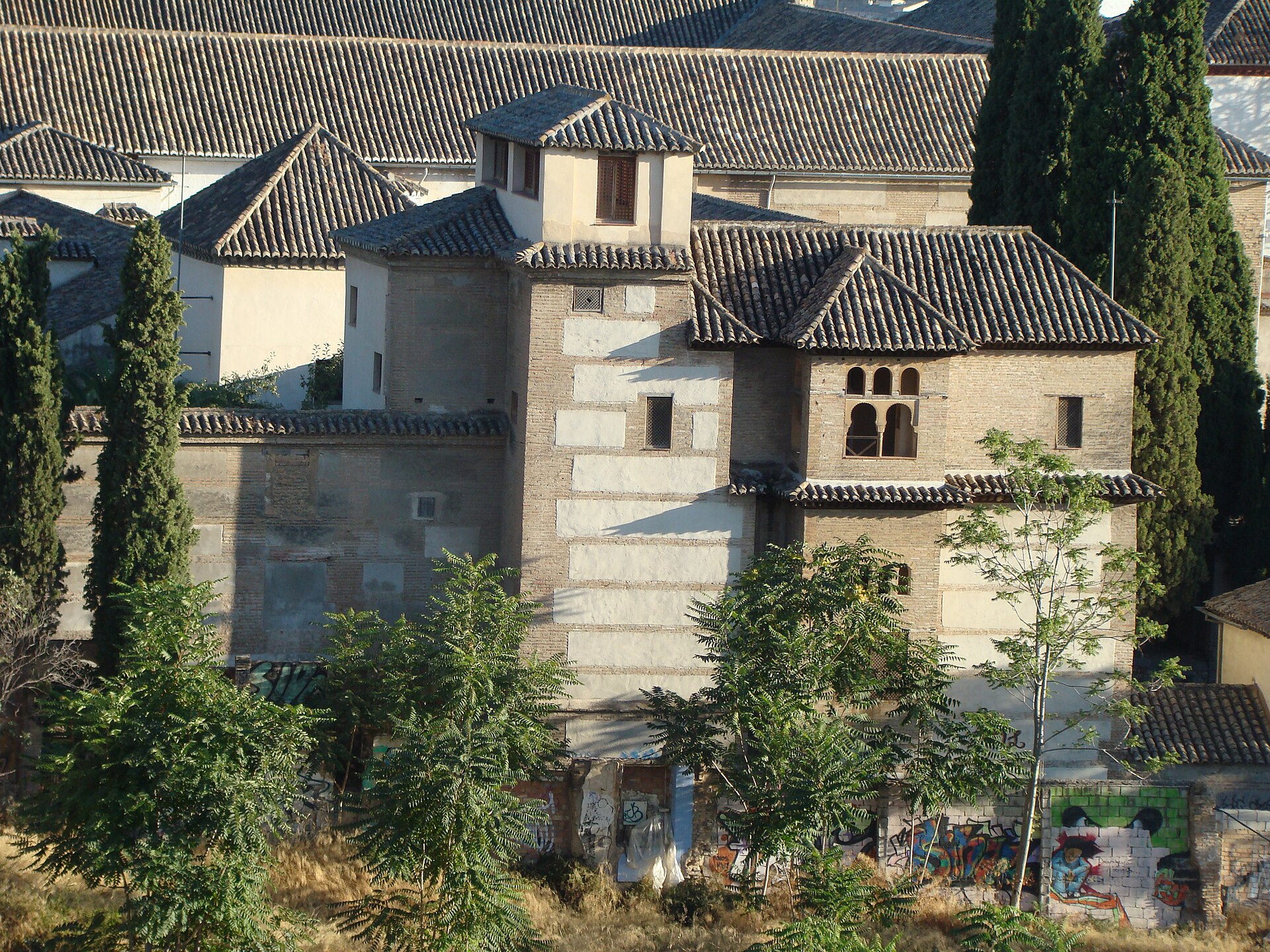
The convent was founded in 1531 at the initiative of Jerónimo de Madrid, abbot of Santa Fe and a dignitary of Granada Cathedral. Its name came from the then-archbishop of Granada, Gaspar de Ávalos, making it the ninth convent established in the city. Hieronymite nuns settled on a site previously occupied by Nasrid-era houses, and rather than demolishing them, the community incorporated the existing structures into the convent complex. As a result, fragments of these Arab houses — along with their original spatial layout — survive inside the building to this day, a rare feature in this part of the city.
The convent weathered several centuries of change, but the turn of the 20th century brought its biggest loss. Urban works began in 1895 to cut a new street through Granada's old center, and construction of Gran Vía de Colón started on March 14, 1900. The convent lost its orchard in the process — a garden that had been central to community life for centuries.
By the late 1970s, the Hieronymite nuns had relocated to the Monasterio de San Jerónimo, another well-known convent in Granada. The vacated building was later converted for hospitality use: it now houses the Hotel Santa Paula, which preserves the historic architecture, blending Renaissance convent walls with exposed Nasrid-era elements.
When should you visit?
Since the building now operates as a hotel rather than a museum, there are no fixed visiting hours in the traditional sense — the architecture is best appreciated from outside and from the building's public areas. The best time to explore this part of Granada is spring (April–May) or early autumn (September–October), when temperatures are mild and the city sees fewer crowds than in July and August. Winters in Granada can be cool, but the compact, historic streets around Gran Vía make for pleasant, quiet walks even then.
Why is it worth stopping by?
Santa Paula is a snapshot of Granada's layered history in a single building: Nasrid residential architecture, a 16th-century religious foundation, and 19th-century urban modernization all overlap here. It's a rare chance to see how the Christian city was literally built on the foundations of the Muslim one, rather than simply replacing it.
Frequently asked questions
Can you visit the Antiguo Monasterio de Santa Paula? The building now functions as a hotel, so access to the interior is largely limited to guests. Architectural elements, including remains of Nasrid-era houses, can still be seen from outside and in the publicly accessible areas.
Who founded the Santa Paula convent? It was founded in 1531 by Jerónimo de Madrid, abbot of Santa Fe and a dignitary of Granada Cathedral, and named by the archbishop of Granada, Gaspar de Ávalos.
Why did the convent lose its garden? Urban works to open a new street began in 1895, and construction of Gran Vía de Colón started in 1900, absorbing the site of the convent's former orchard into the new city layout.
Where did the nuns move after leaving Santa Paula? In the late 1970s, the Hieronymite nuns relocated to the Monasterio de San Jerónimo, another historic convent in Granada.
Nearby places

Earn badges for the places you visit
Download NextOnTrip, discover new places and check off your trails.