About this place
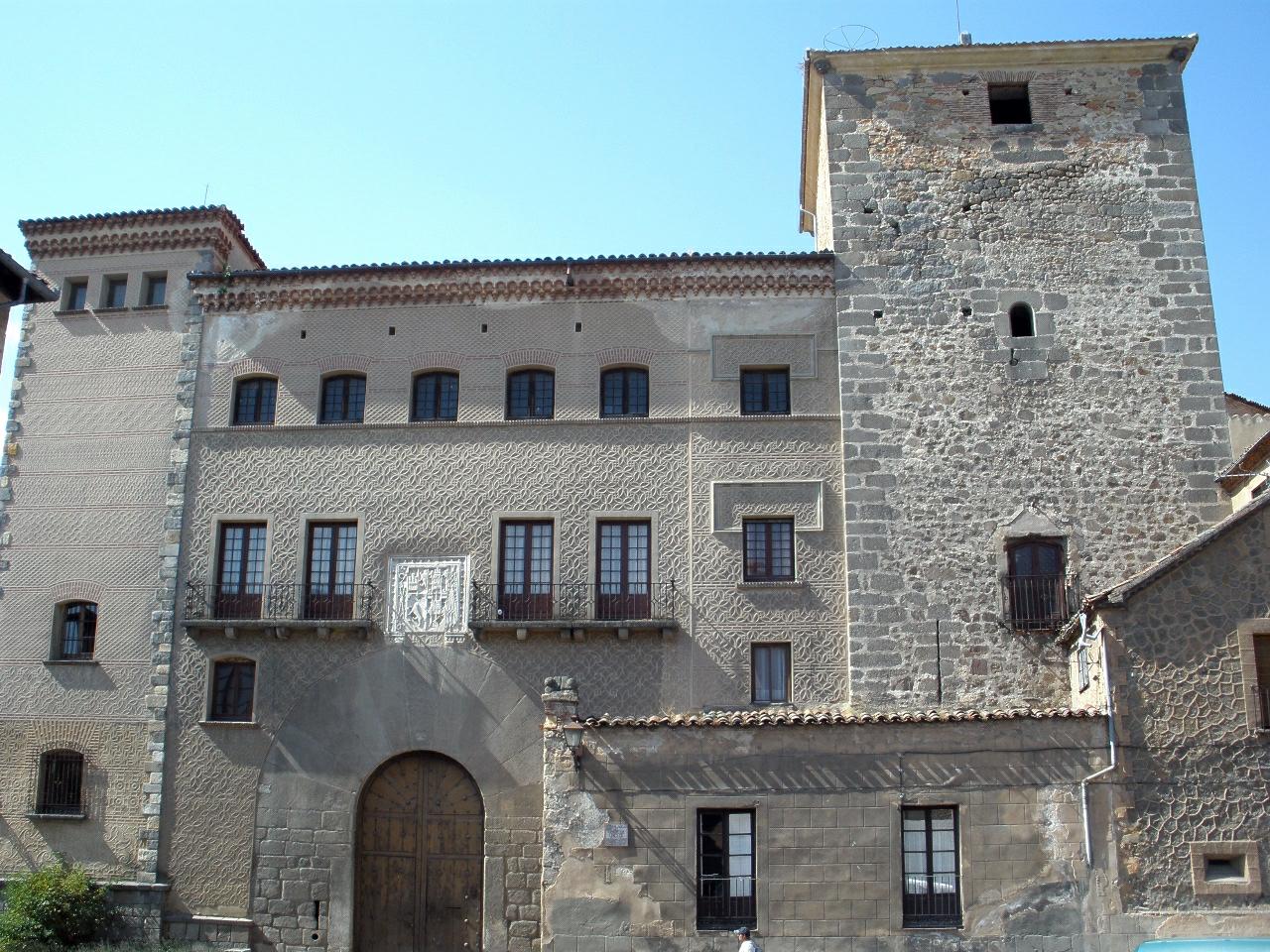
Palacio Azpiroz is a Gothic town palace in Segovia, Spain, standing on Plaza del Platero Oquendo. The building goes by several other names too — Palacio de Cascales or Palacio del Conde de Alpuente — a legacy of the many families who owned it across the centuries, each leaving their name attached to the house.
What is this building?
The palace was built in the last third of the 15th century at the initiative of Alonso Cascales, a wealthy Segovian knight. It rose on the site of the old morería, the neighborhood once inhabited by the city's Moorish population, and parts of it reuse the foundations of an earlier Arab-style structure. It stands as one of many noble residences that shaped Segovia's historic center during the transition from the medieval to the early modern period.
What does the facade look like?
The front of the building is done in the Flamboyant Gothic style typical of the late Middle Ages. Its most distinctive feature is a set of slate-carved windows decorated with Gothic tracery — an unusual material choice rarely seen on other Segovian palaces. The original entrance was a horseshoe arch in the Mudéjar tradition, though it was later replaced with a simpler, straight lintel doorway. The wider facade is also worth a look: Segovia is famous for sgraffito decoration, a technique of scratching patterns through layered plaster to reveal contrasting colors underneath, and this building carries traces of that local craft tradition shared by many houses nearby.
What's inside the courtyard?
At the heart of the palace is an interior courtyard framed on three sides by seven granite columns. Two of the corner columns are topped with octagonal capitals bearing the Cascales family coat of arms, a lasting mark of who commissioned the building. The courtyard also preserves its original well curb. A more recent addition is a stained-glass roof designed by Carlos Muñoz de Pablos, a noted glass artist, blending the centuries-old stonework with contemporary craftsmanship.
Who uses the building today?
The palace currently serves an administrative role as the seat of the regional government office for mobility and digital transformation within the Castile and León regional administration. Because of this, the interior is not open to casual visitors — sightseeing is generally limited to the facade and, depending on office hours, occasional glimpses of the courtyard.
How do you get there, and what should you know?
The palace sits in the heart of Segovia's old town, within easy walking distance of both the cathedral and the Roman aqueduct, making it a natural stop on any walk through the historic center. The best way to reach it is on foot, through the narrow streets of the old quarter — themselves worth the walk for their cobblestones, sgraffito-covered facades, and views toward the hills surrounding the city.
Frequently asked questions
Can you go inside Palacio Azpiroz? No — the building houses a regional government office and is not open for tourist visits. Visitors can view the facade and, depending on the office's schedule, sometimes see into the courtyard.
Why does the palace have so many names? Ownership changed hands repeatedly over the centuries. Azpiroz, Cascales, and Conde de Alpuente all refer to different families who owned the house at different points in its history.
What's the most interesting architectural detail? The Gothic slate windows and the courtyard with its granite columns and Cascales coat of arms on the capitals — a striking mix of Gothic and Mudéjar-influenced detail.
How much time should you set aside to see it? Since the visit is mainly about the exterior, a few minutes is enough — it pairs well with a longer walk through Segovia's historic center.
Nearby places

Earn badges for the places you visit
Download NextOnTrip, discover new places and check off your trails.