About this place
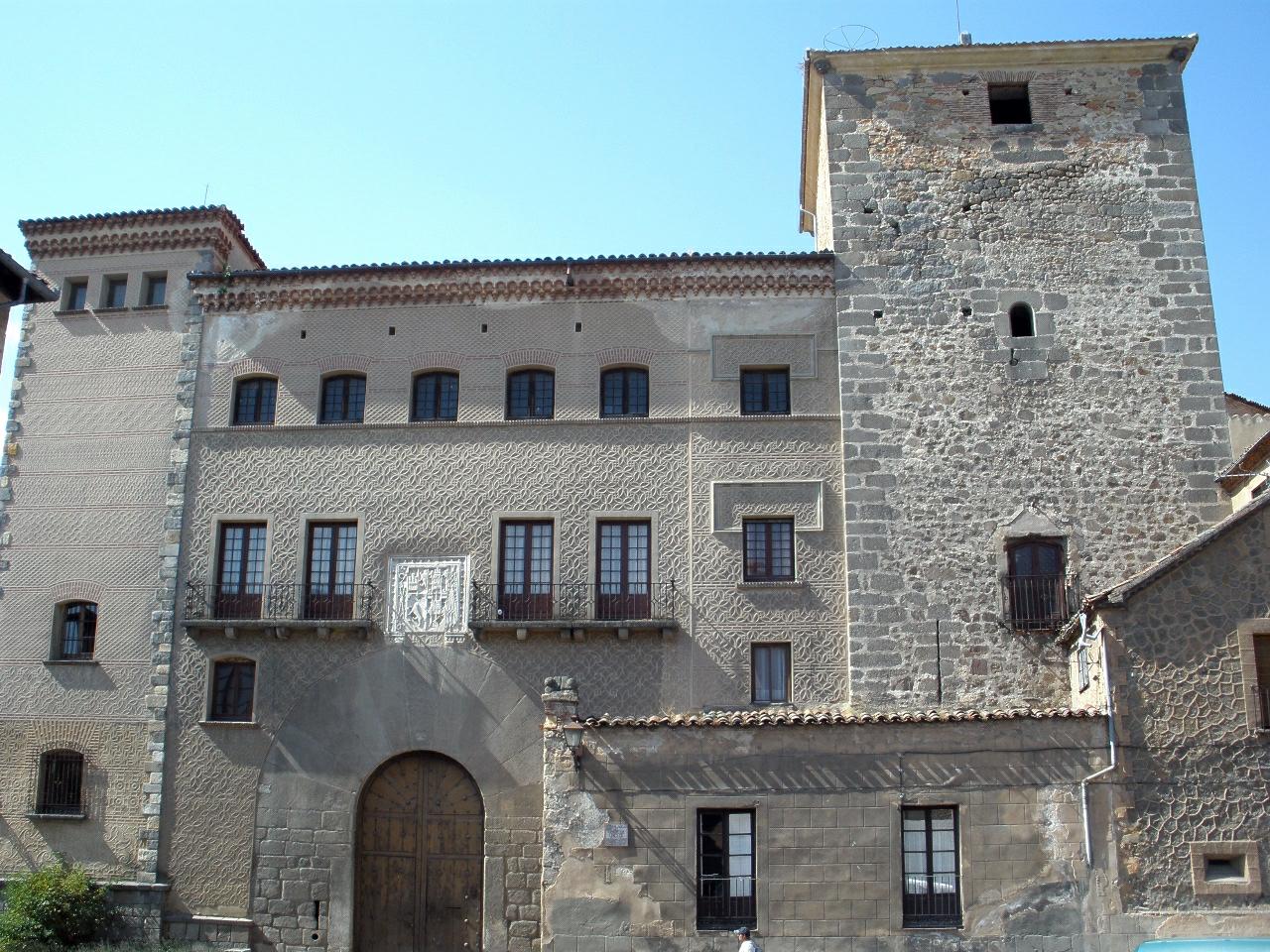
Casa de los Marqueses de Moya is a medieval fortified house in Segovia, also known as Casa de las Cadenas (House of the Chains). It stands on Plaza del Conde de Cheste, right against the city walls at the eastern edge of the Caballeros quarter, and once guarded the northeastern flank of Segovia together with the neighboring Casa de los Cáceres.
How do you get there?
The house sits inside Segovia's old walled town, an easy walk from the cathedral and the Alcázar. The simplest approach is on foot from Plaza Mayor, heading toward the Caballeros quarter in the direction of where the Puerta de San Juan once stood (the gate itself was demolished in 1888, though its name survives locally). There is no dedicated parking at the site — visitors leave cars outside the old town and walk the last stretch through steep, narrow streets.
What will you see?
What survives today reflects two distinct building phases. The first, from the 13th century, gave the structure its clearly military character: the outer enclosure, with a round tower and crenellated battlements, still reads as rugged defensive architecture. The second phase, in the 15th century, converted the fortress into a palatial residence built around an inner courtyard, adding a square tower. The building follows a roughly square floor plan with towers at every corner except the northeast one, where the Puerta de San Juan — one of the city's gates — used to stand before its demolition.
Above the main doorway, a stone coat of arms is carved into the wall. It belongs to Andrés Cabrera and Isabel de Bobadilla, the couple who acquired the house around 1500. Both were notable figures in Spanish history: Andrés Cabrera served as alcaide (warden) of the nearby Alcázar, and Isabel de Bobadilla was one of the closest confidantes of the future Isabel the Catholic — their support allowed the princess to prepare safely in Segovia for her eventual accession to the Castilian throne. Before that, the house belonged to the Counts of Chinchón and Marquises of Moya, from whom it takes its name.
Casa de los Marqueses de Moya is privately owned today and used as a residence, so the interior is not open to visitors. The draw is the exterior itself — the walls, towers, and carved details best appreciated from the plaza and surrounding lanes.
When should you visit?
Morning or late-afternoon light works best for photographing the façade, when it rakes across the stonework and highlights the carved coat of arms. Segovia gets busy in summer with visitors heading to the Alcázar and the Roman aqueduct, but the Caballeros quarter, where this house stands, stays noticeably quieter — a good reason to pair a visit here with a walk along the nearby stretch of city walls. Spring and autumn are the most comfortable seasons for exploring the old town's steep streets on foot.
Frequently Asked Questions
Can you go inside Casa de los Marqueses de Moya? No. The building is privately owned and used as a residence, so the interior is closed to the public. It can only be viewed from the outside.
Why is it also called Casa de las Cadenas? The name "House of the Chains" refers to an old Spanish tradition of marking buildings connected to legal immunity or the special status of their owners with chains at the entrance.
Who were Andrés Cabrera and Isabel de Bobadilla? They were the married couple who acquired the house around 1500. Andrés Cabrera managed Segovia's Alcázar as its warden, while Isabel de Bobadilla was a trusted lady-in-waiting to the future Isabel the Catholic and played a key role in the events leading up to her coronation.
What else is worth seeing nearby? The house borders Segovia's city walls and sits close to the Caballeros quarter, putting it within easy reach of the Alcázar and other surviving fortified houses in the city, such as Casa de los Cáceres and Casa de Lozoya.
Nearby places

Earn badges for the places you visit
Download NextOnTrip, discover new places and check off your trails.