About this place
Casa de los Picos is one of Segovia's most instantly recognizable buildings, famous for a facade studded with hundreds of stone points. It stands on Calle Juan Bravo, right where the street takes its sharpest turn, making it a natural landmark on the walk from the Roman aqueduct toward the Plaza Mayor.
Where does that spiked facade come from?
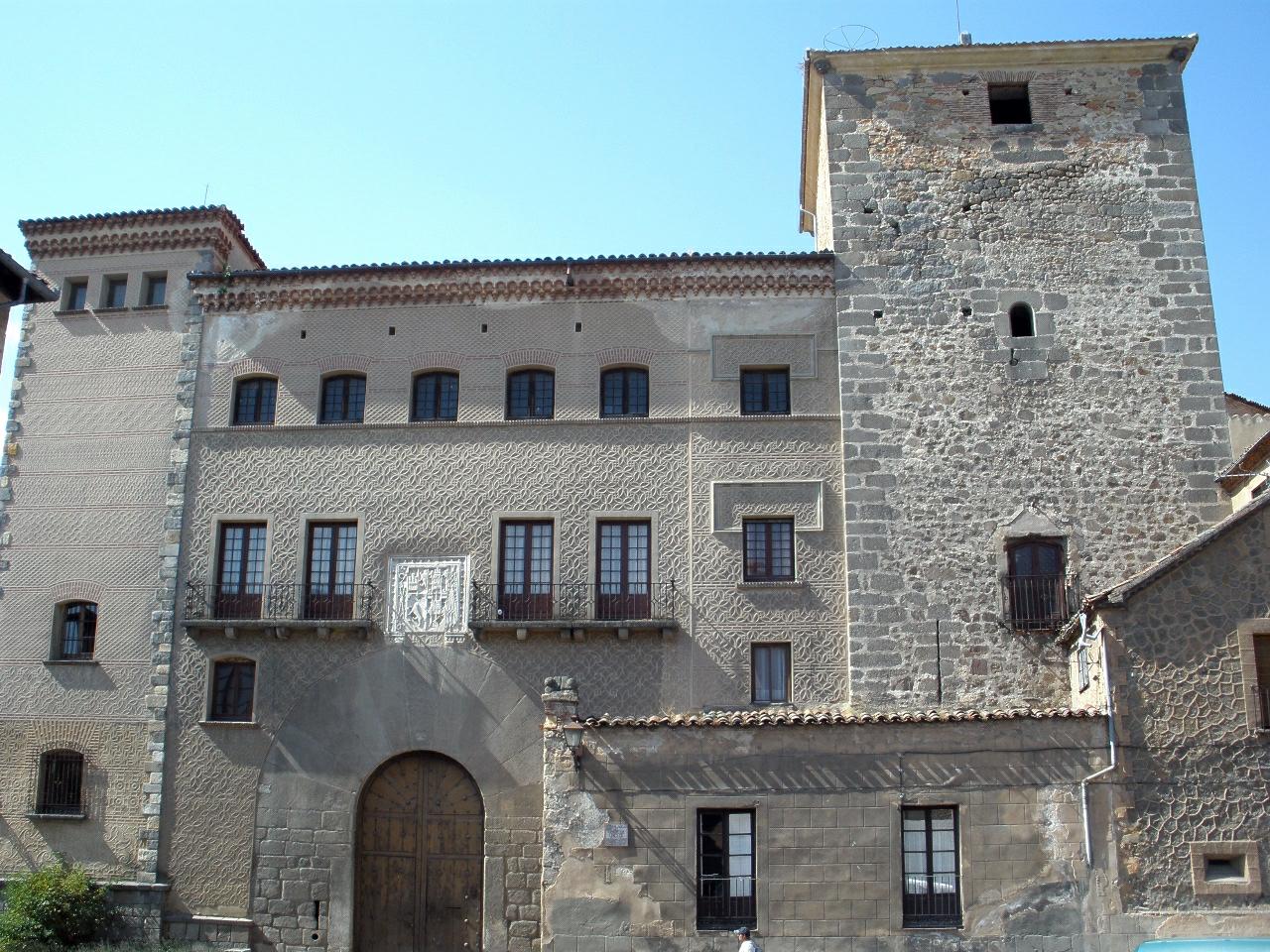
The building was raised in the late 15th century on the initiative of the city councilman Juan de la Hoz, with Pedro López de Ayala as its patron. The entire wall surface, from the base to the cornice, is covered in granite blocks carved into sharp, diamond-like points — more than 600 of them in total. This style of decoration, typical of late Gothic architecture, was meant to signal the wealth and status of the family that owned the house. Seen from a distance, the facade looks almost scaled, like the hide of some giant creature; up close, it reads as a precisely arranged mosaic of angular blocks that throw strong shadows at almost any time of day.
How do you get to Casa de los Picos?
The building sits at Calle Juan Bravo 5, right in the heart of Segovia's old town. It's only a few minutes' walk from the Roman aqueduct — just follow Calle Cervantes and you'll arrive exactly where Calle Real bends most sharply. From there it's a straight walk on to the Plaza Mayor and the cathedral, so Casa de los Picos fits naturally into any walking route through the historic center.
What can you actually see today?
Since the 1970s the building has no longer served as a private residence. Spain's Ministry of Education took it over and, after renovation, turned it into an art school that has operated here since 1977. Today it houses the Escuela de Arte y Superior de Diseño de Segovia (Segovia's School of Art and Higher School of Design). That means the interior is used daily by students, and visitors come mainly for the facade itself — which is, in fact, the whole reason to stop here. It's worth passing by at different times of day: low sunlight throws sharp shadows across the pointed stones, giving a completely different impression than the flat light of midday.
When is the best time to visit?
Segovia sits close enough to Madrid to draw plenty of day-trippers, so the old town can get crowded around midday, especially on weekends and in summer. Early morning or late afternoon are the best windows for viewing the facade without a crowd of other visitors photographing the same spot. Since this is an outdoor attraction, it can be visited year-round regardless of weather — though in winter the earlier sunset shortens the window for good natural-light photos.
Frequently Asked Questions
Can you go inside Casa de los Picos? The interior is occupied by an active art school, so visits are mostly limited to admiring the facade from the outside. Access inside depends on the school's current activity.
How many stone points cover the facade? More than 600 granite blocks carved into sharp points cover the wall, arranged in regular rows from the base to the cornice.
How far is it from the Roman aqueduct? It's a walk of just a few minutes — follow Calle Cervantes and you'll reach the sharpest bend of Calle Real, right where Casa de los Picos stands.
Who built Casa de los Picos, and when? It was built in the late 15th century on the initiative of city councilman Juan de la Hoz, with Pedro López de Ayala as its patron.
Nearby places

Earn badges for the places you visit
Download NextOnTrip, discover new places and check off your trails.