About this place
Casa de la Tierra is a historic palace-house standing just outside the old walled city of Segovia, tied for centuries to the self-governing history of the surrounding region.
What is the history behind the building?
A structure on this site can be traced back to the 15th century, when it was known as Casa de los Pueblos — a house serving the villages that formed part of Segovia's old land community. The building visitors see today, however, dates from the mid-18th century. It was raised by José de la Calle, a construction engineer who also worked on the royal residence at La Granja de San Ildefonso, one of the most significant architectural projects in the Segovia region at the time. From the outset the house was built for a representative role: it served as the meeting place for delegates of the Comunidad de Ciudad y Tierra de Segovia, the historic assembly that joined the city with the villages and hamlets of its surrounding land.
What makes the facade and interior distinctive?
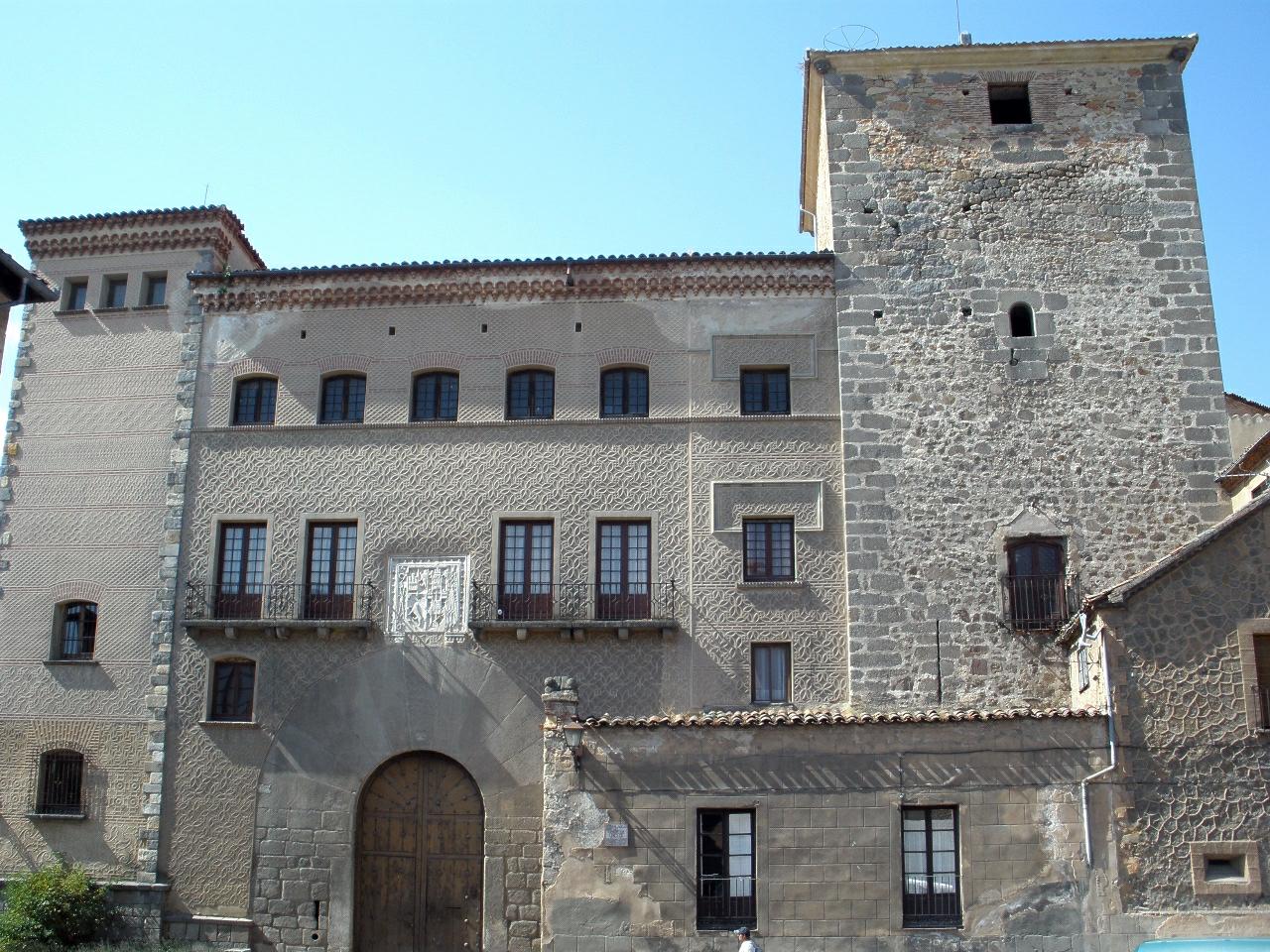
Casa de la Tierra stands apart in Segovia's cityscape through decoration found nowhere else in the city: painted murals combined with esgrafiado, a technique in which patterns are scraped into a top layer of plaster to reveal a contrasting layer beneath. This ornamentation covers not only the facade but extends into parts of the interior, underlining the building's ceremonial character. Architecturally, the house follows the palace-house layout typical of Segovia: a U-shaped plan with two floors arranged around an internal courtyard, enclosed on three sides by a covered, arcaded gallery.
What is its legal and current status?
On November 8, 2021, Casa de la Tierra was declared a Bien de Interés Cultural — a Cultural Heritage Asset — under the Monumento category, the highest level of legal protection granted to heritage buildings in Castile and León. The building has never functioned as a museum; instead, it has carried an administrative role for centuries. Today it houses the headquarters of the Comunidad de la Ciudad y Tierra de Segovia, the institution that continues the tradition of the old city-and-land assembly. Inside are the community's management offices, its secretariat, a historical archive, and the hall where the assembly still meets.
Why does it matter to visitors exploring Segovia?
Casa de la Tierra is a rare case of an administrative building that has served the same community for over five centuries — first as the gathering place for delegates of the city and its surrounding villages, and today as headquarters for the institution that inherited that role. Its painted, sgraffito-decorated facade is instantly recognizable against the plainer stone architecture typical of Segovia's grand buildings, making it a distinctive stop for anyone walking just beyond the old city walls.
Frequently Asked Questions
Where is Casa de la Tierra located? It stands just outside the walls of Segovia's old town, a short distance from the historic center.
What was the building originally used for? Since the 15th century a house called Casa de los Pueblos stood on this site, serving the villages of Segovia's land community; the current building was constructed in the mid-18th century.
What is the most distinctive feature of the building? Its facade decoration — murals combined with esgrafiado plasterwork, extending partly into the interior — a decorative style unique among Segovia's historic buildings.
Is Casa de la Tierra open to the public as a museum? No — it currently functions as the administrative headquarters of the Comunidad de la Ciudad y Tierra de Segovia, housing offices, an archive, and an assembly hall.
Nearby places

Earn badges for the places you visit
Download NextOnTrip, discover new places and check off your trails.