About this place
The Jewish Quarter of Segovia (Judería) covers the southern section of the old walled city and ranks among the best-preserved Sephardic districts in Castile. Jews had settled here since the 11th century, and the quarter grew significantly after the anti-Jewish riots in Burgos in 1391 — remaining active until the expulsion from Spain in 1492.
How do you get to the Jewish Quarter?
The Judería sits inside the old city walls, right next to the cathedral, so it's an easy walk from the historic center — just a few minutes from Plaza Mayor. A good starting point is Calle Judería Vieja, home to the Jewish Quarter Visitor Centre, which explains the history of Segovia's Sephardic community through information panels, artifacts and digital displays.
What can you see in the Jewish Quarter?
The Old Main Synagogue (Corpus Christi Church)
The centerpiece of any visit is the building now known as the Corpus Christi convent church, first recorded as a synagogue in 1373. It served the Jewish community until 1410, when Christian authorities seized it and converted it into a Catholic place of worship. The structure is modest and has no exterior decoration — medieval Spanish law forbade synagogues from rising above the height of Christian churches. A fire on the night of 2–3 August 1899 badly damaged the interior, stripping it down to its bare architectural elements; the building's current appearance dates from a 2004 restoration that recovered some of its original Sephardic character.
The House of Abraham Senior
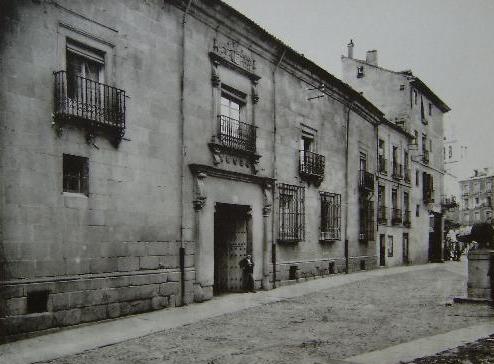
Part of the former home of Abraham Senior still stands in the quarter. Senior was an influential Jewish figure in Segovia, one of the few who kept royal privileges at court right up to the end without converting. Together with his son-in-law Meir Melamed, he served the Catholic Monarchs until 1492. The building today houses an educational centre dedicated to the history of the Judería.
The Jewish Cemetery
A typical walk through the quarter ends along Calle del Socorro, once home to the community's slaughterhouses, then continues through the Puerta de San Andrés and across the small Puente de la Estrella bridge to the Jewish cemetery. The rock-cut graves are still visible today, more than five centuries after the site fell out of use.
When is the best time to visit?
The quarter is compact and best explored outside peak season — spring or autumn bring fewer crowds to its narrow lanes. The Corpus Christi church interior and the visitor centre follow Segovia's standard tourist opening hours, so it's worth checking ahead if your plan involves more than a stroll through the streets.
Frequently asked questions
How many synagogues did the Judería once have? Historical sources describe five synagogues at the quarter's height, along with two Talmudic schools, its own slaughterhouse, and a mikveh for ritual purification baths.
Can you visit the Old Main Synagogue? Yes. The building now functions as the Corpus Christi convent church and is open to visitors, who can still see traces of its Sephardic origins preserved through the 2004 restoration.
Why did the Jewish quarter develop in this particular spot? The Jewish community settled in the southern part of the walled city as early as the 11th century, and the district consolidated and expanded here after the unrest of 1391.
What happened to Segovia's Jews after 1492? The 1492 expulsion edict forced the community to leave the city. Some prominent families, such as Abraham Senior's, had served at the court of the Catholic Monarchs, but ultimately had to emigrate or convert to Catholicism.
Nearby places

Earn badges for the places you visit
Download NextOnTrip, discover new places and check off your trails.