About this place
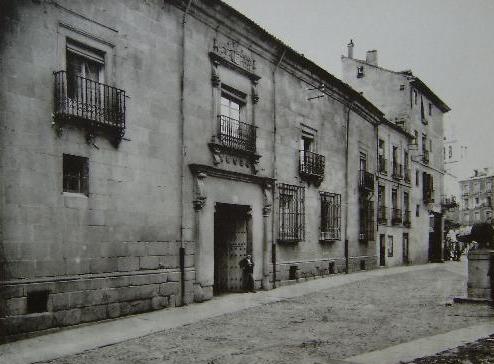
Casa del Secretario is a Renaissance townhouse in Segovia's historic centre, the kind of building visitors often walk past without realizing who once lived behind its façade. It stands on the narrow Calle de Valdeláguila, a short walk from the cathedral, and even though nothing inside is open to the public, the exterior alone is worth a pause.
Who lived in Casa del Secretario?
The house takes its name from Gonzalo Pérez, secretary to kings Charles I and Philip II — a man with direct access to the most sensitive affairs of the Spanish crown in the 16th century. Before him, the property belonged to Diego Enríquez del Castillo, chronicler to King Henry IV. Both men shared the same privilege: proximity to power, and a home in one of Segovia's most prestigious quarters, close to the city's religious and administrative centres.
What can you actually see here?
The main draw of Casa del Secretario is its plateresque façade, the ornate strand of Spanish Renaissance architecture that mixes late-Gothic decorative richness with classical structural elements. Carved reliefs on the front reference the myth of Hercules, a motif frequently used in 16th-century Spain to signal strength, virtue, and the owner's standing in society. Look closely at the stonework around the windows and the main portal — that's where most of the symbolic detail is concentrated.
The interior isn't open for visits, so a stop here means viewing the façade from the street. That's fairly typical in Segovia, where many private noble houses from the city's golden age survive exactly this way — as architectural evidence rather than museum pieces you can walk through.
How do you get to Casa del Secretario?
The building sits within Segovia's old town, among the tight web of streets surrounding the cathedral. Walking is by far the easiest way in — the historic centre is compact and pedestrian-friendly, and the walk from Plaza Mayor or the cathedral takes only a few minutes. It's worth pairing this stop with nearby noble houses, since several sit within short walking distance of each other.
When is the best time to visit?
Because the building is seen from outside, time of day matters more than season. Morning light works best on the stone façade and helps you avoid the crowds that build up around Segovia's main attractions in summer. Spring and autumn offer a reasonable balance between mild weather and fewer visitors overall.
Frequently Asked Questions
Can you go inside Casa del Secretario? No, the building is privately owned and not open to the public. Only the façade can be viewed, from the street.
Who was the secretary the house is named after? Gonzalo Pérez, secretary to kings Charles I and Philip II. Before him, the house belonged to Diego Enríquez del Castillo, chronicler to Henry IV.
What do the Hercules motifs on the façade represent? In Renaissance Spain, references to Hercules symbolized strength and virtue, underscoring the social status of the house's owner.
How much time should you plan for this stop? Just a few minutes — it's a point of interest along an old-town walking route, not a standalone attraction requiring an extended visit.
Nearby places

Earn badges for the places you visit
Download NextOnTrip, discover new places and check off your trails.