About this place
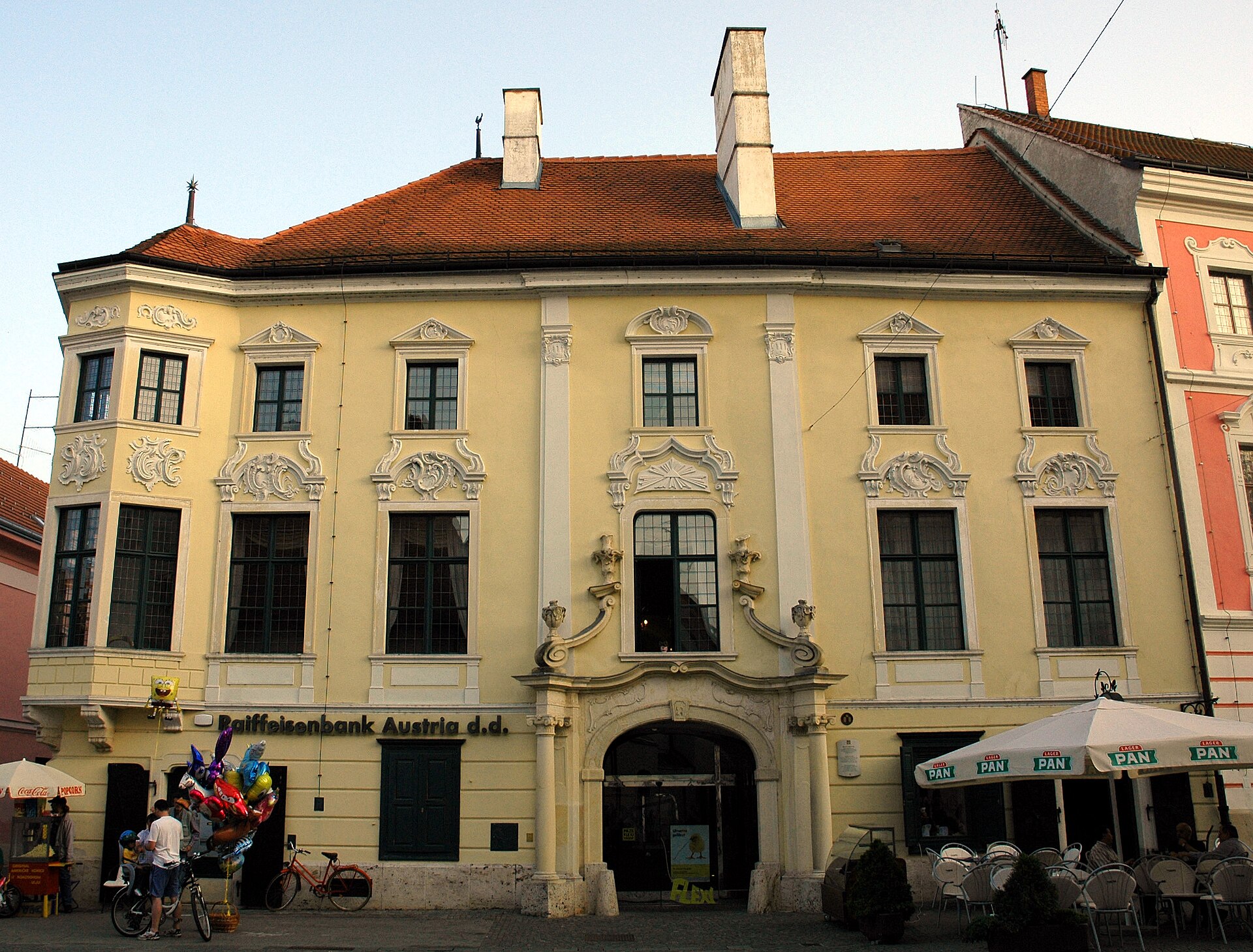
Prašinski-Sermage Palace is one of the most striking Baroque residences in Varaždin, standing on what used to be Theatre Square and is today known as Stančić Square. The single-storey corner building follows an L-shaped layout with two rectangular wings, placing it among the top-tier landmarks of a city famous for its Baroque architecture.
Who built the palace and why does it carry two names?
Construction began in the late 17th century under Baron Franjo Prašinski (Prassinzky), who served as Croatia's chief customs inspector — the source of the first part of the palace's name. The second name entered the picture in the mid-18th century: in 1745, Baroness Ivana Prašinski married Count Petar Ivan Sermage, and ownership of the building passed to the Sermage family. It was this family that gave the palace much of its present appearance, commissioning a Rococo remodel around 1759 that softened the original Baroque facade with lighter, more decorative detailing while keeping the overall Baroque structure intact.
What should you look out for at the palace?
The standout architectural feature is the ornate entrance portal topped by a balcony — widely regarded as the earliest surviving example of a Baroque portal-with-balcony combination in Croatia. It's a detail that sets the building apart from Varaždin's other noble residences and consistently catches the eye of both architecture enthusiasts and casual visitors strolling through the old town. The L-shaped plan, wrapped around two wings, forms an intimate inner courtyard typical of the era's townhouse-and-palace construction.
Ownership kept changing after the Sermage era: in 1791, Petar Ivan Sermage sold the palace to Regina Drašković (née Domjanić), and the Sermage family left Varaždin for good. From 1808, the Paszthory family took over, adding the neighbouring house to the property and converting it into a farm building — the Paszthorys are recorded as owners as late as the mid-19th century.
What can you visit inside today?
Between the two World Wars the building housed a series of different tenants. After World War II, the City of Varaždin handed it over to the City Museum, and it has remained in museum hands ever since. Today the palace is home to part of the Varaždin City Museum's collection — the Gallery of Old and New Masters together with the Archaeological Department. That means a visit combines admiring Baroque-turned-Rococo architecture with browsing paintings from different eras and archaeological finds that trace the region's history.
How do you get there and when is the best time to visit?
The palace sits right in the heart of Varaždin's historic old town, next to other landmark squares and townhouses, making it a natural stop on any walking route through the centre. Spring and summer are the most rewarding seasons to visit — the old town is at its liveliest, daylight brings out the facade's details, and the surrounding squares and side streets add plenty to see along the way.
Frequently asked questions
Who built Prašinski-Sermage Palace? Construction was initiated in the late 17th century by Baron Franjo Prašinski, Croatia's chief customs inspector.
Why does the palace have a double name? After Baroness Ivana Prašinski married Count Petar Ivan Sermage in 1745, the building passed to the Sermage family, giving rise to the combined name Prašinski-Sermage.
What is the palace's most notable architectural feature? Its representative portal topped with a balcony, considered the earliest surviving example of this Baroque design in Croatia.
What is housed in the palace today? Part of the Varaždin City Museum's collection — the Gallery of Old and New Masters and its archaeological holdings.
Nearby places

Earn badges for the places you visit
Download NextOnTrip, discover new places and check off your trails.