About this place
Onze-Lieve-Vrouw-Onbevlekt-Ontvangenkerk is a small parish church in Melle, a municipality in the province of East Flanders, right on the edge of Ghent. Modest in scale, the building has a compact history of its own — it started life as a private chapel before eventually being raised to full parish status.
Getting there
Melle sits on the south-eastern outskirts of Ghent, so the drive or public-transport trip from the city centre takes only about fifteen minutes. The church stands on Tuinstraat, in a quiet residential part of the municipality. It makes for a good short stop for anyone exploring the wider Ghent and Scheldt valley area who wants to see something beyond the city's better-known, crowd-drawing landmarks.
What to see
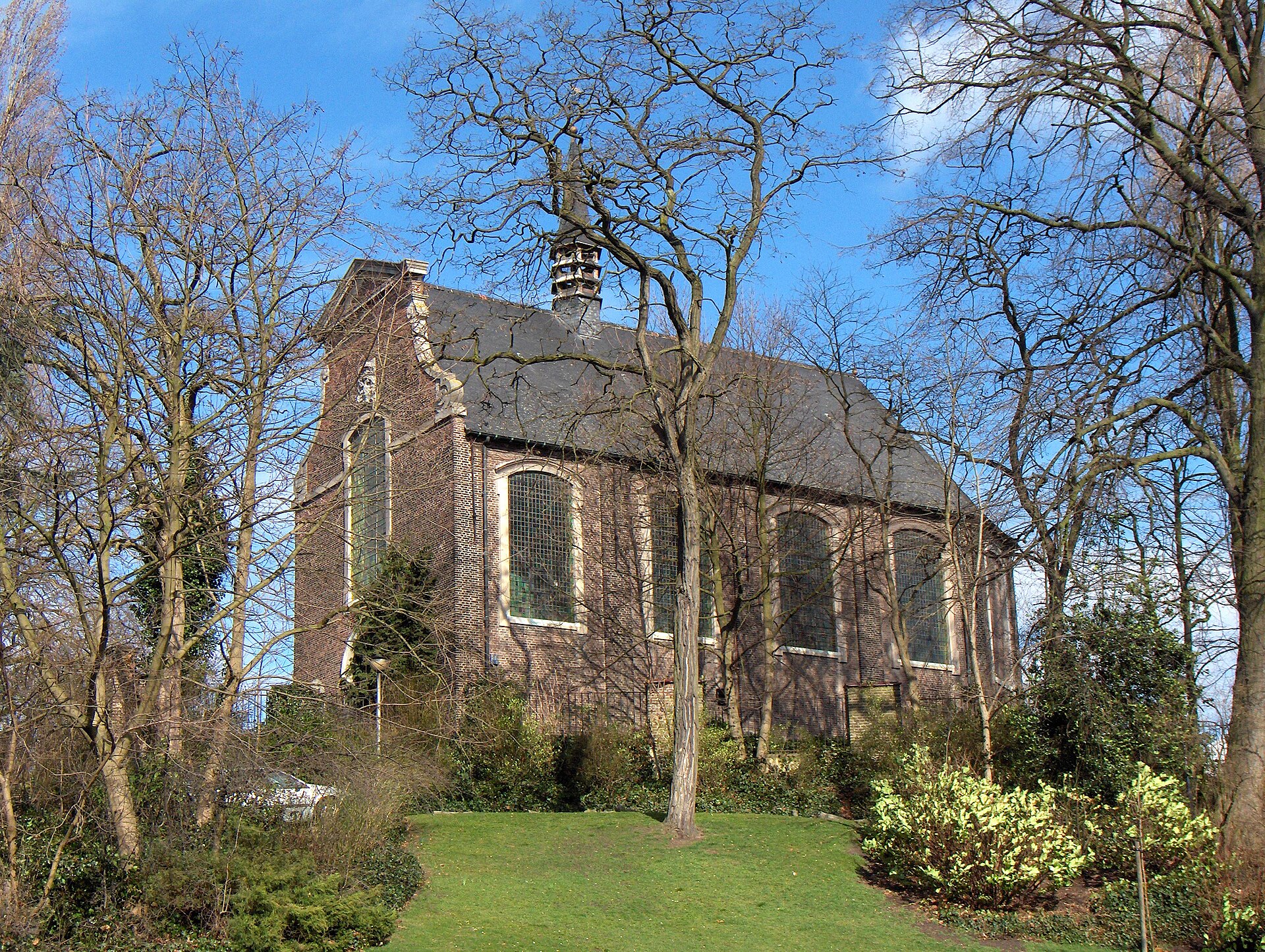
The building was constructed in Neo-Gothic style as a single-nave chapel. It was commissioned and funded by the married couple Wauters-van Kerckhove for the needs of the local community, and consecrated in 1871. A small roof turret marks the roofline — a common feature on Neo-Gothic chapels of that period, used to house a bell despite the building's otherwise modest footprint.
Inside, the standout feature is a wooden, pointed barrel vault. This kind of construction was frequently used in smaller nineteenth-century Flemish churches: instead of a heavier stone ribbed vault, builders opted for a lighter and cheaper timber structure that still kept the pointed, Gothic profile overhead. The result is an interior that feels taller and more vertical than the building's small size would suggest.
The simple, single-nave layout keeps the church from feeling overwhelming — this is a local, intimate place of worship rather than a grand civic monument. That very modesty makes it a good illustration of how many small chapels were built by wealthy bourgeois and noble families across nineteenth-century Belgium: constructed to serve the everyday religious needs of a neighbourhood rather than to make a public statement.
From private chapel to parish church
A key turning point in the building's history came in 1954, when the original chapel was elevated to the status of a parish church. That change meant the building stopped functioning as a private family foundation and instead became the central place of worship for the wider local community in this part of Melle. This shift — from private chapel to full parish — was a common pattern for many similar religious buildings in the expanding twentieth-century suburbs of larger Belgian cities, where population growth often outpaced existing church infrastructure.
When to visit
Since the church remains an active parish, the best time to visit is outside service hours — it's worth checking the local Mass schedule in advance. Melle and the wider Ghent area are most pleasant to explore in spring and early autumn, when the weather favours wandering through the region's quieter, less touristy corners.
Frequently asked questions
What was this building originally? A private chapel, built and funded by the married couple Wauters-van Kerckhove and consecrated in 1871.
Since when has it been a parish church? Since 1954, when it was raised from chapel status to a full parish church.
In what architectural style was it built? Neo-Gothic, as a single-nave building with a roof turret and a wooden pointed barrel vault inside.
Where exactly is it located? On Tuinstraat in Melle, a municipality right on the south-eastern edge of Ghent, in East Flanders.
Nearby places

Earn badges for the places you visit
Download NextOnTrip, discover new places and check off your trails.