About this place
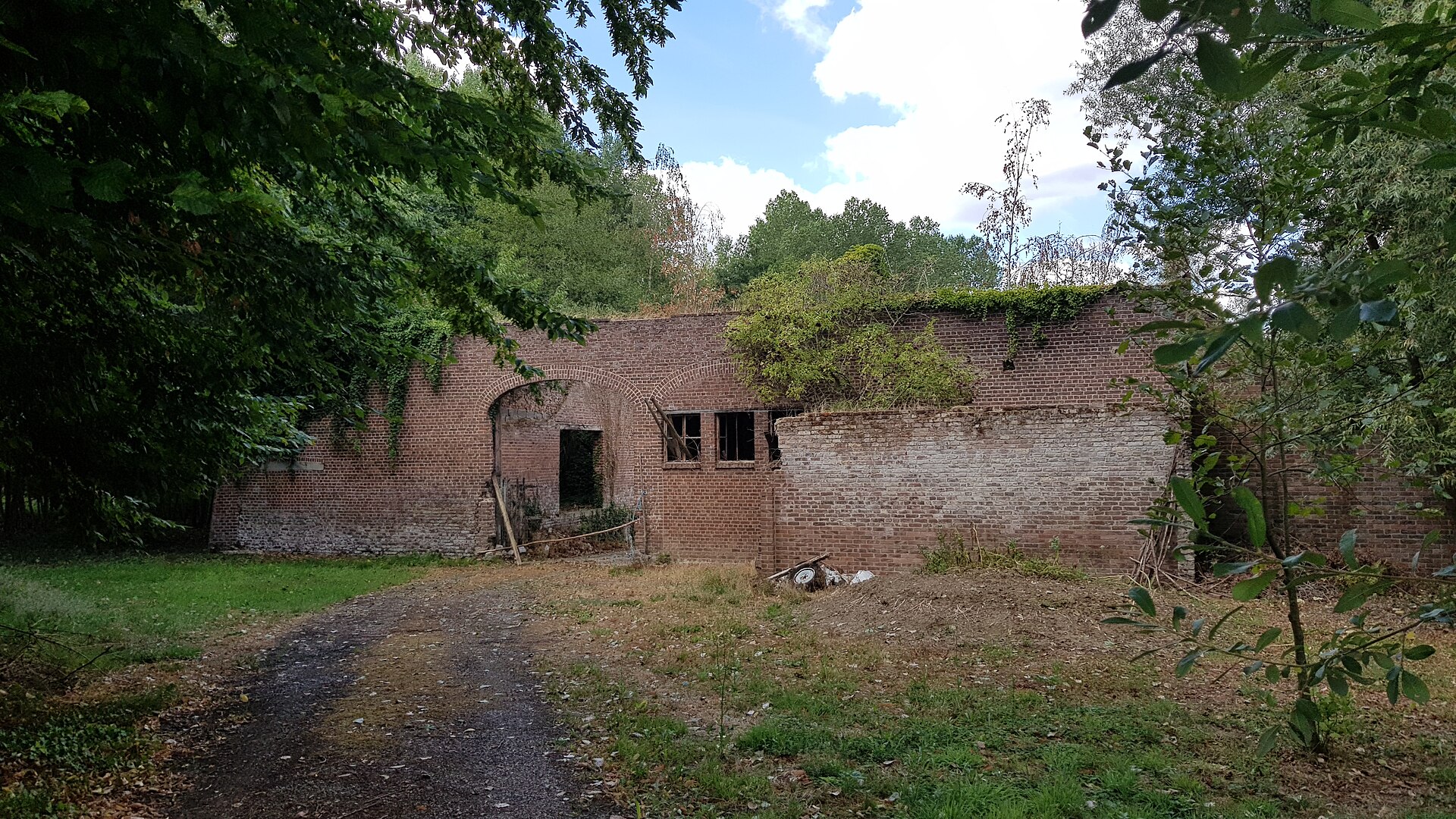
Luimertingenmolen is a former watermill in Kortessem, in the Belgian province of Limburg, standing on the small river Mombeek (locally also called the Molenbeek). It is one of two historic mills in the municipality — alongside the nearby Bombroekmolen — and remains one of the region's better-preserved pieces of rural industrial heritage.
How far back does the mill's history go?
The first written mention of a mill at Luimertingen dates from the end of the 13th century. In a charter dated 13 March 1292, Theodorus van Winclehoven, land commander of the Teutonic Order in the Low Countries, and Willem van Horne, lord of Kortessem, reached an agreement concerning the mills of Kortessem — one located at a place called "Bumbruc" (today's Bombroek) and the other at "Limertinghen" (Luimertingen). Both mills operated as so-called banmills: local villagers were legally obliged to have their grain ground there, with the resulting income shared between the local lord and the Teutonic Order.
What did the mill complex look like over the centuries?
Although its origins reach back to the Middle Ages, the building's present appearance is largely 18th-century. On the Ferraris map, drawn up between 1771 and 1778, the mill is shown as an L-shaped structure, with the mill house set perpendicular to the watercourse and a wing attached opposite it. The complex included the watermill itself, the miller's dwelling, and outbuildings, built partly in half-timbering and partly in brick — a construction style typical of rural architecture in this part of Limburg.
When did the mill stop working, and what happened to it afterwards?
Luimertingenmolen operated as a working watermill on the Mombeek until 1945. After that date, water power was replaced by a diesel engine, which continued to drive the millstones until 1969 — only then did flour production at the site end for good. The building nonetheless survived as a witness to the region's historic water-powered economy and has since been protected as a listed heritage structure.
What can visitors see at the site today?
Today the Luimertingen mill complex forms part of a larger area of natural and landscape heritage in Kortessem, combining historic buildings with floodplain meadows (beemden) along the Mombeek. The surroundings of the mill are sometimes included in walking routes dedicated to the area's water heritage and river-valley nature — visitors passing through can see both the mill's distinctive silhouette and the riverside meadows shaped by centuries of milling activity in the area.
Frequently asked questions
Can the inside of Luimertingenmolen be visited? Available sources do not specify current rules for visiting the interior — the building is primarily known and visible as a piece of architectural heritage set within a network of nature trails.
How did it differ from the neighboring Bombroekmolen? Both mills were established under the same 1292 medieval agreement and for centuries shared the status of banmills jointly owned by the lord of Kortessem and the Teutonic Order, even though they stood at separate locations along the same river.
How long was the mill in operation? From at least the late 13th century (its first written mention) until 1969, though water power was replaced by a diesel engine after 1945.
Nearby places

Earn badges for the places you visit
Download NextOnTrip, discover new places and check off your trails.