About this place
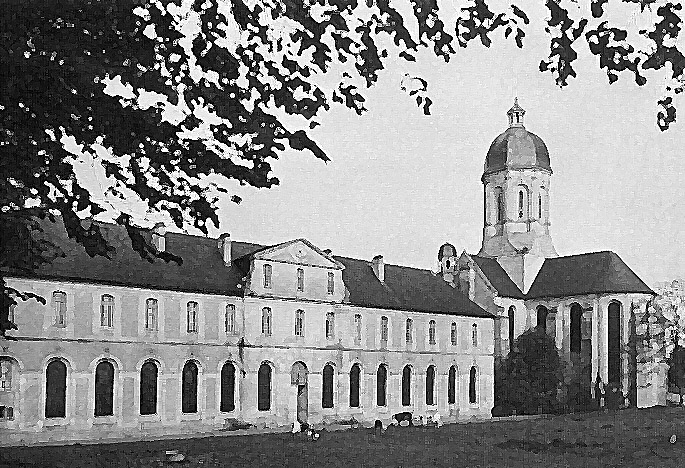
Longues Abbey (Abbaye de Longues, also known as Abbaye Sainte-Marie de Longues) is a former Benedictine monastery standing in the commune of Longues-sur-Mer, in Calvados, Normandy. Established in 1168, it served as a religious community for over six centuries before falling into decline. The surviving stonework now ranks among the most evocative historic ruins on the Normandy coast, just a short drive from the beaches where Allied forces landed in June 1944.
Who founded the abbey, and when?
The monastery was endowed in 1168 by Hugh Wac, a landowner whose family also held Rubercy and other estates in the Cotentin peninsula. Wac granted the founding site along with further donations, and the young community quickly attracted support from English and Norman nobles, plus royal backing from Henry II, King of England and Duke of Normandy, which gave the abbey both prestige and protection early on. Two families in particular, the Bacons of Molay and the d'Argouges, stand out as long-term benefactors; several of their members chose to be buried within the abbey grounds.
How did the abbey's fortunes change over the centuries?
By the mid-13th century the community had grown into a modest but well-organized institution, overseeing several dependent priories and holding patronage rights over parish churches across the surrounding Bessin countryside. Decline set in during the early 16th century, when the abbey was placed under the commendam system: an externally appointed abbot took the revenues without actually running the house, and monastic discipline weakened as a result. The Wars of Religion brought further damage — in 1562 Protestant forces looted the buildings. By the late 18th century, following a prolonged legal dispute, the Bishop of Bayeux secured the abbey's formal closure, and around the same period the nave, its crossing tower, and part of the transept collapsed after years of neglect. The property was sold off as national land during the Revolution.
What remains standing, and what does the abbey look like today?
The best-preserved structure is the former lodging for the abbey's lay servants, the only cloister building still fully standing, dating to the late 12th century, with Romanesque vaulting on carved capitals. The chancel, with its flat east end, also survives; its stonework echoes the nave of Bayeux Cathedral. Inside the old guesthouse, visitors can see one of Normandy's largest collections of medieval glazed floor tiles alongside rare 14th-century wall paintings. Remarkably, the ruins escaped damage entirely during the Allied landings of June 1944, despite lying so close to the invasion front. Their survival owes much to Charles Dewey, an American senator who bought the site in 1932 and financed the first conservation work. Later owners continued restoring the abbey through the 20th and 21st centuries, and in 2006 it was listed as a French historic monument.
Is the abbey connected to the D-Day battery in Longues-sur-Mer?
No — the two sites simply share the same village. The Longues-sur-Mer battery is a separate coastal fortification built by German forces as part of the Atlantic Wall: four 150mm naval guns still housed in their original concrete bunkers on the cliffs between Gold Beach and Omaha Beach, the only D-Day site where original guns remain in place. The abbey sits inland, at the heart of the village, with no historical link to the wartime battery, though many visitors combine both stops in one trip since they are only minutes apart by car.
Frequently asked questions
Are the abbey and the D-Day battery the same site?
No. They are two independent attractions within the same commune: a medieval Benedictine abbey in the village center, and a World War II German gun battery on the clifftop.
When can visitors tour the abbey ruins?
Access is seasonal, generally from June to mid-September, Tuesday through Saturday. It is worth checking current opening times before travelling, as access outside this window is limited.
What are the highlights of a visit?
The Romanesque vaulting of the former servants' building, the chancel with its Bayeux-influenced stonework, and the medieval glazed tiles and 14th-century murals inside the old guesthouse.
Did the abbey suffer any damage during the Normandy landings?
No. Despite its proximity to the D-Day beaches, the abbey buildings came through the June 1944 landings unscathed.
Nearby places

Earn badges for the places you visit
Download NextOnTrip, discover new places and check off your trails.