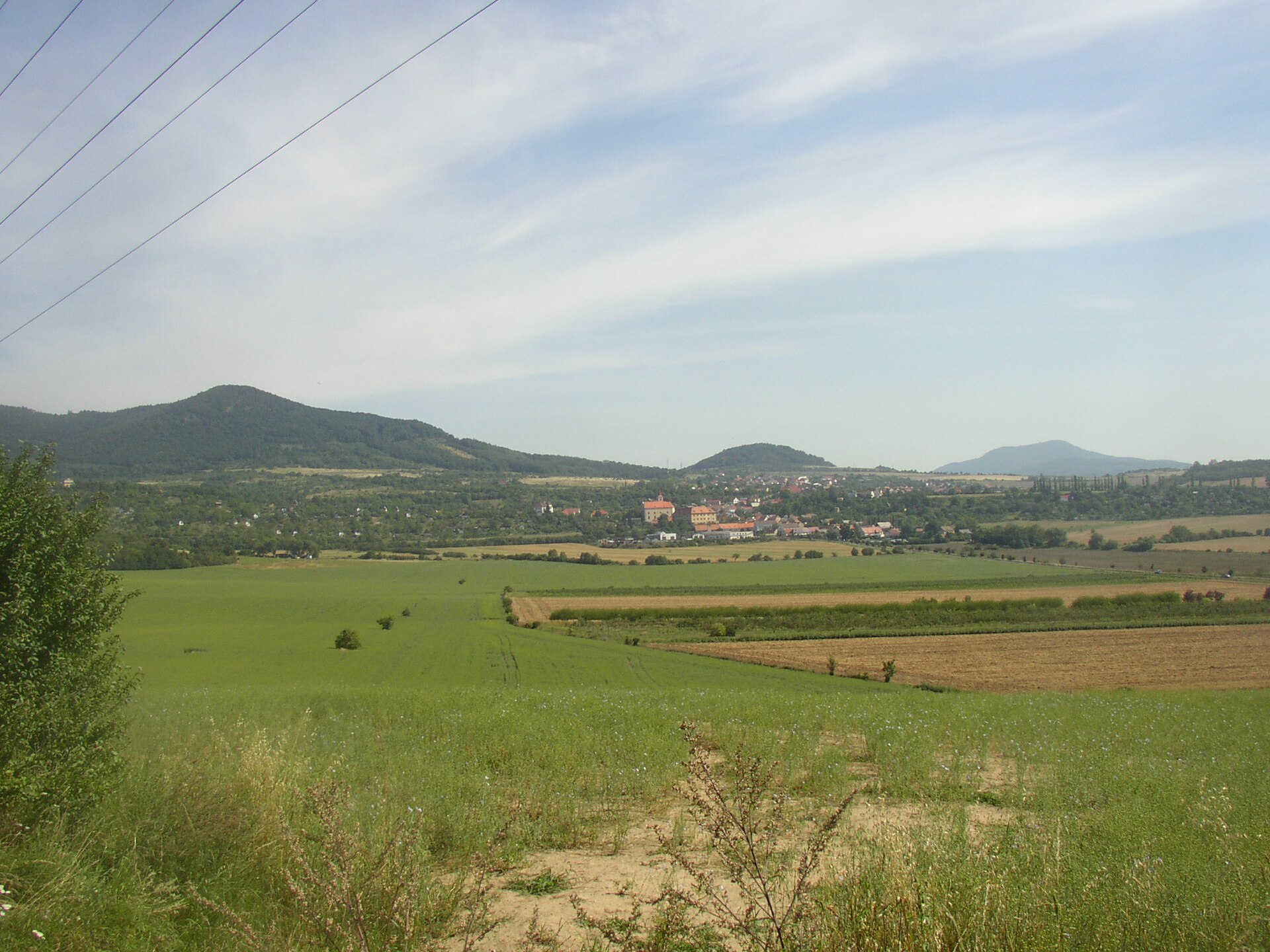
About this place
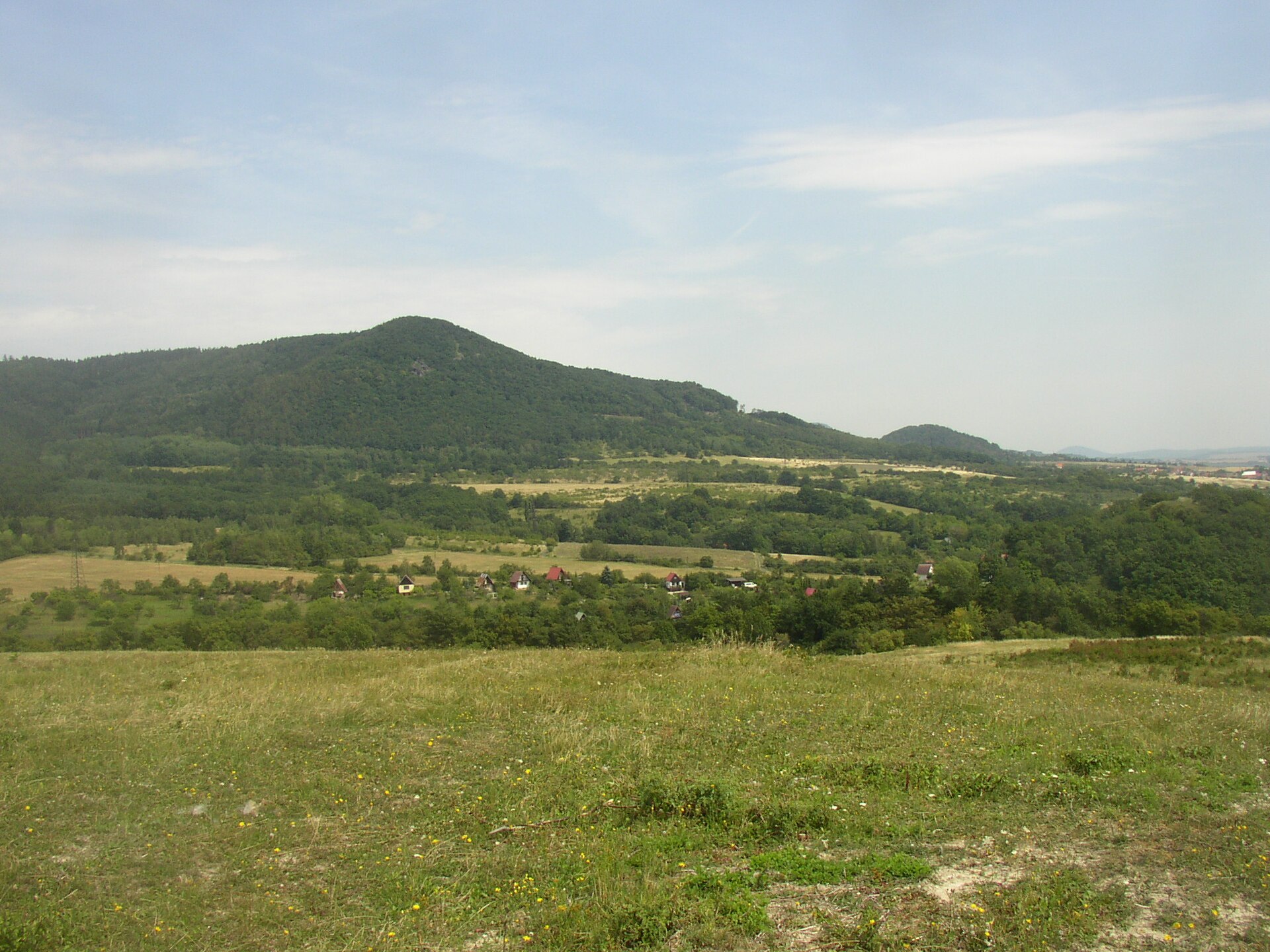
Liščín is a small but distinctive volcanic hill in the Chudoslavice municipality in the Central Bohemia region of the Czech Republic, within the České středohoří (Bohemian Central Uplands) Protected Landscape Area. Rising to a modest 437 meters above sea level, it lacks any marked hiking trail, yet it has quietly drawn attention for centuries — thanks to a legend about buried gold and to traces of human activity that reach back thousands of years.
Where is Liščín located?
The hill sits roughly 5 km northeast of Litoměřice, sandwiched between the villages of Myštice, Pohořany and Maškovice, and falls administratively under the municipality of Chudoslavice. It's a typical feature of the České středohoří — a range of cone-shaped hills born from Tertiary volcanic activity, punctuating the otherwise gently rolling farmland along the lower Elbe valley. Its summit lies at approximately 50.5686°N, 14.18°E.
How did the hill form?
Geologically, Liščín is built from olivine nephelinite and nephelinite basanite — volcanic rocks that pushed up through the underlying Cretaceous mudstones and claystones during the Tertiary period. The result is an asymmetrical, cone-like profile, topped by an unusual bowl-shaped summit plateau: the rim sits noticeably higher than the center of the top. This kind of shape is characteristic of extinct volcanic remnants across the region, making Liščín a small but genuine point of interest for anyone curious about the area's geology.
Where does the name "Goldberg" come from?
The hill is also known by its German name, Goldberg — literally "Golden Mountain." The name traces back to a local legend in which a shepherd is said to have found pieces of gold on the hill, prompting the owners of the Ploskovice estate to attempt actual gold mining there in the 17th century. The venture failed — the deposits weren't rich enough to justify extraction — but the name stuck, a lingering reminder of that long-abandoned ambition.
What has been found on the summit?
Liščín also has an archaeological side worth noting. Bronze artifacts dating from the Late Bronze Age have been recovered on the summit, suggesting the site may have served a ritual or cult function in prehistoric times. Graves containing bronze grave goods were also uncovered on the hill's northern slope, further pointing to the summit's importance to the communities that once lived in the area — quite possibly tied to burial rites for local elites.
More recent human activity has left its mark too: the northern and western sides of the hill were quarried in the past. Those old workings are now gradually being reclaimed by shrubs and undergrowth, blending back into the landscape and adding a slightly wild character to any walk around the hill.
Is it worth the climb?
Despite having no official trail, Liščín rewards those willing to make the short, unmarked ascent with sweeping views over the surrounding České středohoří hills and the Elbe valley. Access is possible from the west, via an unmarked path branching off the road connecting Pohořany and Staňkovice. Given the lack of any tourist infrastructure, it's best approached as a walk for visitors comfortable navigating without a signposted route — sturdy footwear helps, and visiting outside the thickest summer vegetation makes orientation easier.
Frequently asked questions
How high is Liščín? The hill reaches an elevation of about 436.8 meters above sea level.
Is there a marked trail to the top of Liščín? No, there is no officially marked trail. The only access is an unmarked path from the west, starting at the road between Pohořany and Staňkovice.
Why is Liščín also called Goldberg? The German name refers to a legend about a shepherd finding gold there, and to unsuccessful 17th-century gold-mining attempts by the owners of the Ploskovice estate.
What archaeological finds have been made at Liščín? Late Bronze Age artifacts were found on the summit, and graves with bronze grave goods were discovered on the northern slope, pointing to a possible cult or ritual use of the site in prehistory.
What is the hill made of? Liščín is composed of volcanic rock — olivine nephelinite and nephelinite basanite — that intruded through Cretaceous mudstones and claystones in the Tertiary period.
Nearby places

Earn badges for the places you visit
Download NextOnTrip, discover new places and check off your trails.