About this place
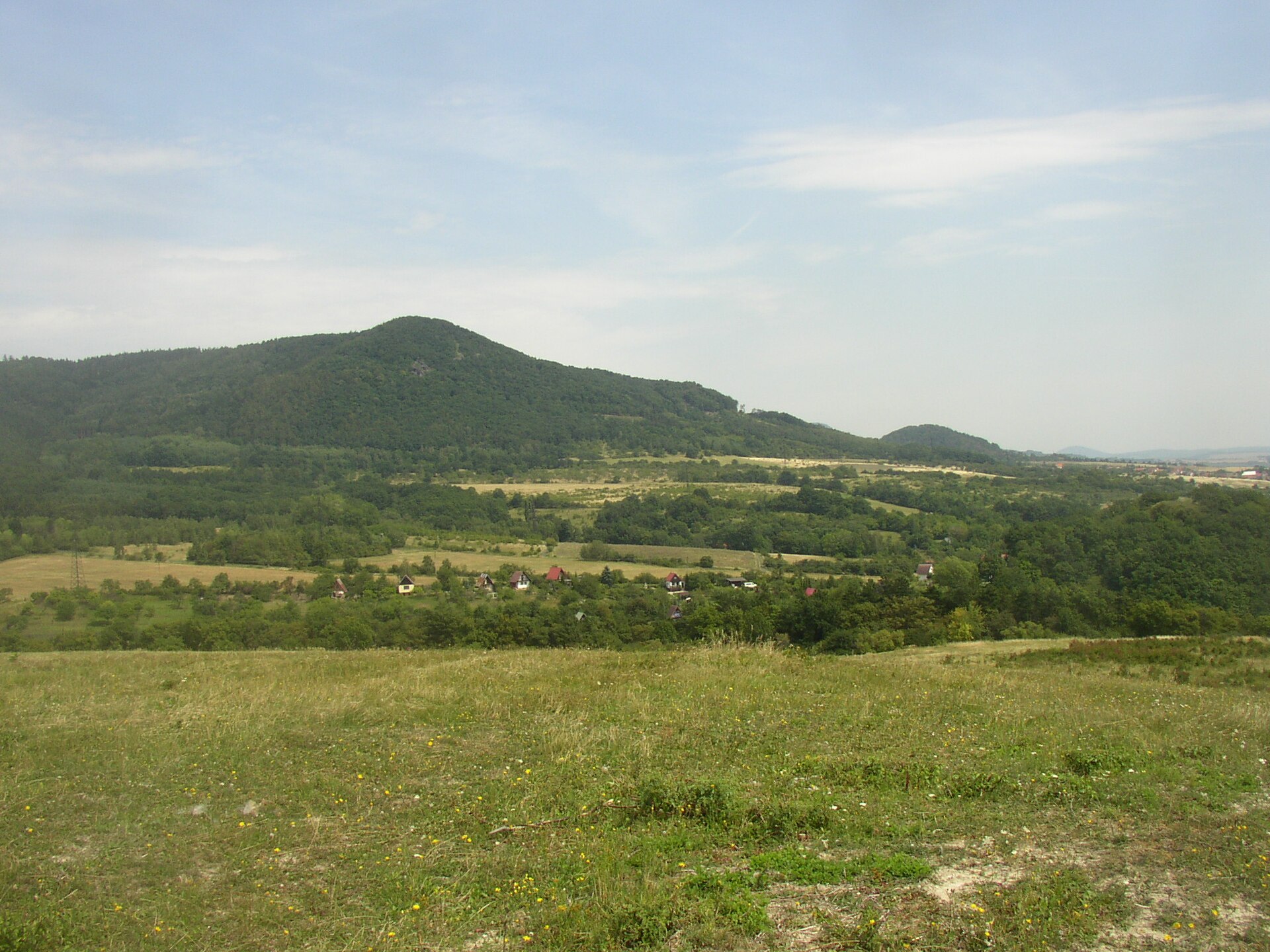
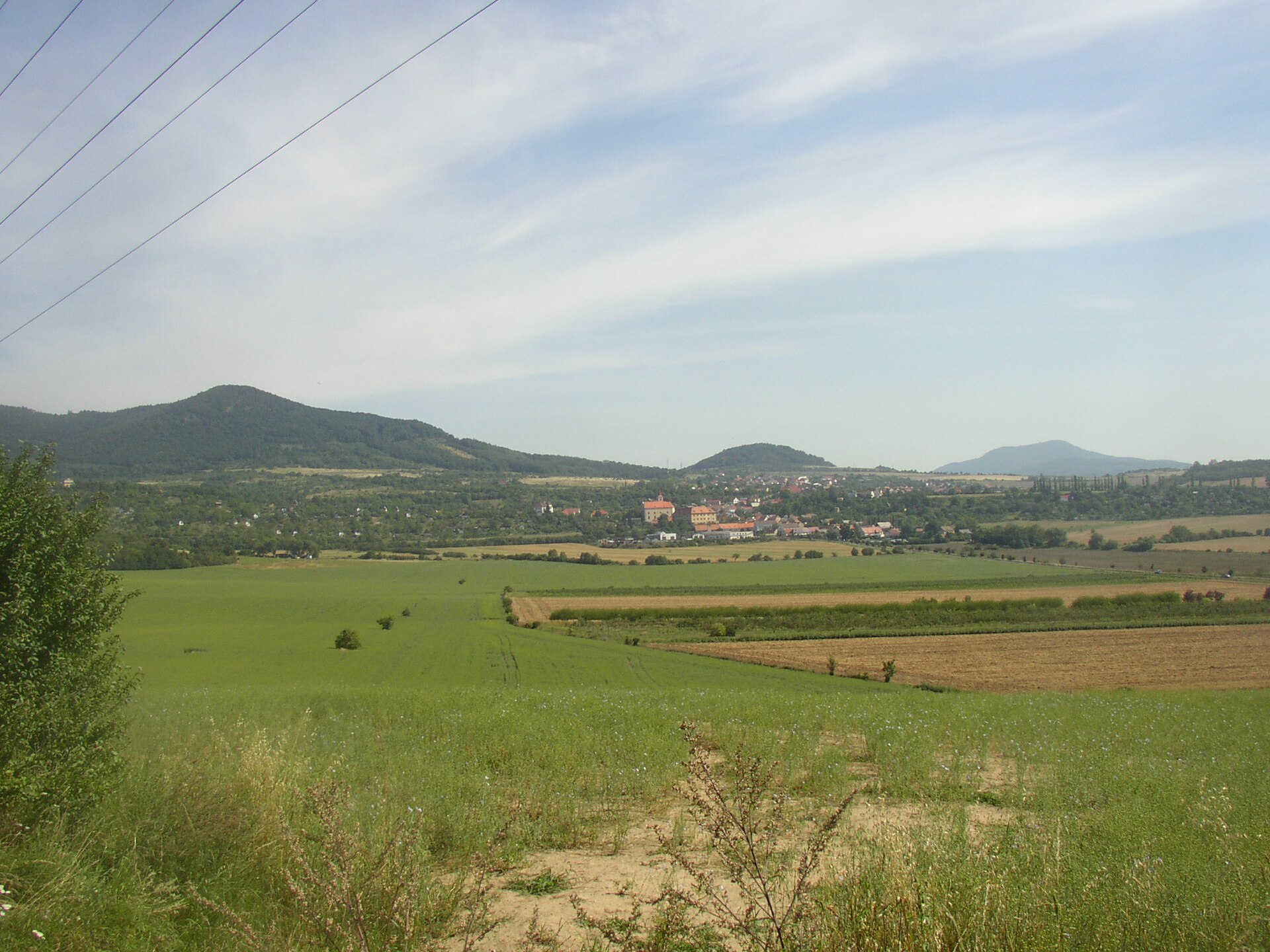
Kočka is a small but distinctive basalt hill near Skalice in the Czech Central Highlands (České Středohoří), sitting right on the cadastral boundary of Žitenice, a short distance from Litoměřice. The name literally means "cat," inspired by the shape of the exposed rock, which from a distance looks like a lying animal — hikers sometimes call the same hill Sovice ("owl hill"), since others read the silhouette as a bird rather than a cat. At roughly 275 meters above sea level it isn't a tall summit, but its bare, tree-free ridge is enough to open up a genuinely pleasant view over the surrounding countryside, including the town of Litoměřice itself.
What will you see there?
Kočka is a textbook example of the volcanic hillocks that dot the Czech Central Highlands — a region shaped by basalt intrusions that pushed through older bedrock during past volcanic activity. What sets this particular hill apart is that its rocky top stays bare and unforested, unlike many neighboring hills covered in woodland, which is exactly why its odd silhouette is recognizable from far away. From the ridge you get a clear panorama over Litoměřice and the rolling fields and hills of the Středohoří region, making it a favorite short walk for people living nearby.
How to get there?
A blue-marked hiking trail leads to Kočka, starting at the upper railway station in Litoměřice. The route runs past the Mostka hill, and after about two kilometers a side path branches off toward the summit itself. The hill also sits close to the road connecting Litoměřice and Žitenice, only around 500 meters away, which makes it an easy short walk for anyone arriving by car rather than by train. The blue trail suits families with children as well as visitors who want a quick, view-rich outing without much physical effort.
A hill with a mining past
Kočka hasn't always looked the way it does today. Basalt was once quarried here for gravel production, and that industrial past reshaped the entire hill — its current form largely dates back to the final blast carried out in the quarry in 1901. Since then the rock has kept the jagged, irregular profile that visitors see now, with the old quarrying activity still legible in its broken outline. Because of its geology, Kočka is also cited as one of the sites documenting the volcanic history of the Czech Central Highlands.
When to visit?
Spring and autumn are the best seasons for a visit, when the air tends to be clearer and the view from the exposed ridge reaches furthest, while the climb itself stays comfortable without summer heat. In summer, it's worth timing the walk for early morning or late afternoon, since the completely open hilltop offers no shade against the midday sun. In winter, provided the trail isn't icy, the bare surroundings make the panorama even sharper once the trees nearby have lost their leaves.
Frequently asked questions
Where does the name Kočka come from? From the shape of the rock, which resembles a lying cat when viewed from a distance; the alternative name Sovice instead evokes an owl.
How long does it take to reach the summit? From the upper railway station in Litoměřice it's about two kilometers along the blue trail to the branch-off point, followed by a short final climb to the top.
Can you drive closer instead of walking the whole way? Yes — the hill lies about 500 meters from the Litoměřice–Žitenice road, which shortens the approach for anyone not arriving by train.
Is there tourist infrastructure on site? Not really — this is a low-key viewpoint along a hiking route, worth visiting mainly for the panorama and its unusual, quarry-shaped rock formation rather than for any facilities.
Nearby places

Earn badges for the places you visit
Download NextOnTrip, discover new places and check off your trails.