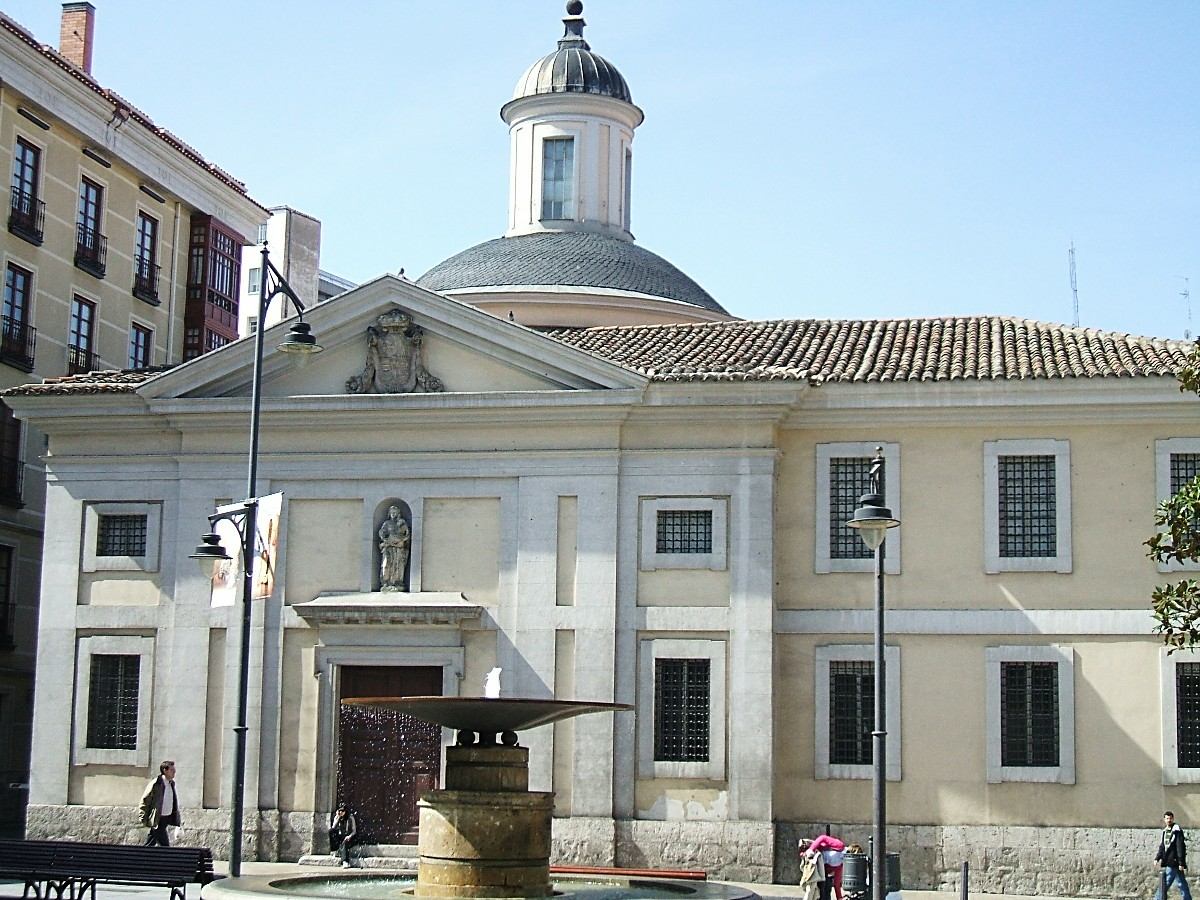
About this place
The Monastery of Saint Joachim and Saint Anne is a royal Cistercian convent located in Valladolid, one of the historic cities of Castile and León in northern Spain. Its dual dedication honors Joachim and Anne, venerated in Catholic tradition as the parents of Mary, mother of Jesus.
What should you know before visiting?
The convent belongs to the Cistercian order, the female branch of the medieval Benedictine reform known for its stricter rule and contemplative way of life. Communities of this kind in Spain traditionally follow an enclosed (cloistered) way of life, meaning that parts of the building — cells, the cloister garden, service areas — remain off-limits to visitors. What usually stays open to the public is the convent church, where you can attend Mass or listen to the nuns' prayer following the rhythm of the canonical hours.
How do you get there?
Valladolid is well connected to the rest of Spain: a high-speed train from Madrid takes under an hour, and frequent bus services link the city with other parts of the region. The city itself is compact, and its historic center is best explored on foot. The monastery sits within the urban fabric of Valladolid, so reaching it doesn't require travel beyond the city — a short walk or a local bus ride from the center is enough.
What else is worth seeing nearby?
Valladolid has a rich history tied for centuries to the Spanish royal court and to religious life, which explains the dense concentration of convents, churches, and palaces within a few hundred meters of the center. It's worth pairing a visit to the Monastery of Saint Joachim and Saint Anne with a stop at the cathedral, the Colegio de San Gregorio — home to the National Museum of Sculpture — or a walk through the old town with its characteristic Castilian brick-and-stone architecture. In spring, the city is known for its Holy Week (Semana Santa) processions, among the most solemn in Spain, with local religious brotherhoods and convent communities taking part.
When is the best time to visit?
Spring and early autumn are the best times to come, when temperatures in Castile are milder than in the height of summer and the city sees fewer tourists. If you want to experience the community's liturgical life, plan your visit around service times — these can vary, so it's worth checking the current schedule on-site or by phone beforehand.
Practical tips
As an active place of worship and a religious community's home, the monastery expects visitors to behave accordingly: move quietly, dress modestly (covering shoulders and knees), and avoid photographing the interior during services. Visits are usually limited to the church section — remember this is a place of prayer, not a museum, so opening times may follow the community's own daily rhythm rather than standard tourist hours.
Frequently asked questions
Is the monastery open to visitors? The convent church is generally open to the public at set hours, while the enclosed part of the building remains closed — typical for contemplative women's communities.
Is there an entrance fee? Entry to the church of an active religious site like this is usually free, though donations toward the community's upkeep are welcome.
How long does a visit take? Visiting the church itself typically takes 20–30 minutes, but it's worth allowing more time if you plan to combine it with a walk through the nearby old town landmarks.
Can you take photos inside? Rules can be strict, especially during services — it's best to ask on-site or follow any posted signs.
Nearby places

Earn badges for the places you visit
Download NextOnTrip, discover new places and check off your trails.