About this place
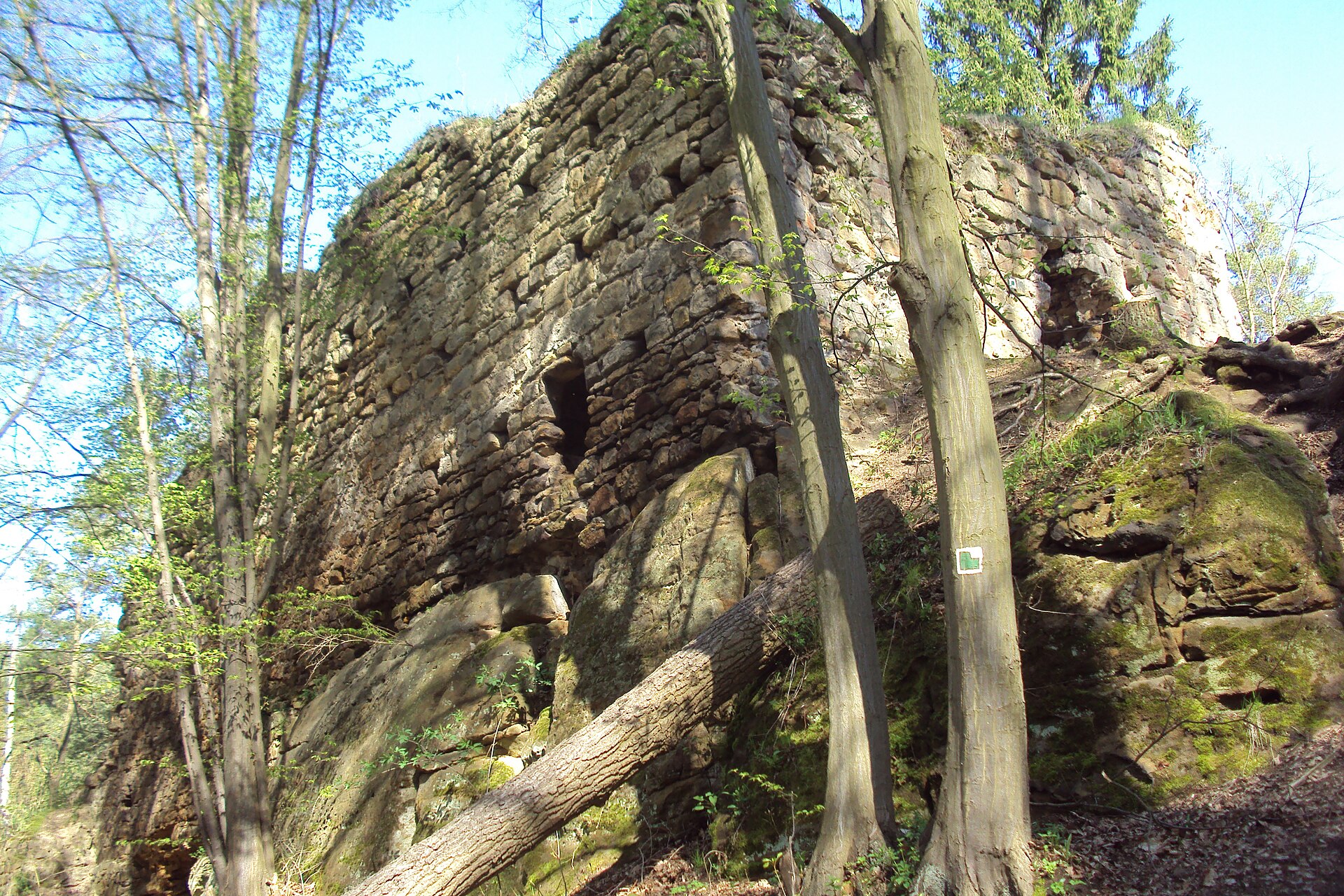
Jiljov is a sandstone rock near Holany, in the Česká Lípa district of the Liberec region, long mistaken for the ruins of a medieval fortified manor. It turns out the romantic name hides something else entirely — a two-century-old duck-hunting lookout built for the lords of nearby Zahrádky.
Where is Jiljov?
The rock stands roughly a kilometer east of Holany, on the stretch of land linking the village with the neighboring Zahrádky estate. The surrounding countryside is dotted with fishponds and old landscaped parkland, typical of this corner of the Česká Lípa district. The site sits along the hiking paths connecting Zahrádky and Holany, so it fits easily into a longer walk through the area rather than requiring a dedicated trip.
Castle, manor, or a case of mistaken identity?
The name Jiljov turns up in historical records as far back as 1388, and the last mention hinting that someone actually lived there dates to 1454. For a long time these references were taken at face value, and the rock was assumed to be the remnant of a medieval fortified manor, even a small castle. The terrain seemed to back this up: the rock sits on a circular earthen rampart surrounded by a moat, a layout that looks every bit like a defensive site. The catch is that the genuine medieval settlement those early records describe stood somewhere else entirely. The rampart and moat at Jiljov are not a military relic at all — they were shaped by earthworks carried out only in the 19th century.
A duck blind disguised as a ruin
The breakthrough came from 19th-century cadastral maps. One of them marks the Jiljov site with the symbol of a small building surrounded by radiating lines — the standard cartographic shorthand for a "posed," a raised hunting blind. A two-story wooden structure once stood on top of the sandstone rock, serving exactly that purpose: hunters shot ducks as they flew in to land on the neighboring fishpond, which was fed by a millrace running from the mills near Holany's fish-farming ponds. Steps carved directly into the stone led up to the platform, while distinctive grooves cut into the rock floor once held climbing plants — greenery that camouflaged the hunters from the birds below. Shooting from the raised upper level also meant firing downward, which kept anyone nearby out of the line of fire. Traces of stone quarrying are still visible on one face of the rock.
The whole arrangement most likely dates to around 1820, part of broader landscaping work commissioned by Vincenc Karel Kounic, then owner of the Zahrádky estate, who was busy giving the grounds around his residence a romantic, picturesque flourish — the same taste for staged "ruins" that made features like Jiljov so easy to misread centuries later.
What survives today
The wooden hunting platform disappeared long ago, but the sandstone core of Jiljov has survived, and visitors can still climb the carved stone steps to the small square platform at the top. A rock niche on the southern face preserves the hole once used to anchor a supporting beam. Archaeological research carried out in 1970 confirmed that the terrain features visible today date from the 19th century rather than the Middle Ages, settling the long-running debate over the site's supposed defensive origins. Jiljov has been listed as a protected cultural monument since 1965.
Frequently asked questions
Is Jiljov really a castle ruin? No. Despite centuries of being called a fortified manor or small castle, research has shown that its present form comes from 19th-century landscaping rather than any medieval fortification.
What was the site actually used for? It served as a raised duck-hunting blind built on a sandstone rock in the early 19th century, overlooking a neighboring fishpond.
How was its real purpose discovered? The key evidence came from 19th-century maps, which marked the spot with the symbol of a hunting structure complete with shooting openings.
Is the site protected today? Yes. Jiljov has held cultural monument status since 1965, and 1970 archaeological research confirmed its 19th-century origin.
Nearby places

Earn badges for the places you visit
Download NextOnTrip, discover new places and check off your trails.