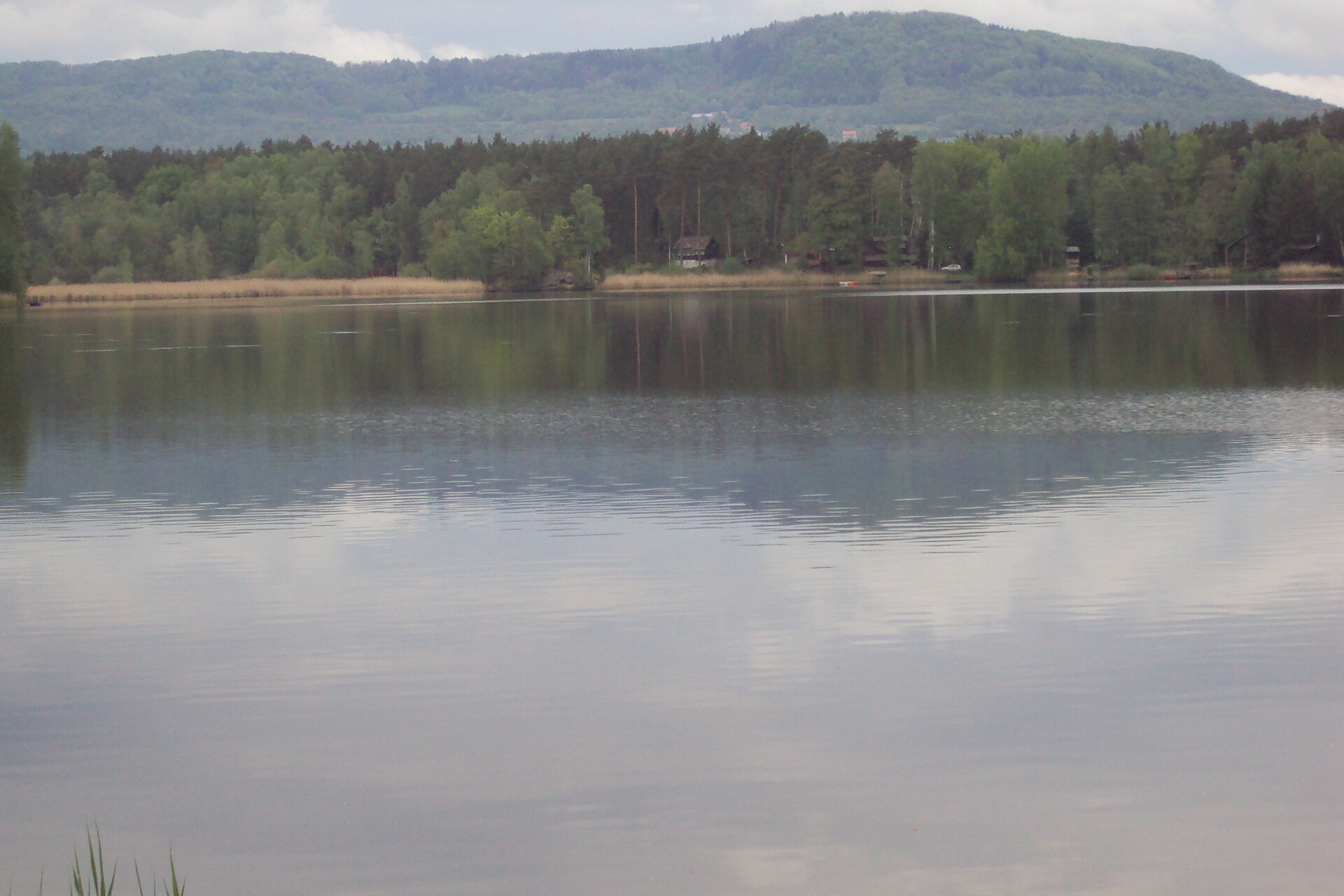
About this place
Hostíkovice Castle (also known as Milčany, and historically by its German name Kickelsburg) is a ruined medieval stronghold in the municipality of Holany, in the Česká Lípa district of the Liberec Region, Czech Republic. The ruins sit between the Holanský and Milčanský ponds, surrounded by pine woods and a cluster of cottages, about 8 km southwest of Česká Lípa.
How do you get there?
A marked hiking trail (red waymarks) runs between the Holanský and Milčanský ponds, right past the ruins, in an area popular with weekenders staying at the nearby cottages. The closest reference point is the town of Holany, a short drive from Česká Lípa. The castle stands on a rocky outcrop on the western shore of Holanský pond and can be visited freely, year-round, at no charge.
Why does it have two names?
The naming here often confuses visitors. An earlier, still older manorial seat — most likely called Milčany — once stood on an island in the neighboring pond and disappeared around the turn of the 14th and 15th centuries. A new castle, which inherited that name, was built on a different spot between 1391 and 1402. For a long time the ruins were mistakenly identified as the castle of Vítkovec; that identification is now known to be wrong, and the site's correct name is Milčany, also referred to as "hrad u Hostíkovic" (the castle by Hostíkovice).
What is known about its history?
A nobleman named Přibík already used the title "of Milčany" in 1366, suggesting an earlier family seat existed in the area before the current castle. The first written record of the "Milčany estate" dates to 1391, and the castle itself was built between 1391 and 1402. In 1402, ownership passed to Jindřich Berka z Dubé, and in 1437 the stronghold was bought by Zikmund (Děčínský) z Vartenberka. It may have suffered damage during Lusatian raids in 1444. The castle's importance began to fade after 1438, when nearby Nový Rybník became the new manorial seat; the last mention of Milčany as part of the Rybnov estate dates to 1460. From 1543 onward, records describe the castle as abandoned, and the final written mention comes from 1622. The stronghold most likely fell into permanent ruin during the Thirty Years' War, and building material from its walls is said to have been reused to build the church in Holany. Since 1958, the ruins have been protected as a cultural monument.
What survives today?
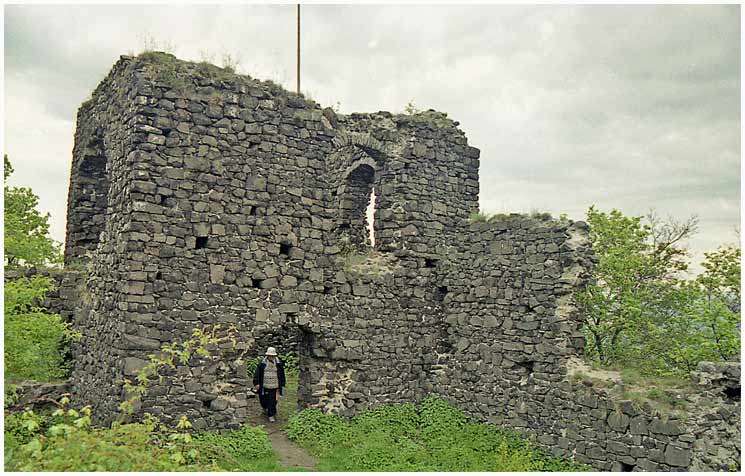
Only one corner of the palace remains standing: the eastern wall, still roughly 7 meters high, and a shorter southern wall of about 3 meters, which preserves a single loophole and holes once used for ceiling beams. Around the site, visitors can also make out remnants of earthen ramparts and other terrain irregularities left by the old fortifications. It's worth noting that sandstone quarrying in the surrounding area over the centuries has altered much of the original landscape around the ruins.
When is the best time to visit?
Since this is an open-air site, spring and summer are the best seasons, when the woodland around the ponds is fully green and the longer days make it easy to combine a walk to the ruins with time spent by Holanský pond. Autumn tends to be quieter, with fewer visitors, which suits travelers who prefer exploring the history at a slower pace.
Frequently asked questions
Are Hostíkovice Castle and Milčany Castle the same place? Yes. The ruins are known both as "hrad u Hostíkovic" and Milčany — it's the same site, which for years was also mistakenly identified as the castle of Vítkovec.
When was the current castle built? It was built between 1391 and 1402, on a different spot from an older family seat that had previously stood on an island in the neighboring pond.
What remains of the original stronghold? A palace corner survives, with a taller eastern wall (about 7 m) and a shorter southern wall (about 3 m) that still has a loophole, plus traces of ramparts and earthworks.
Is there an entry fee to visit the ruins? No, the ruins are freely accessible and can be visited at no cost throughout the year.
Nearby places

Earn badges for the places you visit
Download NextOnTrip, discover new places and check off your trails.