About this place
Jelení hora is a modest but view-rich summit in the Ore Mountains (Krušné hory), rising just east of the village of Kryštofovy Hamry in the Chomutov district of the Czech Republic. At 993 m above sea level, it is the highest point of the Přísečnická hornatina, a hilly geomorphological district that wraps around the Přísečnice reservoir.
How to get there?
The usual starting point is the car park by the dam of the Přísečnice reservoir, roughly one and a half kilometres west of the summit. From there, a blue-marked trail follows the top of the dam before turning onto a paved road that climbs directly toward the peak. The walk is short and undemanding — well under an hour each way — making it a realistic option for families with children. Kryštofovy Hamry itself lies about the same distance to the northwest, and while it serves as a useful landmark for orientation, most hikers find it more practical to begin at the reservoir car park rather than from the village.
What will you see?
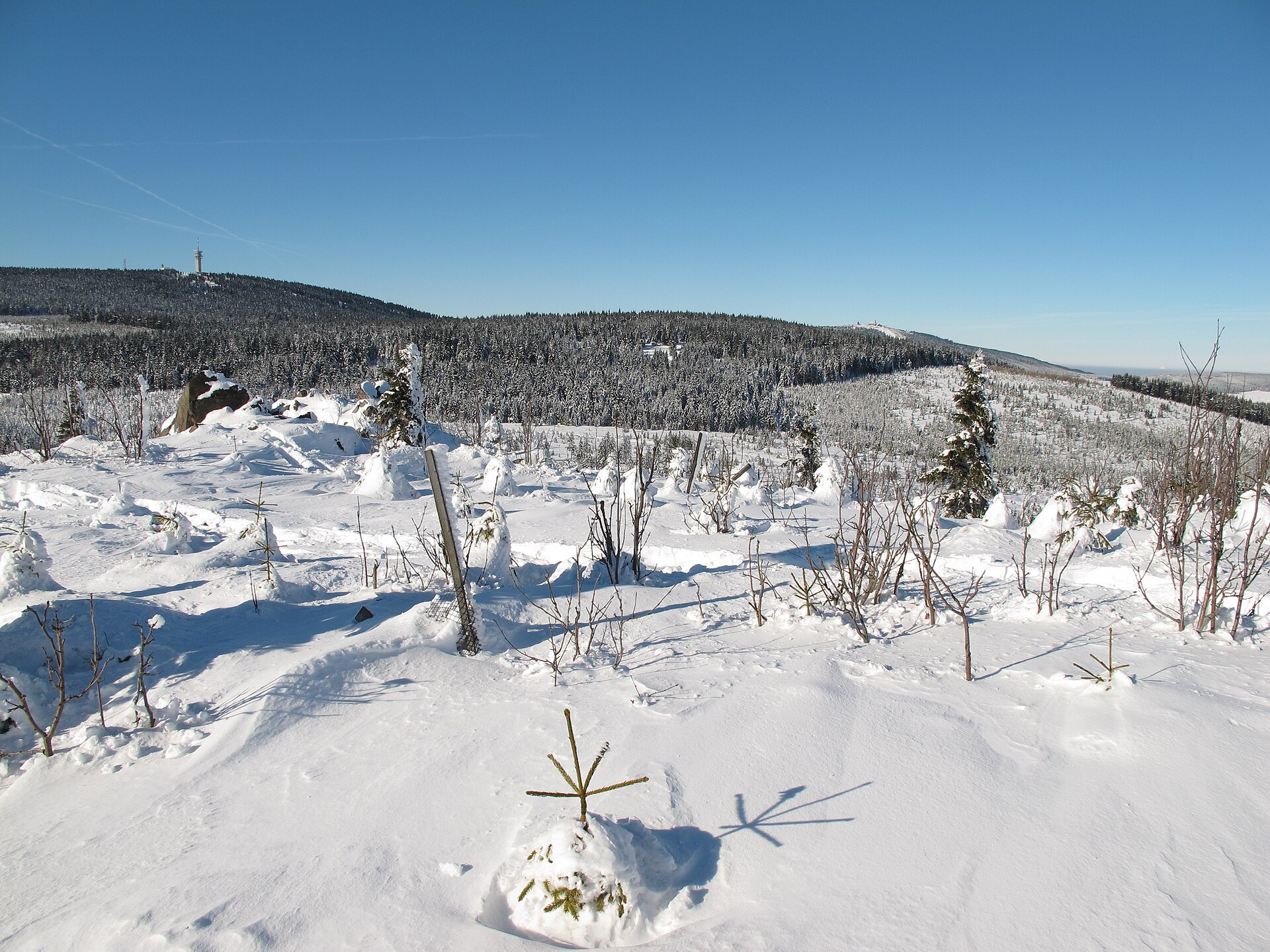
Geologically, Jelení hora is built of nephelinite, a volcanic rock that sets it apart from many of its neighbours in the Ore Mountains. What draws visitors here, though, is not the rock but the view: the summit is regarded as one of the finest lookout points in the entire Czech Krušné hory, and within the Chomutov district it is often singled out as the best vantage point around. On a clear day, the panorama stretches to the highest peaks of the range — Klínovec on the Czech side and Fichtelberg just across the border in Germany, the two tallest summits of the whole massif.
A summit cross marks the very top, while the actual viewpoint lies a short distance — some fifty metres — away from it, worth knowing if the view itself is the main goal rather than the exact high point. Near the foot of the hill, close to the Přísečnice reservoir, a small spring known as Karlův pramen (Karl's Spring) bubbles up in a neatly kept spot, making for a pleasant stop on the way back, especially in warmer months.
The reservoir itself, whose dam forms part of the approach, is one of the larger dams in the Ore Mountains and is worth a look in its own right — walking along its crest is a fitting warm-up before the climb to Jelení hora.
When to visit?
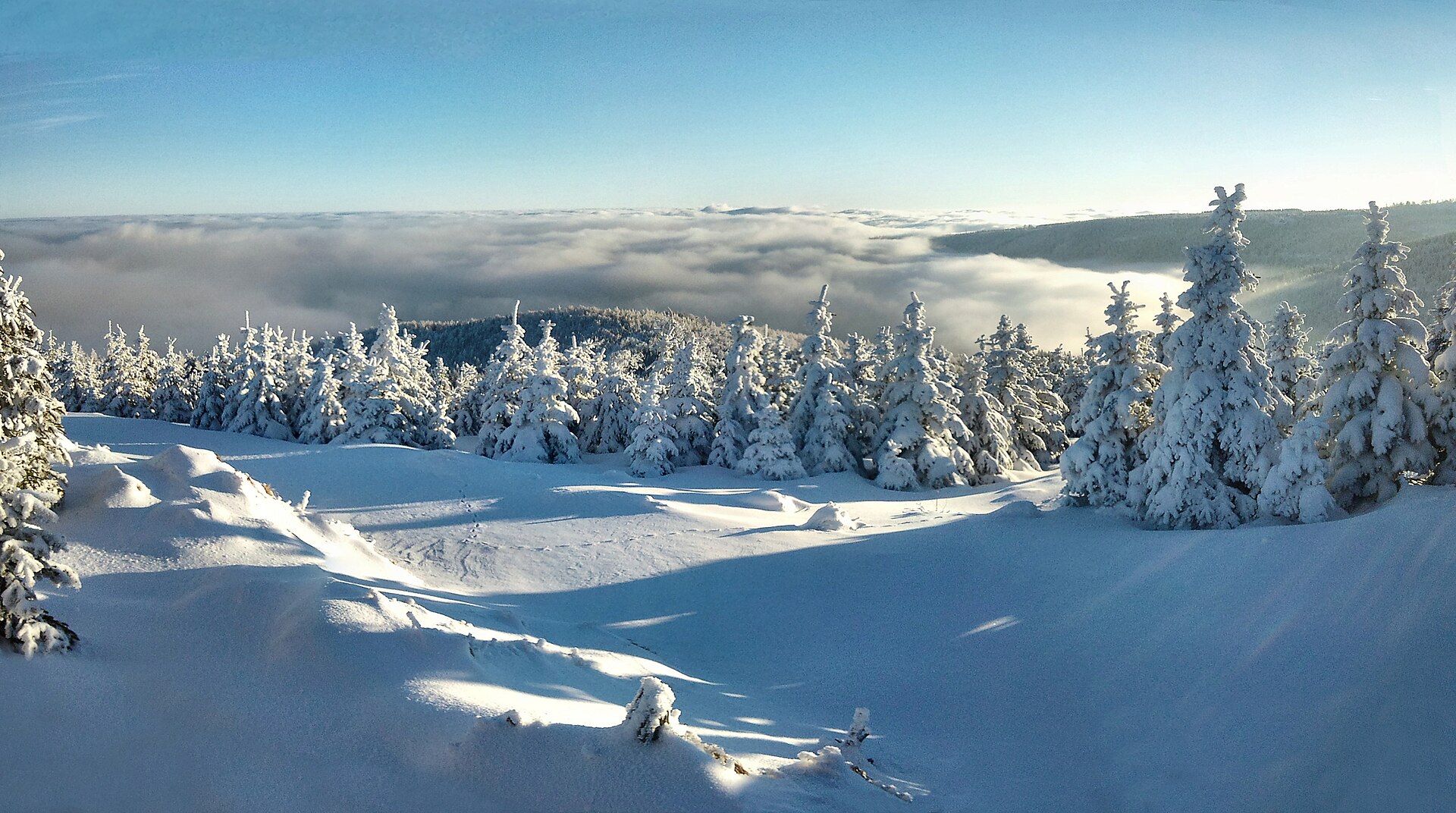
Late spring through early autumn is the best window for a visit, when long daylight hours and generally clear conditions favour distant views toward peaks like Klínovec and Fichtelberg. Summer adds the bonus of a rest stop at Karlův pramen and a stroll along the Přísečnice reservoir. In autumn, crisper air after the first cool days often sharpens the views even further, though hikers should plan around earlier nightfall. Winter ascents are possible but call for proper footwear, since the paved section of the approach can turn icy.
Frequently asked questions
How high is Jelení hora? The summit reaches 993 metres above sea level and is the highest point of the Přísečnická hornatina geomorphological district.
Where is the best place to start the hike? Most visitors begin at the car park by the dam of the Přísečnice reservoir, following the blue trail along the dam crest and then a paved road up to the summit.
What can you see from the top? On clear days, the view extends to the two highest peaks of the Ore Mountains — Klínovec on the Czech side and Fichtelberg in Germany.
Is there anything else worth seeing nearby? Yes — at the foot of the hill, near the Přísečnice reservoir, sits the well-kept Karlův pramen (Karl's Spring), and the reservoir itself adds a scenic detour to the route.
Nearby places

Earn badges for the places you visit
Download NextOnTrip, discover new places and check off your trails.